
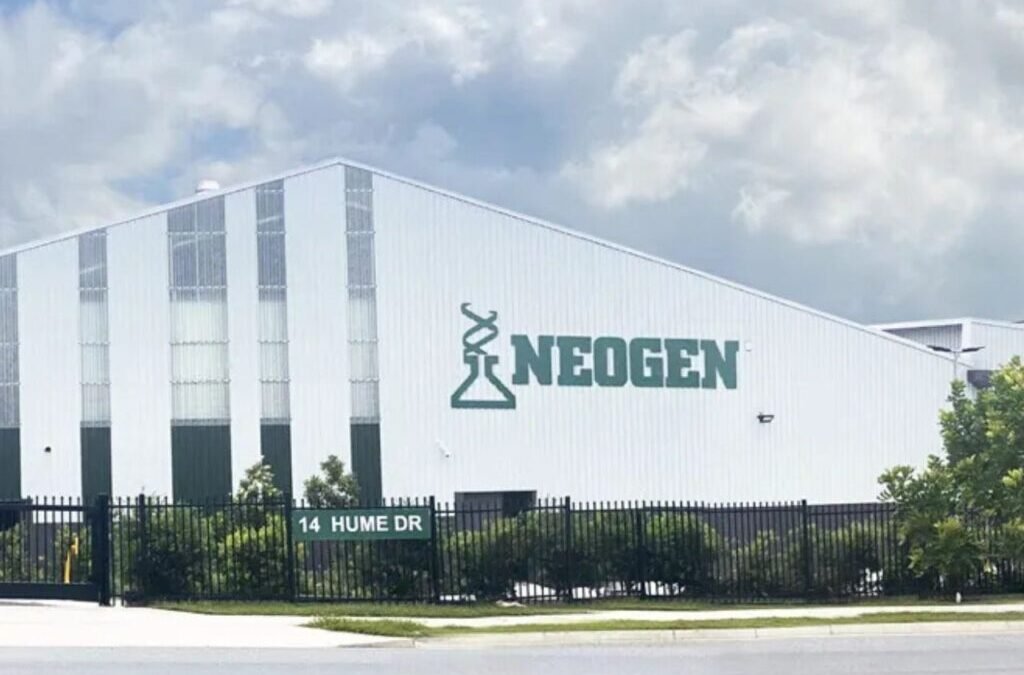
Synopsis: Neogen Chemicals is transitioning from a specialty chemicals company into a domestic battery materials player as India pushes to localise its EV supply chain. The key question is whether Neogen can become one of India’s first listed suppliers of lithium electrolyte salts, currently dominated by Chinese imports.
India’s EV and battery manufacturing ambitions are creating an entirely new domestic chemicals opportunity that barely existed a few years ago. One specialty chemical manufacturer that historically focused on bromination and organolithium chemistry is now rapidly expanding into lithium electrolyte salts and battery materials as India pushes to reduce dependence on imported battery components.
With a market capitalisation of ₹4,704 crores, the shares of Neogen Chemicals are trading at ₹1,718 apiece in today’s market session, up 3.15% from their previous day’s close of ₹1,664 apiece. The stock has delivered a return of 11.19% over the last year.
Building India’s Domestic Battery Materials Capacity
The company has already commissioned 200 MTPA of lithium electrolyte salt capacity, while another 1,300 MTPA is currently under trial production. Management also plans an additional 1,000 MTPA electrolyte salt expansion, along with 500 MT of intermediate capacity by Q3 FY27. Alongside this, Neogen has fully commissioned its 2,000 MT electrolyte plant at Dahej.
This matters because electrolyte salts are one of the most critical components inside lithium-ion batteries. India still remains heavily dependent on imports, particularly from China, for most advanced battery materials. Neogen is now attempting to position itself directly inside that localisation opportunity.
The Financials Already Reflect The Transition
The latest quarterly numbers show that the transition is already beginning to influence the financial profile of the business. Q4 revenue grew 21% year-on-year to ₹250 crore, while EBITDA rose 10% to ₹45.3 crore. Net profit increased from ₹5 crore to ₹11 crore during the quarter.
However, the more important nuance is margin behaviour. EBITDA margins compressed slightly from 20.25% to 18.20% despite strong revenue growth. The slight margin compression comes at a time when the company is scaling multiple new battery materials facilities simultaneously, which typically involves higher operational and commissioning costs during the initial ramp-up phase.
FY27 Could Become The Real Inflexion Year
Management itself has described FY27 as a “transformative year” for the company. The guidance now targets ₹875–950 crore of revenue driven by the commissioning of the large battery materials facility at Pakhajan and scaling electrolyte operations at Dahej.
Importantly, this guidance is not purely dependent on organic growth in Neogen’s legacy speciality chemical operations. Instead, a meaningful portion of the expected growth is linked directly to battery materials capacity, beginning commercial contribution.
That distinction matters because the market often values battery material companies differently from traditional speciality chemical businesses. Speciality chemical companies typically trade on stable margins and incremental capacity additions. Battery materials businesses, however, are often valued on long-term strategic positioning inside EV and energy storage supply chains. If Neogen successfully scales domestic electrolyte salt production, investors may gradually begin valuing the business through a very different lens.
The China Dependence Opportunity
The larger opportunity exists because India’s battery ecosystem still lacks meaningful domestic suppliers across several critical material categories. Electrolyte salts remain overwhelmingly import-dependent despite aggressive EV manufacturing targets under India’s broader clean mobility push. As domestic cell manufacturing capacity expands over the next decade, localisation pressure for battery materials is likely to rise sharply.
This creates a potentially important positioning advantage for early domestic suppliers capable of scaling production with technical consistency and customer qualification approvals. Neogen appears to be positioning itself precisely for that transition.
The Risks Still Matter
The opportunity, however, remains execution-dependent. Battery materials manufacturing is technically far more demanding than conventional specialty chemicals. Customer qualification cycles are long, quality consistency requirements are strict, and large-scale commercial adoption takes time. The company is also entering a segment where global competition, particularly from Chinese players, remains extremely strong. If utilisation ramps slower than expected, the large capex cycle could continue weighing on margins and return ratios for longer than investors currently anticipate.
Market Takeaway
Neogen Chemicals increasingly looks like a company attempting to reposition itself from a niche speciality chemicals manufacturer into a strategic battery materials supplier for India’s emerging EV ecosystem.
The real question is no longer whether Q4 profit grew. The real question is whether Neogen can become one of India’s first meaningful domestic electrolyte salt suppliers at scale. If that transition succeeds, the company may eventually be valued less like a traditional speciality chemical stock and more like a battery materials platform tied directly to India’s long-term energy transition story
About the Company and Financials
Founded in 1989, Neogen Chemicals manufactures speciality bromine compounds, lithium chemicals, and advanced organic chemistry products used across pharmaceuticals, engineering, agrochemicals, and battery materials. The company is now expanding aggressively into lithium-ion battery chemicals, including electrolyte salts and electrolytes, as India pushes to localise its EV and energy storage supply chain.
Year-on-Year analysis: Revenue from operations has increased from ₹ 774 crores in FY25 to 855 crores in FY26, up 10.58%, with reported operating and net profit being ₹151 crores and ₹47 crores for the same period.
Disclaimer: The views and investment tips expressed by investment experts/broking houses/rating agencies on tradebrains.in are their own, and not that of the website or its management. Investing in equities poses a risk of financial losses. Investors must therefore exercise due caution while investing or trading in stocks. Trade Brains Technologies Private Limited or the author are not liable for any losses caused as a result of the decision based on this article. Please consult your investment advisor before investing.
The post Neogen Chemicals Shares: Can It Reduce India’s Dependency on China for Lithium Electrolyte Salts? appeared first on Trade Brains.