
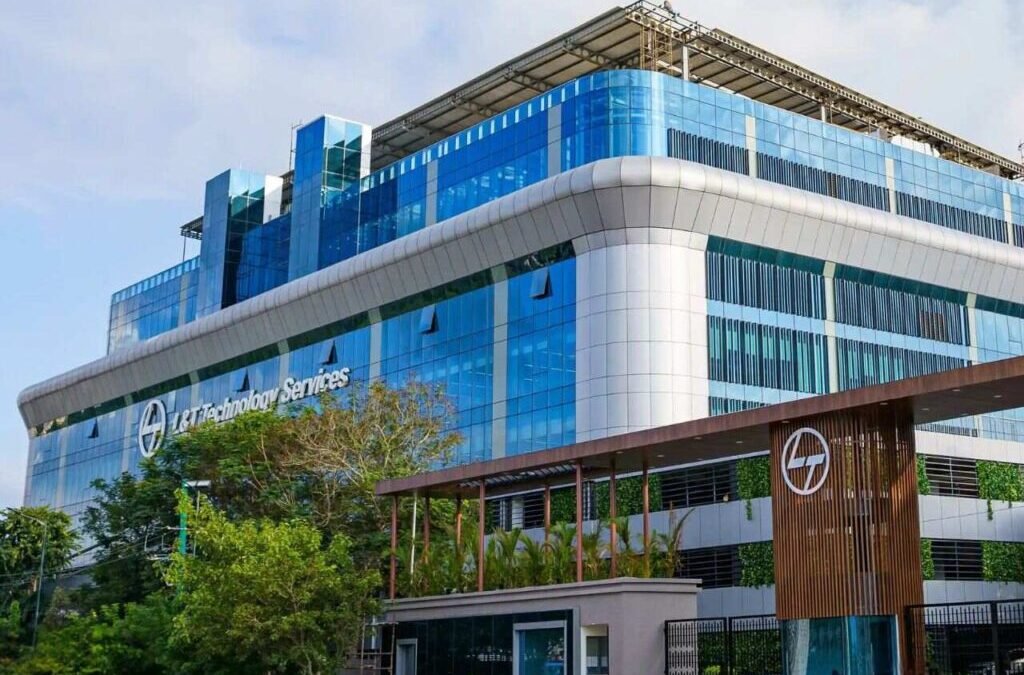
Synopsis: LTTS is undergoing a strategic transformation by exiting low-margin businesses and focusing on AI-led engineering through its Engineering Intelligence framework. While near-term growth remains modest, strong deal wins, margin improvement, and six future-focused technology bets position the company for more sustainable, high-quality growth in the long term.
After a deliberate portfolio reset, LTTS is repositioning itself for long-term growth by focusing on high-value, AI-driven engineering services. The company has exited non-core and low-margin segments to improve the quality of revenue, even at the cost of short-term growth. With strong deal momentum, improving margins, and a clear roadmap under its Lakshya 31 strategy, LTTS is now aligning itself with global technology trends such as AI, automation, and digital engineering to build a more resilient and scalable business model.
A Year of Strategic Reset Amid Modest Growth
FY26 was an interesting phase for LTTS, as it chose to focus on building resilience in FY26 rather than growing faster. The overall revenue grew by 5% and reached $1,321 million, while continuing operations witnessed 8.3% growth, reaching $1,233 million. The company focused on restructuring its portfolio to ensure future sustainability.
As part of this initiative, LTTS divested itself from its SWC segment, which was a step towards ensuring better growth in the future. However, as can be seen, this step had some immediate impact on the growth trajectory of the company as the Q4 growth remained underwhelming.
Portfolio Rationalization: Trading Volume for Quality
The strategic divesting of SWC along with the trimming of close to $19 million of business per year on an annualised basis underscores how LTTS follows a disciplined process in managing its capital allocation. While management recognised that certain pieces of the acquired SWC business, such as telecommunications infrastructure and cybersecurity, had been integrated and scaled to a global level, other areas of the business, such as smart cities, were less scalable on a global basis. Thus, LTTS made the conscious choice to divest those segments of the business that did not fit with the strategy of providing global engineering services.
Engineering Intelligence: The Core of AI-Led Transformation
LTTS’ future roadmap will centre around Engineering Intelligence (EI), which is a strategy that aims to integrate AI across their products, processes, and platforms. In contrast to other IT services companies, LTTS aims to leverage AI in the context of engineering processes and not for general IT purposes.
EI is an approach that will rely on multimodal, agentic, and edge AI to build autonomous, production-ready solutions. These are not just theoretical ideas but have already impacted how the company is winning deals and working with clients. LTTS is leveraging AI in three layers: enhancing productivity, optimising the process for their clients, and embedding intelligence directly into the final products.
Six Strategic Bets to Drive Future Growth
There have been formulated by LTTS six key technology bets based on their Lakshya 31 strategy that would form the backbone of their growth in the coming five years. These are as follows: software-defined mobility; plant build-out and modernisation; energy & industrial automation to digital manufacturing; next-generation compute & AI infrastructure; software platforms for engineering intelligence; and MedTech.
These domains currently constitute less than a 50 per cent contribution to their revenue and would be expected to contribute more than 70 per cent to their total revenue generation in the upcoming five years. LTTS is focusing its investments in these domains through technological development, partnerships, and hiring talented individuals.
Segmental Resilience Backed by Strong Deal Momentum
Even after the reorganisation, LTTS proved its mettle in all three key verticals – mobility, sustainability, and tech. The sustainability segment turned out to be one of the growth engines, reporting double-digit growth due to successful execution and strong deal-making, such as big deals with international energy companies.
The mobility vertical, which had struggled before, now seems to have stabilised, with robust pipeline activity and increasing traction in North American markets, especially software-driven automobiles. The tech vertical, affected by portfolio rationalisation, will shift focus towards high-margin, artificial intelligence-based platform offerings. Notably, big deals made their way to $855 million for FY26, marking an impressive increase of 40 per cent YoY.
AI-Led Delivery and Margin Expansion Levers
Another major highlight of LTTS’ business model is that it has been able to boost profit-related metrics even amid slow growth in the top line. Operating margin has been lifted up to 15.2% in the fourth quarter of FY26, underpinned by efficiency measures, better segment mix, and exiting unprofitable segments.
LTTS is making the most of AI not only for growing the bottom line but also for optimising costs, which will drive efficiency in engineering processes. AI-driven delivery, non-linear revenue creation, and optimisation of selling, general, and administrative expenses can help boost margins further.
Execution Discipline and Long-Term Growth Visibility
Furthermore, execution excellence of LTTS is also observed in terms of its operating metrics. LTTS had demonstrated steady large-deal momentum with an average of $200 million in deal wins during six straight quarters.
Working capital effectiveness is seen through a drop in days sales outstanding from 93 days to 83 days and effective free cash flow generation of 100% of net income. Furthermore, LTTS is investing in talent acquisition in view of ramping up deals in areas such as new-age engineering and artificial intelligence.
Balancing Growth Ambitions with Strategic Caution
LTTS has laid down an explicit medium-term target of growing at 13%-15% CAGR for revenue in the coming five years, with EBIT margins of 16%-17%. Interestingly, such growth is likely to be mainly organic in nature and will be aided by some targeted tuck-in acquisitions.
LTTS appears to be conservative in the short run, not giving any earnings guidance but reiterating its plans to outpace the industry growth rates. This strategy indicates that LTTS values sustainable growth over rapid scaling up.
Conclusion: A Structural Pivot Toward Sustainable, AI-Driven Growth
The portfolio reset at LTTS is not only about reorganising but also about moving into the future that is characterised by artificial intelligence-driven engineering services. The exit from non-core businesses, focusing on engineering intelligence, and investing in areas that match the global tech landscape have enabled the company to lay a solid groundwork for future growth.
Although the immediate effect would be reduced revenue growth, the advantages of higher margins, better pipeline and customer engagements are starting to show up. Whether LTTS’ approach can yield desired results will depend on scaling the company’s AI-driven capabilities and making good use of its six bets. Nevertheless, looking at current trends, LTTS is likely positioned for success in its move from reset to growth mode.
Disclaimer: The views and investment tips expressed by investment experts/broking houses/rating agencies on tradebrains.in are their own, and not that of the website or its management. Investing in equities poses a risk of financial losses. Investors must therefore exercise due caution while investing or trading in stocks. Trade Brains Technologies Private Limited or the author are not liable for any losses caused as a result of the decision based on this article. Please consult your investment advisor before investing.
The post LTTS: Can Its AI-Led Strategy Drive Sustainable Growth? appeared first on Trade Brains.