
Synopsis: India’s beverage market is undergoing a major shake-up as low-priced disruptors and regional flavours are rapidly gaining popularity. Aggressive pricing, strong retail expansion, and evolving consumer tastes are breaking long-held dominance, pushing the industry toward a more competitive, diverse, and innovation-driven landscape that is reshaping how Indians choose their everyday drinks.
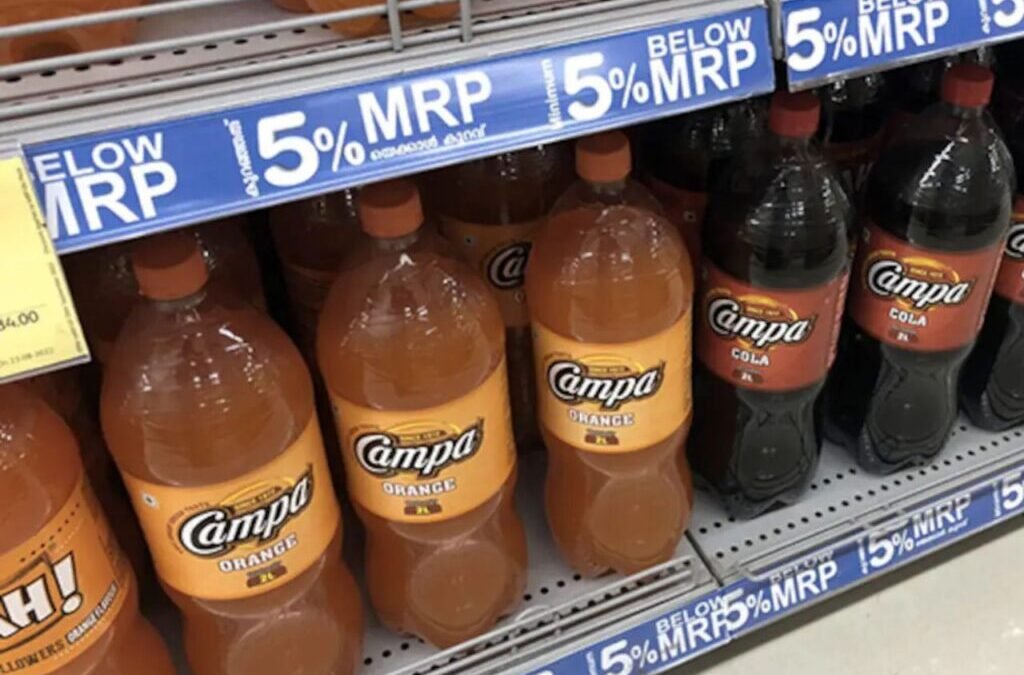
New and emerging players in India’s Rs 60,000-crore soft drinks market are rapidly reshaping competition. Led by Reliance’s Campa and Verlinvest-backed Lahori Zeera, their combined market share has doubled to nearly 15% in Jan–Sep 2025. This surge has directly eaten into Coca-Cola and PepsiCo’s dominance, whose share has slipped to around 85%, signalling a clear shift in consumer preference.
The Reliance Disruption
When Reliance bought Campa Cola for just Rs 22 crore in 2022, no one expected it to shake up the market so strongly. By 2025, the brand will have surged into a Rs 1,000-crore business, growing rapidly and forcing major soft drink giants to rethink their strategies.
Reliance Consumer Products has driven Campa’s explosive growth by using an aggressive, low-price strategy. Revenue jumped from Rs 400 crore to Rs 1,000 crore in FY25, a 150% surge. By selling 200ml bottles at just Rs 10, far cheaper than rival brands, and pricing family packs 30–40% lower, the company rapidly expanded Campa’s reach and market share.
The strategy extends beyond pricing. RCPL invested in establishing dedicated bottling plants, including a new facility in Assam in February 2025. The brand secured IPL 2025 co-presenting sponsorship for over Rs 200 crore, replacing Coca-Cola’s Thums Up in cricket’s most premium marketing slot. This visibility, combined with Reliance’s vast retail infrastructure spanning JioMart, Reliance Fresh, and Reliance Smart, creates unparalleled distribution reach.
Lahori Zeera’s Rs 530-Crore Success Story
While Campa revives cola nostalgia, Lahori Zeera has created an entirely new category within India’s beverage landscape. Founded in 2017 by three cousins, Saurabh Munjal, Saurabh Bhutna, and Nikhil Doda, with just Rs 1 crore capital, this Punjab-based brand has grown into a Rs 535 crore revenue business by FY2025, targeting Rs 800 crore in FY2026.
The numbers tell a remarkable growth story. Revenue surged 47% from Rs 212 crore in FY2023 to Rs 312 crore in FY2024, while profits tripled to Rs 22.5 crore. Manufacturing capacity expanded from 96,000 bottles daily in 2017 to over 5 million bottles daily across three plants in Punjab, Gujarat, and Lucknow, with plans to scale to 10 million bottles through strategic co-packing partnerships.
In May 2025, Lahori raised Rs 200 crore from Motilal Oswal Wealth at a valuation of Rs 2,800 crore a threefold increase from its 2022 valuation. This capital supports expansion into 18 states covering 500,000 retail outlets through 2,000+ experienced beverage distributors. The founders retain 78.8% equity, maintaining strategic control while pursuing ambitious growth targets.
Moreover, the brand is also expanding internationally, with a soft launch planned in the UAE in the coming years, positioning Lahori as a global ambassador for Indian flavours. The UAE offers an ideal testbed for Lahori’s global ambitions, both for carbonated and still drinks.
Defensive Strategies Emerge
The disruption hasn’t gone unnoticed. Coca-Cola’s Global President and CFO, John Murphy, acknowledged in January 2025 that India’s local beverage brands were performing exceptionally well. Both multinationals are deploying defensive strategies to protect market share.
Coca-Cola’s 8–12% price cuts, wider returnable glass bottle push, and 1.5-million rural outlet expansion show a clear volume-defence strategy. Varun Beverages counters with 4–5 new plants, 25%+ capacity expansion, and 4 million store reach, focusing on affordable SKUs to protect growth and sustain operating margins.
Tata Consumer Products, offering beverages through Tata Gluco Plus, initially priced its products 30% higher than competitors and 20% above multinationals. Campa’s aggressive retailer margins forced Tata to adjust pricing to maintain market viability.
From Duopoly to Diversity
The broader market context makes this disruption particularly significant. India’s non-alcoholic beverage market is projected to reach ~Rs 1.5 lakh crore by 2030, up from Rs 67,100 crore in 2019. The carbonated soft drinks segment, valued at around Rs 38,400 crore, expects 5% annual growth through 2027, adding Rs 1,900-2,000 crore yearly.
Conclusion
India’s soft drinks market is undergoing its biggest shift in decades. With Campa and Lahori rewriting pricing, distribution, and consumer expectations, global giants can no longer rely on legacy dominance. As regional flavours rise and affordability reshapes demand, the industry is moving from a predictable duopoly to a dynamic, innovation-driven battlefield that benefits consumers the most.
Written by Abhishek Singh
Disclaimer

The views and investment tips expressed by investment experts/broking houses/rating agencies on tradebrains.in are their own, and not that of the website or its management. Investing in equities poses a risk of financial losses. Investors must therefore exercise due caution while investing or trading in stocks. Trade Brains Technologies Private Limited or the author are not liable for any losses caused as a result of the decision based on this article. Please consult your investment advisor before investing.
The post ₹60,000 Cr Market: Are Campa and Lahori Zeera triggering major shift in India’s soft drinks market appeared first on Trade Brains.