
Synopsis: Growing disruptions across a key global aviation corridor are forcing airlines to rethink long-standing routes. As uncertainty rises and travel patterns begin to shift, attention is slowly moving toward alternative transit points. A new possibility is emerging, but it remains early and far from fully developed.
Air travel between Europe and Asia is facing fresh disruption as parts of the Middle East airspace turn uncertain, forcing airlines to reroute flights and rethink long-established paths. This corridor has long carried millions of passengers every year, making it one of the most important in global aviation. But as this system shows signs of strain, a key question is beginning to emerge, could another city like Delhi step in if the disruption continues?
What’s Happening Now?
The current situation across the Middle East shows a rapidly changing and highly uncertain airspace environment. As of March 13, 2026, according to Flightradar24, several countries in the region had imposed partial or complete airspace restrictions, with operations allowed only under strict conditions. Bahrain’s airspace remained closed for most flights, with departures allowed only on specific routes and with prior permission. Qatar also kept its airspace closed for overflights, while allowing limited arrivals and departures through defined waypoints, again requiring prior approval. Similarly, Israel’s airspace was officially closed, although some flights continued to operate with special permission, indicating a partially functional system rather than a complete shutdown.
Several other countries enforced stricter measures. Iran and Iraq imposed broad airspace closures, with only limited exceptions in Iran and a total shutdown in Iraq. Kuwait and Syria also maintained significant restrictions, while Saudi Arabia closed specific areas near conflict zones. The United Arab Emirates introduced controlled access through emergency air traffic systems, limiting how flights could operate within its airspace. These restrictions were time-bound but frequently updated, reflecting the fluid nature of the situation.

On March 16, Emirates had to cancel several flights and reroute aircraft mid-air following a drone attack near Dubai’s airport. This highlights how even the most established aviation hubs in the region are being affected, with disruptions now extending beyond airspace restrictions to airport operations.
As of March 17, according to Flightradar24, conditions remained unstable despite some signs of reopening. Airspace across the region, from Israel to the United Arab Emirates, continued to face intermittent closures due to ongoing missile and drone activity in major cities. Airlines were forced to either cancel flights or reroute them in real time, leading to widespread disruption across global flight networks. The situation escalated further when Israel and the United States carried out strikes on Iran, adding to the uncertainty.

Why The Middle East Became The Euro-Asia Connector
The Middle East’s rise as the primary bridge between Europe and Asia is often attributed to geography, but its dominance is the result of a carefully built aviation ecosystem. Positioned almost equidistant between major economic centres in Europe, Asia and Africa, Gulf cities naturally sit along the shortest flight paths connecting these regions. This makes them ideal stopover points for long-haul journeys, particularly on routes where non-stop travel is either uneconomical or operationally challenging.
However, geography alone did not create global aviation hubs. Over the past two decades, airlines such as Emirates, Qatar Airways and Etihad Airways built highly efficient hub-and-spoke networks that transformed the region into the world’s most important transit corridor. Instead of relying on direct point-to-point routes, these airlines aggregate passengers from multiple origins, funnel them through central hubs like Dubai, Doha and Abu Dhabi, and redistribute them across continents. This model allows airlines to profitably serve a far wider network of cities than traditional long-haul carriers.

Equally important has been the infrastructure and policy environment. Airports in the Gulf were designed specifically for transit, with fast connections, minimal visa friction, and round-the-clock operations. The scale of this ecosystem is reflected in its financial impact. Before the current conflict, the International Air Transport Association (IATA) had projected that the Middle East would account for nearly 17 percent of the global airline industry’s expected USD 41 billion net profit in 2026. Emirates alone has emerged as the world’s largest and most profitable international carrier, with Dubai also becoming a major destination in its own right. The Middle East didn’t just benefit from geography – it engineered global transit.
Where Delhi (GMR) Actually Stands Today
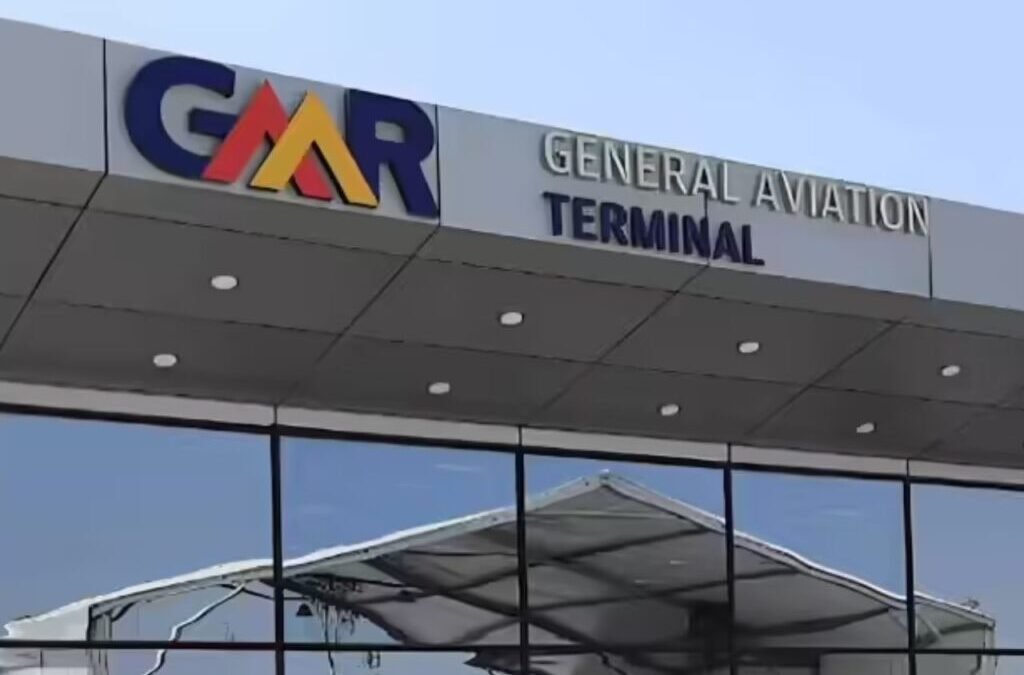
GMR Airports-led Delhi Airport remains one of India’s busiest aviation hubs, supported by a strong base of both domestic and international travellers. In February 2026 alone, the airport handled around 7.0 million passengers, reflecting a 3.6 percent increase compared to the same period last year. This included roughly 5.1 million domestic passengers, which grew by about 5.0 percent year-on-year, while international traffic stood at about 2.1 million, remaining largely flat. Despite global disruptions, monthly passenger traffic has stayed consistently close to 7 million since late 2025, indicating stable demand.
On a year-to-date basis for FY2026, Delhi Airport handled approximately 71.7 million passengers, slightly lower by 0.8 percent compared to the previous year. This dip has largely been attributed to temporary operational disruptions, including changes in airspace conditions and runway upgrades. However, the broader trend still shows resilience, with international passenger numbers reaching around 19.8 million, marking the highest levels recorded so far for this period.

Operationally, the airport continues to expand its capacity and efficiency. Aircraft movements in February stood at nearly 38,700, reflecting a 6.7 percent increase year-on-year, while total movements for the year so far crossed 418,000. At the same time, Delhi Airport has also strengthened its global connectivity, now linking to about 159 destinations worldwide, including 75 international routes. It has also climbed the global rankings, becoming the sixth busiest airport globally and fifth in the Asia-Pacific region in terms of seat capacity during February 2026.
Beyond passenger traffic, cargo and infrastructure developments are also supporting growth. Delhi remains India’s largest cargo handling airport, crossing more than 1.05 million metric tonnes of cargo in FY2026 so far, a growth of around 4.0 percent year-on-year. At the same time, capacity upgrades such as runway improvements, higher duty-free limits, and enhanced passenger services are aimed at improving the transit experience. While these developments strengthen Delhi’s position as a major aviation hub, its traffic profile still remains largely driven by origin and destination demand rather than transit passengers.
Could This Become an Opportunity?
Before the recent escalation, the Middle East was firmly established as the primary bridge between Europe and Asia. In December 2025, Dubai International Airport remained the world’s busiest airport, handling around 5.50 million seats, reflecting a 4 percent increase year-on-year. The region had become a critical part of global aviation, supported by strong airline networks, efficient transit systems, and well-developed infrastructure. European carriers had already been avoiding Russian airspace since 2022, which made the Middle East an even more important corridor for long-haul travel between Europe and southern Asia.
However, the current conflict is now disrupting this system. Parts of the Middle East airspace have become difficult to navigate, forcing airlines to take longer and less efficient routes. This is increasing both travel time and fuel consumption. At the same time, the spread between jet fuel and crude oil prices has widened, partly because nearly 20 percent of the world’s jet fuel supply passes through the Strait of Hormuz, where shipping activity has slowed. These changes are making long-haul operations more expensive and less predictable for airlines.

The impact is not limited to fuel costs. Longer flight durations can push pilots and cabin crew beyond regulated duty hours, requiring airlines to deploy additional crew or introduce technical stops. Each stop adds airport and ground handling costs while also increasing operational complexity. Aviation insurance costs are also rising as insurers factor in higher risks, and oil price volatility linked to regional instability is adding further pressure. According to OPSGROUP, the traditional Europe-Asia corridor through the Gulf is no longer functioning smoothly, with airlines rerouting either north through the Caucasus and Afghanistan or south via Egypt, Saudi Arabia and Oman.
In the months leading up to the conflict, Delhi was already beginning to see a gradual rise in its relevance as a transit point between Europe and Asia. Supported by India’s fast-growing aviation market and increasing international travel demand, the airport was expanding its global connectivity across Europe, the Middle East and Southeast Asia. While domestic traffic continued to dominate overall volumes, international transit activity was quietly gaining traction.
This trend was particularly visible in Europe-Asia transfer traffic. Between September 2024 and August 2025, Delhi Airport handled over 6.7 lakh transit passengers on these routes, up from about 4.98 lakh in the previous year. The growth was evenly distributed, with East-to-West traffic rising by 34 percent and West-to-East traffic increasing by 35 percent. This indicates that Delhi was already starting to build a base in a segment traditionally dominated by Middle Eastern hubs.
Indian carriers were at the centre of this shift. Air India carried nearly two-thirds of these transit passengers, while IndiGo accounted for around one-quarter. Although the overall scale remains significantly smaller than Gulf hubs, this steady increase suggests that Delhi was gradually developing the network and traffic base required to support transit operations.
The ongoing disruption in the Middle East now adds a new dimension to this trend. What was earlier a gradual build-up could potentially accelerate if airlines continue to face challenges operating through traditional Gulf corridors. In such a scenario, Delhi’s existing transit base, combined with its growing connectivity, could position it as an emerging alternative for Europe-Asia routes, even if not an immediate replacement.
The key question, however, is whether Delhi has the ecosystem required to scale this opportunity – and what would need to change for it to truly compete with established global transit hubs.
What Needs To Change For Delhi to Win
For Delhi to turn this opportunity into real growth, the most important factor will be building a strong airline experience, similar to what Middle Eastern carriers have achieved. The rise in transit traffic so far has largely been led by Air India, but to compete globally, the airline will need to match the quality offered by leading international carriers. Airlines such as Emirates and Etihad Airways are known for their high service standards, comfortable cabins, reliable schedules, and consistent passenger experience. For Delhi to become a serious transit hub, Air India will need to deliver a similar level of quality across long-haul routes.

The transit experience itself also needs to improve. Leading hubs have built their success by making connections simple and stress-free, where passengers can move quickly between flights without confusion or delays. For Delhi to match this, transfers need to be faster, processes need to be simpler, and flights need to be better coordinated. Industry experts also highlight that smoother terminal transfers, better scheduling, and stronger coordination between airlines will be key.

Infrastructure will also have to keep pace with growth. As more transit passengers pass through Delhi, the airport must ensure that terminals, runways, and ground operations can handle higher volumes without delays. At the same time, expanding airline networks and adding more international routes will help build a stronger transit system.
In the end, this opportunity is not just about location or rising traffic. It is about building a high-quality and reliable travel experience that passengers can trust. Opportunity exists, but execution will decide the outcome.
-Manan Gangwar
Disclaimer: The views and investment tips expressed by investment experts/broking houses/rating agencies on tradebrains.in are their own, and not that of the website or its management. Investing in equities poses a risk of financial losses. Investors must therefore exercise due caution while investing or trading in stocks. Trade Brains Technologies Private Limited or the author are not liable for any losses caused as a result of the decision based on this article. Please consult your investment advisor before investing.
The post Will GMR’s Delhi Airport Become the Europe-Asia Transit Hub, If Middle East Airspace Remains Unstable? appeared first on Trade Brains.