
Synopsis: Five of India’s biggest internet IPOs have now been listed long enough for investors to judge them beyond listing hype. The results are brutally different. While Eternal (Zomato) has delivered over 100% returns since its IPO, Nykaa remains down more than 30%, and Swiggy trades below its issue price. Despite this, ICICI Securities believes India may just be entering the biggest phase of digital consumption growth yet.
India’s Internet Boom Is No Longer About Storytelling
For years, Indian internet IPOs were sold on the same pitch: digital India, rising internet penetration, young consumers, and long-term growth. But by 2026, markets will finally separate companies with durable business models from companies still burning cash to defend market share. The result is one of the widest performance divergences ever seen inside a single sector.
The Winners Have One Thing in Common
Eternal, formerly Zomato, listed at ₹115 in 2021 and now trades near ₹246, a return of roughly 100%. The company’s Q4 FY26 profit surged 346% as Blinkit scaled aggressively and food delivery margins improved to 4.4% of GOV. The market stopped valuing Zomato as a cash-burning startup and started valuing it as infrastructure for urban consumption.
The Other Side of the Story
Le Travenues Technology, which operates Ixigo, may be the most under-discussed internet success story in India right now. Despite being listed at ₹138, the stock ended at the listing day close of ₹169, and has been muted since last year, and the credits go to the recent geopolitical instability
However, the difference is market positioning. Ixigo controls nearly 51% of India’s online rail-ticketing ecosystem and benefits from massive user stickiness. Railway distribution at scale is not easy to replicate, which gives the company something markets reward heavily: defensibility.
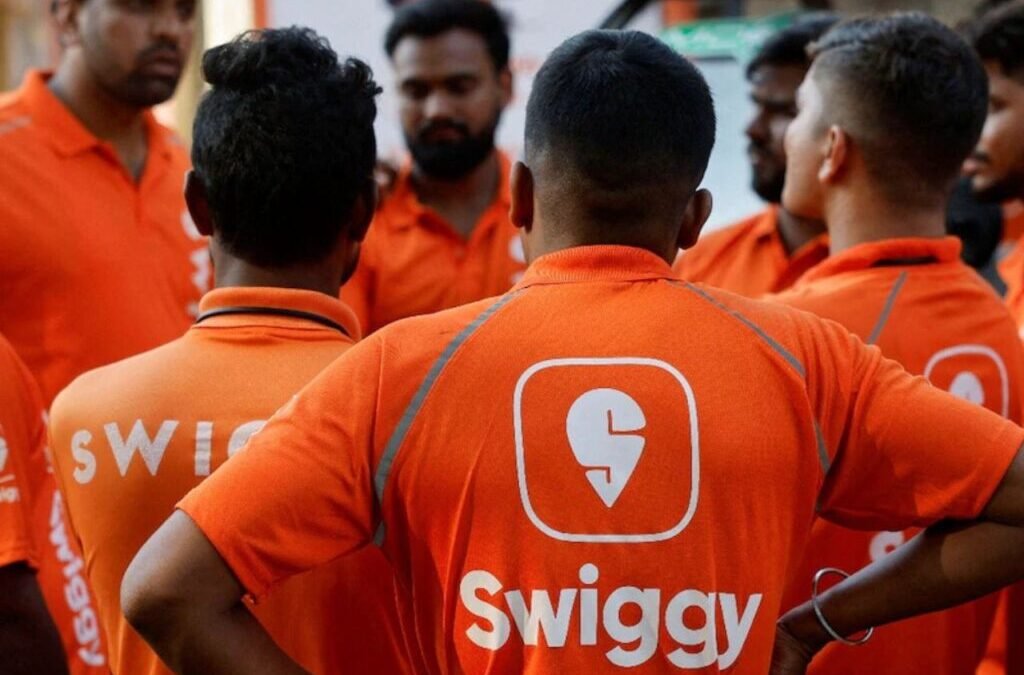
FSN E-Commerce Ventures, which operates Nykaa, tells the opposite story. The stock listed at ₹2,018 pre-split is valued at ₹367 post-split and now trades near ₹273, down almost 30.78%. Swiggy, listed at ₹412, is also trading roughly 38% below its IPO price despite strong brand recall and quick-commerce expansion.
Even Unicommerce eSolutions, despite reporting 52% revenue growth and international profitability across six markets, still trades 54.63% below its IPO price. The market is no longer rewarding “internet company” as a category. It is rewarding pricing power, monopoly positioning, and visible profitability.
Why ICICI Securities Is Still Bullish
According to a recent report highlighted by Financial Express, ICICI Securities believes India may now be entering the same per-capita income phase that triggered China’s digital consumption explosion between 2006 and 2012.
The brokerage expects: India’s e-commerce GMV to touch $214 billion by FY30, Food delivery to become a $20–26 billion market, Online travel (OTA) to grow at a 14% CAGR over the next few years
The structural logic is simple. Rising disposable incomes, urbanisation, UPI adoption, smartphone penetration, and lower-friction digital infrastructure are pushing India deeper into platform-led consumption, exactly the transition China witnessed during its internet boom years.
The Market Is Now Choosing Platforms, Not Apps
The biggest lesson from the last four years is that not every internet company becomes a compounding platform. Food delivery with logistics density can scale profitably. Rail-ticketing ecosystems can create natural monopolies. SaaS infrastructure businesses can build sticky enterprise relationships.
Key Risks Investors Should Not Ignore
Despite the long-term digital opportunity, risks remain significant. Internet businesses still face intense competition, high customer acquisition costs, and pressure to maintain growth while turning profitable. Premium valuations can correct sharply if earnings disappoint, while regulatory changes around data, pricing, labour practices, or platform dominance could directly impact margins and scalability across multiple digital business models.
Market Takeaway
India’s digital consumption story is very real. The sector itself is not the problem anymore. The problem is valuation discipline and business quality. The next phase of internet investing may look very different from the previous one. Markets are no longer rewarding growth at any cost. They are rewarding platforms with scale advantages, profitability visibility, and customer stickiness.
And that explains why one internet IPO became a multibagger while another destroyed three-fourths of investor wealth, even though both were sold under the exact same “digital India” narrative.
Disclaimer: The views and investment tips expressed by investment experts/broking houses/rating agencies on tradebrains.in are their own, and not that of the website or its management. Investing in equities poses a risk of financial losses. Investors must therefore exercise due caution while investing or trading in stocks. Trade Brains Technologies Private Limited or the author are not liable for any losses caused as a result of the decision based on this article. Please consult your investment advisor before investing.
The post Why Is ICICI Securities Bullish on Eternal, Nykaa, Swiggy, Ixigo and Other New-Age Stocks? appeared first on Trade Brains.