
The brands that publish consistently aren’t always the most creative—they’re the most organized. When your best visuals are scattered across drafts, re-exports, and “final_v7” folders, the bottleneck isn’t ideas; it’s retrieval, approval, and reuse.
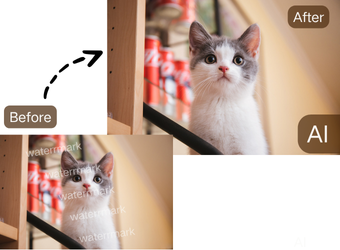
That’s why a simple workflow upgrade—cleaning and standardizing assets with ai watermark remover as part of your weekly publishing routine—often improves output faster than hiring another designer. Supawork describes this tool as free and no sign-up, which makes it easy to add to a repeatable process without introducing new friction.
The hidden cost of messy assets
A messy library creates invisible delays. Someone needs to ask where the original file is, someone needs to confirm which export is approved, and someone needs to redo a crop or remove an overlay before it can go live. None of this work looks like “content creation,” but it consumes the same time and attention as writing, editing, and design.
Over a month, this turns into a predictable pattern: you post less, you reuse less, and you default to “quick” content that’s easy to publish but weak in performance. Asset hygiene breaks that pattern by making reuse the default.
What asset hygiene actually looks like (in practice)
Asset hygiene isn’t a fancy system. It’s a set of small habits that make publishing predictable:
A clean library has one source of truth for each core visual, clear naming, and version control that doesn’t rely on memory. The goal is that any teammate can find an asset, understand its status, and republish it in minutes—without reopening a design tool or asking in Slack.
This matters most in teams that publish daily, work with freelancers, or manage multiple channels (organic, paid, email, website). The more channels you run, the more painful messy assets become.
Why “clean first” beats “create more”
Many teams try to solve slow publishing by generating more content. That can work short-term, but it usually increases chaos: more files, more variants, more confusion.
Cleaning first does the opposite. It reduces the noise in your library, so your best assets become easy to reuse. Once reuse becomes easy, you can publish more without making your workflow heavier.
Motion is the fastest way to make old winners feel new
After you fix the library problem, the next leverage point is format. Motion consistently earns attention in feeds, and you don’t need a full video team to create it. The simplest workflow is to convert your cleaned, proven visuals into short clips using image to video ai as the production shortcut.
Supawork’s image-to-video page highlights high-definition output, watermark-free videos, and a no-sign-up workflow, and it shows simple settings like resolution (720p/1080p), duration (4s/8s), and movement amplitude.
Those controls are useful because they let a team standardize “what a refresh clip looks like,” so your brand doesn’t feel random from post to post.
A different way to think about short videos
Most marketers approach video like storytelling: beginning, middle, end. But short-form social often rewards something else—clarity.
If your goal is weekly publishing velocity, treat each short clip as a single visual sentence:
- One subject.
- One movement.
- One message.
That’s it. When motion is subtle, and the message is singular, your content looks native, feels intentional, and stays easier to produce at scale.
The “two-lane” system that keeps teams fast
The best asset workflows separate production into two lanes:
Lane 1 is the library lane. This lane keeps assets clean, approved, and reusable. It’s where you fix the “we can’t find the file” problem and prevent preventable rework. This is where a consistent cleanup step with an ai watermark remover is most valuable, because it reduces the “small issues” that slow publishing right before deadline.
Lane 2 is the distribution lane. This lane turns approved assets into platform-native outputs—especially motion variants—so your content doesn’t look stale. This is where image to video ai fits, because it turns your best static winners into attention-friendly clips without rebuilding the creative from scratch.
Separating these lanes is what makes the system feel different from typical “repurposing” advice. You’re not just recycling content; you’re building operational reliability.
What to measure (so hygiene doesn’t feel like busywork)
Asset hygiene is only valuable if it creates visible outcomes. Instead of measuring “how tidy the folder is,” measure publishing speed and reuse:
Track how long it takes to ship a post from “idea” to “published.” Track how often you reuse a proven asset versus creating from scratch. Then watch the second-order effects: more consistent posting, more consistent testing, and fewer last-minute production emergencies.
When teams adopt an asset hygiene mindset, they usually discover a surprising truth: a clean library produces more creative freedom, because you’re no longer spending your best hours on avoidable rework.
Closing
There will always be new platforms, new formats, and new trends—but most content teams lose time in the same place: messy assets that can’t be reused quickly. Fix the library first, then add motion as the multiplier. When your workflow makes it easy to reuse what already works, publishing stops feeling like a sprint and starts feeling like a system.
The post The Asset Hygiene Advantage: Why Clean Libraries Create More Content appeared first on Trade Brains Features.