
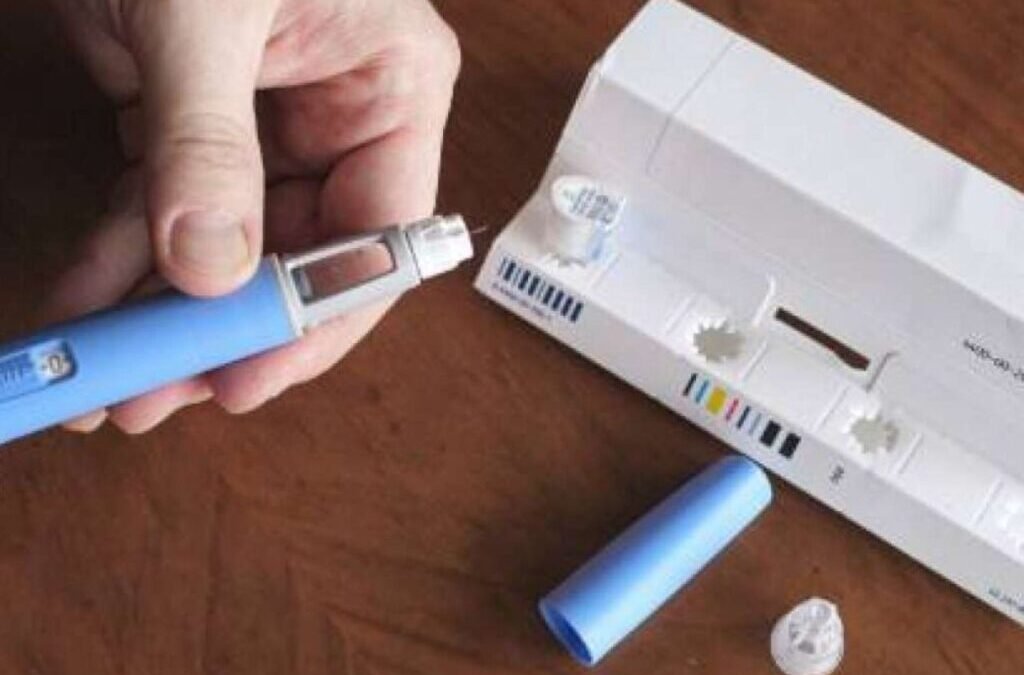
Synopsis: India’s semaglutide market is opening up rapidly after patent expiry, with sharp price cuts and multiple generic launches. Brokerages see Sun Pharma and Torrent Pharma among the strongest contenders, while firms such as Lupin, Eris, Zydus, Dr Reddy’s, Natco, Alkem and Glenmark are pursuing distinct pricing and format strategies.
India’s semaglutide market has seen heightened competition, with the expiration of the patent causing a flood of generics at discounted prices. The prices vary between Rs 1,290 and Rs 8,000 monthly. Analysts at Goldman Sachs, Macquarie, and CLSA rate Sun Pharma and Torrent Pharma highly to benefit from the large market size and volumes.
Price disruption has opened up the market
The semaglutide market in India has started a new chapter after the patent expiry of the drug. Several local pharmaceutical companies have started launching generic versions of the drug at significantly discounted prices. The most notable change in the market is the price factor. The prices of the generic versions of the drug range from Rs 1,290 to Rs 8,000 per month, whereas the prices of the innovator drug range from Rs 8,800 to Rs 16,400.
The initial wave of generic drug launches has witnessed a divide between vial and pen prices. Vials have been found to be the cheapest form of the drug. Natco, Eris, and Glenmark have launched their versions of the drug at prices ranging from Rs 1,290 to Rs 1,760 per month. Glenmark has launched a weekly dose of the drug at Rs 325, making it one of the cheapest options on the market.
Meanwhile, pen formats are being offered as the more convenient option at a higher cost. Alkem has introduced a once-a-week pen at Rs 1,800/month, Zydus at Rs 2,200, Natco and Eris at Rs 4,000 to Rs 4,500, Dr Reddy’s at Rs 4,200, and Sun at Rs 3,000 to Rs 8,000 based on dose forms. This indicates that they are not targeting the same customer segment but are trying to create their own market niches.
Sun, Torrent, and a few others: Brokerages’ take
Analysts’ reports indicate that although most players are likely to gain from this first round of genericisation, a few are better placed to gain market share. CLSA has said that all players will gain from this first round of genericisation. However, they have identified Sun Pharma and Torrent Pharma as players that will gain a relatively larger market share. This is because they believe that, because of the sharp fall in prices, the market size will grow nearly sixfold to Rs 8,300 crore from Rs 1,400 crore. This potential could be as high as Rs 28,500 crore over time.
Macquarie’s perspective is slightly broader in scope but similar in direction. They think that Torrent Pharma, Sun Pharma, Lupin, and Eris have the best chance to win share in the incremental business. They pointed to the first-mover advantage that Torrent enjoys in the oral form of semaglutide, which differentiates it in a market in which all other launches to date have been injectables. They also pointed to differentiated device strategies adopted by the larger companies, particularly Zydus.
Goldman Sachs was more concerned with the size of the price reset and the potential expansion in demand. They pointed to the fact that vial pricing has come in at almost 90% discounts to existing brand prices, with pen pricing having seen smaller discounts but still expected to be the more popular format. They also estimate that there will be a significant volume acceleration post-genericisation and estimate the Indian GLP-1 market to be $1.5 billion by FY31.
Market segmentation may decide the winners
There is now a discernible segmentation in the semaglutide market in India. Companies like Alkem, Natco, Eris, and Glenmark appear to be competing in the low-cost disruption space, with aggressive pricing in vials and relatively low-cost pens driving access-led growth.
Zydus Life Sciences, on the other hand, appears to be in the mid-tier segment, with multiple products and prices that are higher than the most competitive ones but lower than some of the premium ones. In contrast, Sun Pharma and Dr Reddy’s appear to be competing in the premium generics space, where factors like convenience, branding, and physician and patient support may be important.
This may be important, as brokerage reports suggest that the winner may not be decided by prices alone. The top three to four companies may end up taking market share, with differentiation likely to be on factors like device strategy, oral forms, patient engagement, and execution strength. For example, Dr Reddy’s has already launched SEMAKARE with Nestlé, while Sun Pharma has already entered the diabetes and weight management markets.
Collectively, the early brokerage perspective on the issue indicates that Sun Pharma and Torrent Pharma appear to be gaining traction as the most popular stocks in the race in India, followed by companies like Lupin, Eris, Zydus, Dr Reddy’s, Natco, Alkem, and Glenmark in their own ways. The race, as said, is in its initial stages, but considering the discounts, innovations, and the potential market size, the opportunity in semaglutide is expected to be one of the most watched in the pharmaceutical space in India.
Disclaimer: The views and investment tips expressed by investment experts/broking houses/rating agencies on tradebrains.in are their own, and not that of the website or its management. Investing in equities poses a risk of financial losses. Investors must therefore exercise due caution while investing or trading in stocks. Trade Brains Technologies Private Limited or the author are not liable for any losses caused as a result of the decision based on this article. Please consult your investment advisor before investing.
The post Pharma Stocks: Which Company Is Likely to Lead India’s Weight-Loss Injection Market? appeared first on Trade Brains.