
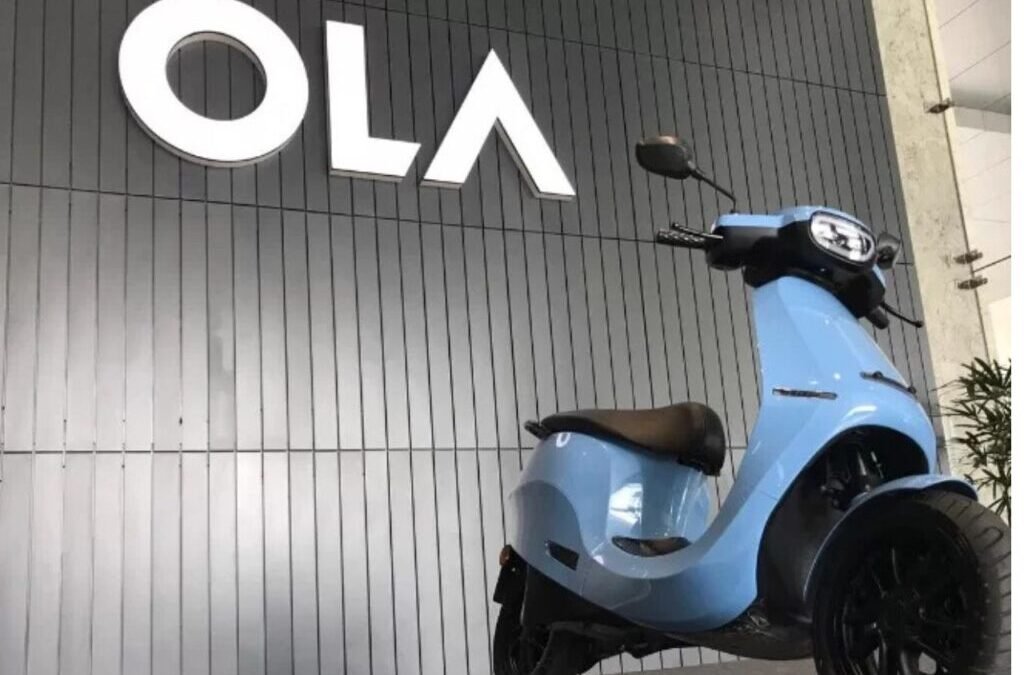
Synopsis: Ola Electric unveils LFP Gen1 46100 battery cell, cheaper/safer than NMC 4680 Bharat Cell, set for scooters/three-wheelers from Q2 2026 to slash EV costs via Gigafactory scale-up.
Ola Electric has taken a big step in its battery journey. On Monday, founder and CMD Bhavish Aggarwal announced that the company’s new LFP battery cell is ready. This could lower the cost of electric vehicles significantly across India.
Ola Electric Mobility stock, with a market capitalisation of Rs. 12,637 crores, fell Rs. 28.65, down 1.85 per cent from its previous closing price of Rs. 29.19. Furthermore, the stock over the past year has given a negative return of 43.6 per cent.
Aggarwal posted a photo of the new cell on X, simply captioned: “Guess what!” The cell is called the LFP Gen 1. It uses the 46100 format, 46 mm wide and 100 mm tall. That makes it bigger than Ola’s current 4680 Bharat Cell.
The cell uses LFP chemistry, lithium iron phosphate, instead of the nickel-based NMC chemistry in the current Bharat Cell. LFP cells are cheaper to make, last longer, and carry far less fire risk. However, they store slightly less energy by weight.
LFP cells cost roughly 20–30% less per unit of energy than NMC cells. Therefore, Ola can pass those savings on to customers. The company already offers buyback schemes and service guarantees to drive EV adoption. Cheaper cells add another layer of affordability.
LFP also suits India’s conditions well. It cuts reliance on imported nickel and cobalt. Furthermore, it aligns with the government’s Make in India goals and the PLI incentive scheme, which Ola is already passing on to buyers of its motorbikes.
Aggarwal said thousands of vehicles powered by Ola’s 4680 cells are already on the road. They have collectively covered millions of kilometres in real-world conditions. The new LFP cell will start entering products next quarter, likely between July and September 2026.
Ola’s Gigafactory in Krishnagiri, Tamil Nadu, is the backbone of this push. The plant currently runs at around 2.5 GWh of capacity and is scaling toward 6 GWh. It handles everything in-house from electrode production to final cell assembly.
In February 2026, Ola’s Q3 shareholder letter said the 46100 LFP cell was 12–24 months away. Aggarwal’s announcement suggests the company has moved much faster than expected.
The Battery Innovation Centre in Bengaluru supports this work. Over 200 scientists and engineers work there. Together, they hold around 400 patents across multiple battery chemistries and formats.
Ola now has two parallel cell lines in the works. The high-performance 4680 NMC cell powers premium scooters and the Roadster X+ motorcycle. The new LFP 46100 cell targets affordable scooters, three-wheelers, and home energy storage.
This mirrors the strategy used by Tesla and Chinese battery leaders like CATL and BYD. Ola’s Shakti home battery system already ships in 1.5 to 9.1 kWh packs. LFP cells will likely expand that range further at lower prices.
No official specs, such as exact energy rating or charge speed, have been released yet. Still, the physical prototype confirms the cell is real. Aggarwal put it plainly: the End ICE Age will be built not just with vehicles, but with the full energy stack.
The post Ola Electric unveils its new LFP battery cell that could make EVs cheaper for millions appeared first on Trade Brains.