
Austin, TX, USA, June 04, 2025 (GLOBE NEWSWIRE) — Custom Market Insights has released a new research report called “Passenger Information Display System Market Size, Trends and Insights By Display Type (LCD Display System, LED Display System, Others), By Transportation Mode (Roadways, Railways, Airways), By Component (Hardware, Software, Services), and By Region – Global Industry Overview, Statistical Data, Competitive Analysis, Share, Outlook, and Forecast 2025–2034“ in its research database.
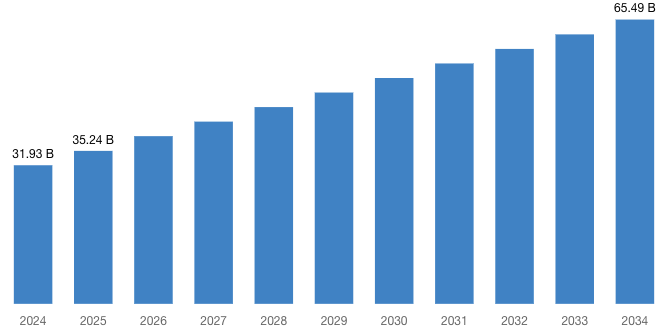
“According to the latest research study, the demand of the global Passenger Information Display System Market size & share was valued at approximately USD 31.93 Billion in 2024 and is expected to reach USD 35.24 Billion in 2025 and is expected to reach a value of around USD 65.49 Billion by 2034, at a compound annual growth rate (CAGR) of about 6.05% during the forecast period 2025 to 2034.”
Click Here to Access a Free Sample Report of the Global Passenger Information Display System Market @ https://www.custommarketinsights.com/request-for-free-sample/?reportid=18404
Passenger Information Display Market Overview
According to industry experts at CMI, the implementation of new strategies and technologies by manufacturers presents lucrative opportunities for players in the Passenger Information Display Market during the forecast period. Furthermore, we expect the growing significance of organized retailing to drive the market’s future growth.
Passenger Information Display Market Growth Factors and Dynamics
- Integration of AI and Predictive Analytics: The usage of AI along with predictive analytics is transforming the passenger information systems as it enables smarter and real-time communication. These technologies let the systems analyze the large volumes of the data and forecast delays, traffic congestion, or service changes beforehand. Travelers are getting valuable, proactive alerts and some exciting backup travel options, which enable them to make good decisions and minimize frustration. And of course, AI really helps transit workers find the best routes and schedules based on how people are actually using buses and trains nowadays. This trend enhances the passenger experience and increases operational efficiency, as it is expected that AI-powered systems will create investment opportunities in smart transportation infrastructure globally.
- Cloud-Based Content Management Systems: Cloud-based platforms are becoming the backbone of modern passenger information display systems, enabling centralized control, remote management, and seamless updates across multiple transit locations. Such systems support real-time content delivery along with multilingual delivery and easy scalability without any complex hardware upgrades. The system assists transit agencies in updating schedules, alerts, and announcements from a central dashboard. It improves the efficiency and responsiveness of the transit agencies. The cloud infrastructure further enhances the data security, backup abilities, and integration with the IoT devices. As cities swivel toward moving smarter with technology, the cloud storage games are heating up really fast. Suddenly, passenger information displays are experiencing significant growth and generating a lot of excitement in the market.
Request a Customized Copy of the Passenger Information Display System Market Report @ https://www.custommarketinsights.com/request-for-customization/?reportid=18404
- Multilingual and Accessible Display Solutions: As public transit is becoming global and diverse, there has been a rising demand for multilingual and accessible passenger information display systems. These systems cater to a wide range of users by supporting multiple languages, voice announcements, visual icons, and features for the visually or hearing impaired. Accessibility compliance is becoming a regulatory requirement in many countries, pushing transit agencies to adopt inclusive solutions. Support of multiple languages also enhances travel experiences for tourists from around the world and cuts down on confusion and raises safety levels. This trend indicates that many people support making public transportation fair and inclusive, and display technology for transit buses and subways is regarded as a crucial area for market growth.
- Eco-Friendly and Energy-Efficient Displays: With the increasing emphasis on going green, systems that provide information to passengers while being energy-efficient and environmentally friendly are becoming highly sought-after market items. Technologies like e-paper displays, LED backlighting, and solar-powered signage offer reduced energy consumption while maintaining high visibility and reliability. These solutions not only lower operational costs but also align with green transportation initiatives and government regulations promoting environmentally responsible infrastructure. Bus and rail systems are really committing increasingly to having displays that are going to last a long time, that can be recycled when they wear out, and that use very little power from the grid. As climate consciousness rises globally, the demand for sustainable display technology is becoming a major driver of innovation and investment in the transit communications sector.
- Growing Adoption of Interactive and Touchscreen Displays: Interactive big screens and touch panels that provide information are significantly transforming how commuters access and organize travel-related information. The changing gestures of people using computers and screens to find the information they need are quite impressive these days. These systems offer real-time trip planning, wayfinding assistance, ticket booking, and service alerts through user-friendly interfaces. Touch-enabled kiosks and wall-mounted displays enhance passenger engagement by offering personalized, on-demand information, especially in busy transit hubs like airports and metro stations. Adding integration with mobile apps, scanning with QR codes, and making use of contactless services can greatly enhance the user experience. As digital engagement becomes a key metric for public transportation systems, the demand for interactive display technologies is rapidly increasing, fueling market growth and redefining modern commuter communication strategies.
- Expansion of Smart City Initiatives: The big push for smart cities is definitely spurring faster and wider adoption of these fancy new systems that give real-time information to passengers. These displays are vital parts of modern infrastructure for moving people around. Being able to instantly pass information along to drivers, give up-to-date details on traffic, and work nicely with all parts of the city on emergency notices as well as information about things like the weather makes them indispensable. Governments and planners are really putting in a good effort by investing in smart transportation systems, which aim to get all the vehicles and communications humming along smoothly. They work on things like connectivity and fewer traffic jams, and similarly, they use data in smart ways that make decisions smarter rather than just relying on old-fashioned guesses. As smart cities reach for better quality of life by putting in pieces of technology, passenger information systems are growing to cohere together, changing and bending to fit people’s needs more and more. This trend is crucial for ensuring that the display system market grows steadily and is filled with innovative new ideas.
Report Scope
| Feature of the Report | Details |
| Market Size in 2025 | USD 35.24 Billion |
| Projected Market Size in 2034 | USD 65.49 Billion |
| Market Size in 2024 | USD 31.93 Billion |