
Austin, TX, USA, June 04, 2025 (GLOBE NEWSWIRE) — Custom Market Insights has published a new research report titled “Digital Legacy Market Size, Trends and Insights By Storage Capacity (upto 500 MB, 500 MB to 5 GB, 5 GB to 10 GB, upto 30 GB), By End User (Individual, Group, Family), By Application (Media, Entertainment, Healthcare, Others), and By Region – Global Industry Overview, Statistical Data, Competitive Analysis, Share, Outlook, and Forecast 2025–2034“ in its research database.
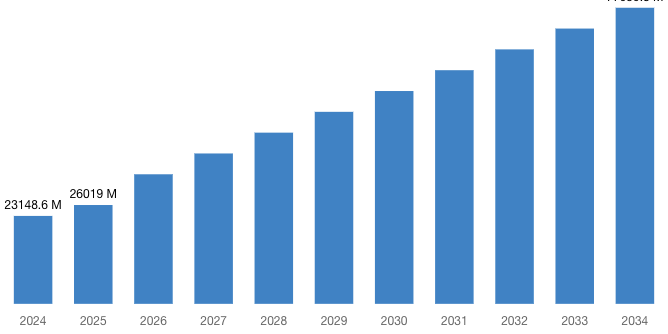
“According to the latest research study, the demand of global Digital Legacy Market size & share was valued at approximately USD 23,148.6 Million in 2024 and is expected to reach USD 26,019 Million in 2025 and is expected to reach a value of around USD 77,959.8 Million by 2034, at a compound annual growth rate (CAGR) of about 12.97% during the forecast period 2025 to 2034.”
Click Here to Access a Free Sample Report of the Global Digital Legacy Market @ https://www.custommarketinsights.com/request-for-free-sample/?reportid=27175
Digital Legacy Market Overview
According to industry experts at CMI, the implementation of new strategies and technologies by manufacturers presents lucrative opportunities for players in the Digital Legacy Market during the forecast period. Furthermore, we expect the growing significance of organized retailing to drive the market’s future growth.
Digital Legacy Market Growth Factors and Dynamics
- Integration of Blockchain Technology: Blockchain is transforming the digital legacy market as it offers immutable and transparent record-keeping for the digital assets. That decentralized system makes digital inheritance documents unquestionably safe from tampering and really builds trust in secure transfers of digital things. Smart contracts streamline inheritance procedures, facilitating the transfer of assets according to predetermined criteria. Start-ups and also major established companies are using blockchain to prove ownership and also make cooperating across systems much quicker and easier. This trend is significantly improving the integrity and transparency of data. And it’s attracting people not just because they really appreciate that stuff, but also because of their vision of privacy. In short, all of this is helping us build at the core of the new generation of digital stuff in terms of estate plans, which is foundationally made from blockchain technology.
- AI-Powered Legacy Management: Artificial intelligence (AI) is revolutionizing digital legacy solutions by automating data categorization, personalized planning, and predictive insights. Using AI definitely helps users manage large amounts of digital content by sorting files, suggesting important preferences for the future, and identifying key accounts to preserve for the long term. Some platforms use AI to make virtual doppelgangers, like talking heads or orators that can send messages after someone has left this world. This approach lets them create a lasting online presence that carries on their legacy, and while it might sound a bit weird and futuristic, it can also feel quite warm and nostalgic at the same time. This trend really makes users’ lives better and keeps things pretty simple when it comes to planning their digital legacy. By integrating AI, providers can offer highly tailored, proactive services, making digital legacy management more intuitive, efficient, and emotionally resonant for users and their families.
Request a Customized Copy of the Digital Legacy Market Report @ https://www.custommarketinsights.com/request-for-customization/?reportid=27175
- Growing Use of Biometric Security: Biometric security features like face ID, fingerprints, and voice authentication are becoming super important in digital will solutions now. These technologies provide secure, user-specific access to sensitive digital assets and ensure that only authorized individuals can manage or retrieve data. Biometrics are gaining popularity due to their ability to prevent fraud, eliminate the need for passwords, and enhance the security of deceased person authentication. As more and more people look for ways to nail down and secure their digital information more reliably, relying less on tricky passwords and annoying security questions, biometric technology is becoming increasingly popular. Such a trend boosts the secure ecosystem for the digital legacies along with building users’ trust. It’s super important because most people have lots of very personal, sensitive documents online now.
- Legal Recognition of Digital Assets: As digital life becomes central to modern living, governments and legal institutions are increasingly recognizing it in estate planning laws. Governments are introducing new legislation and case precedents to define ownership rights, inheritance rules, and data access policies after death. This trend is fostering growth by legitimizing digital legacy planning and encouraging individuals to include digital assets in wills and trusts. Legal recognition also aids service providers in refining their offerings to ensure compliance with the latest standards. As laws evolve and become more established, both users and estate planning professionals are increasingly using these digital platforms to leave their legacies with greater confidence. This increases the use of these platforms, and the market keeps growing and growing.
- Cross-Platform Legacy Management Tools: Digital legacies that are compatible with various systems are currently in high demand because people are managing a wide range of digital footprints, including emails, various social media platforms, different cloud storage services, and apps designed for money management. The new tools are being made for unifying access and planning across various platforms, which ensures the comprehensive and streamlined management of digital estates. These services simplify the process of designating digital heirs, controlling account closures, and transferring ownership regardless of the service provider. The convenience and efficiency of managing all digital assets through a single interface are highly attractive to users. This trend promotes interoperability, reduces complexity, and positions digital legacy tools as essential components of personal digital planning.
- Rising Demand for Posthumous Digital Communication: A growing trend in the digital legacy market is the demand for posthumous digital communication services that allow individuals to schedule messages, emails, or videos to be delivered after death. This feature provides an opportunity to capture significant emotional moments and final goodbyes, or it can convey important personal advice. Innovative platforms are integrating this functionality into their offerings, enhancing the emotional and human aspect of digital legacies. As folks look for meaningful ways to be remembered long after they’re gone and to comfort people who are still left behind, demand for that capability is really going up. This capability adds a unique personal touch to legacy plans and makes digital methods of afterlife planning feel more meaningful and widely accepted by many people.
Report Scope
| Feature of the Report | Details |
| Market Size in 2025 | USD 26,019 Million |
| Projected Market Size in 2034 | USD 77,959.8 Million |
| Market Size in 2024 | USD 23,148.6 Million |