
Austin, TX, USA, Sept. 23, 2025 (GLOBE NEWSWIRE) — Custom Market Insights has published a new research report titled “Car Security System Market Size, Trends and Insights By Vehicle Type (Passenger Vehicle, Commercial Vehicle), By Product (Alarm, Keyless Entry, Immobilizer, Central Locking, Others), By Sales Channel (OEM, Aftermarket), and By Region – Global Industry Overview, Statistical Data, Competitive Analysis, Share, Outlook, and Forecast 2025 – 2034“ in its research database.
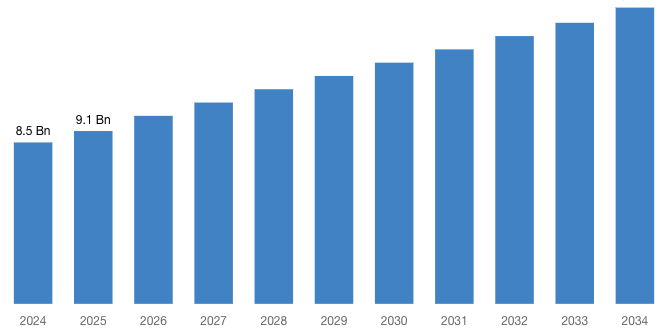
“According to the latest research study, the demand of the global Car Security System Market size & share was valued at approximately USD 8.5 Billion in 2024 and is expected to reach USD 9.1 Billion in 2025 and is expected to reach a value of around USD 15.6 Billion by 2034, at a compound annual growth rate (CAGR) of about 6.3% during the forecast period 2025 to 2034.”
Click Here to Access a Free Sample Report of the Global Car Security System Market @ https://www.custommarketinsights.com/request-for-free-sample/?reportid=73553
Overview
According to industry experts at CMI, an automobile security system is a series of electrical and mechanical devices that work together to keep anyone from breaking into, stealing, or vandalizing a car. It also lets the owner know when something happens and gives them ways to protect themselves. When a security system’s sensors detect a trigger, such as unwanted access, impact, or movement, it sets off alerts that may be heard and seen, as well as immobility or notifications to the owner by remote or wireless technologies. Modern systems monitor doors, trunks, hoods, and even movements within or outside the house to establish distinct safe zones. The growth of the car security system market is ascribed toseveral factor such as increasing urbanization, rising vehicle ownership, technological advancements, increasing product innovation and many others.
Key Trends & Drivers
- Regulatory mandates and safety standards: Safety standards and regulations primarily influence the car security system market. They decide how businesses around the world make, install, and keep up with car security technology. For example, the ISO/SAE 21434 Standard is a safety standard, while UNECE WP.29 Cybersecurity (UN R155) and Software Updates (UN R156) are legislation. The United Nations’ UNECE WP.29 Cybersecurity (UN R155) and Software upgrades (UN R156) standards make it possible for cars to have full systems for handling cybersecurity and software upgrades. OEMs must set up Cyber Security Management Systems (CSMS) and Software Update Management Systems (SUMS) that cover the entire life of the vehicle, from design and production to updates after it is sold. 54 UNECE member countries require new kinds of cars and trucks to meet specified norms. If they don’t, they might not be able to safeguard their reputations, register, or trade. This, in turn, drives the growth of the market.
Request a Customized Copy of the Car Security System Market Report @ https://www.custommarketinsights.com/request-for-customization/?reportid=73553
- Expansion of connected and electric vehicles: One of the main reasons the car security system industry is increasing is because more people are buying connected and electric vehicles (EVs). This is because more people are open to improved connectivity options, and electric vehicles (EVs) are growing more popular all around the world. 27% of the connected auto technology industry is made up of safety and security applications. These include theft prevention, real-time vehicle tracking, emergency response, and remote diagnostics. This study highlights how it is important for different kinds of transportation.
Report Scope
| Feature of the Report | Details |
| Market Size in 2025 | USD 9.1 Billion |
| Projected Market Size in 2034 | USD 15.6 Billion |
| Market Size in 2024 | USD 8.5 Billion |
| CAGR Growth Rate | 6.3% CAGR |
| Base Year | 2024 |
| Forecast Period | 2025-2034 |
| Key Segment | By Vehicle Type, Product, Sales Channel and Region |
| Report Coverage | Revenue Estimation and Forecast, Company Profile, Competitive Landscape, Growth Factors and Recent Trends |
| Regional Scope | North America, Europe, Asia Pacific, Middle East & Africa, and South & Central America |
| Buying Options |