
Synopsis: Reliance is building a large artificial intelligence and hyperscale data centre ecosystem through massive investments, global partnerships and captive green energy. With gigawatt-scale capacity and a Data Centre as a Service model, analysts estimate the platform could generate over 6 billion dollars annually while creating a vertically integrated AI infrastructure powerhouse.
India’s largest conglomerate may be quietly preparing for its next big reinvention, one that could reshape its growth trajectory over the next decade. With massive capital deployment, global partnerships and a strategy that builds on its scale and execution track record, the opportunity could open up a powerful new earnings engine for the group, but could this move really help Reliance generate close to 6 billion dollars in annual revenue?
The New Segment
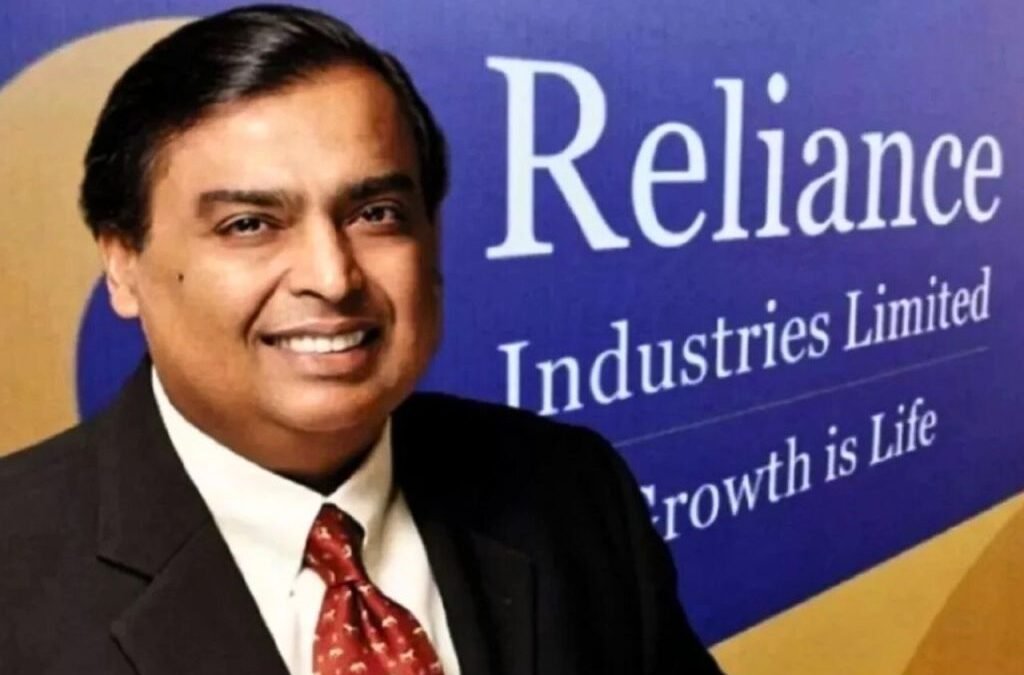
The idea of creating a dedicated artificial intelligence arm was first announced by Mukesh Ambani at the 48th Annual General Meeting of Reliance Industries Limited on August 29, 2025. At the meeting, the company said it would set up a new subsidiary focused on building large-scale AI infrastructure and services in India.
Ambani outlined four clear missions for the unit: developing gigawatt-scale AI-ready data centres in Jamnagar, forming partnerships with global technology companies and open-source communities, rolling out AI solutions across education, healthcare, agriculture and small businesses, and attracting top AI talent back to India. The broader vision was to create a national-scale AI ecosystem anchored in infrastructure, partnerships and talent.
That vision has now taken shape with the operational launch of Reliance Intelligence, a wholly owned subsidiary incorporated in September 2025. The new entity will house Reliance’s AI partnerships with global firms such as Google and Meta Platforms, while also driving execution of its large-scale data centre strategy. Reliance is working on building a Jamnagar Cloud region to support AI adoption across its telecom, retail, energy and financial services businesses. It has also announced a joint venture with Meta to develop enterprise-ready AI platforms for Indian companies and government institutions, combining Reliance’s industry reach with Meta’s open-source AI models.
The subsidiary will be led by Gaurav Aggarwal, Chief AI Scientist at Jio Platforms, who took on his current role in May 2024. Reliance Intelligence has already begun hiring AI and machine learning engineers, particularly for developing Indic-language models and incubating new AI products.
In recent public posts, Aggarwal said the goal is to assemble a team capable of pushing the technical boundaries of India’s AI ecosystem at national scale, inviting professionals experienced in training pipelines, distributed systems, model optimisation and deep learning research to join the effort. Aggarwal previously worked as an AI researcher at Google DeepMind and IBM, and has led data science and AI teams at Ola and Snapdeal, bringing both research and industry experience to Reliance’s new AI vertical.
What Is The Big Bet?
Reliance Industries Limited has formally stepped into the hyperscale data centre business through Digital Connexion, its joint venture with Brookfield Asset Management and Digital Realty. The partnership has announced plans to invest around 11 billion dollars over five years to build a 1 gigawatt AI-ready data centre in Visakhapatnam, Andhra Pradesh.
This is the first confirmed large-scale AI data centre project for Reliance and follows chairman Mukesh Ambani’s announcement at the company’s 29 August AGM that the group would make significant investments in artificial intelligence infrastructure. According to earlier commentary from Morgan Stanley, while part of the capacity may be used internally, the facility could also operate under a Data Centre as a Service model, leasing compute capacity to hyperscalers and major AI developers.
In January 2025, Reliance also disclosed plans for another AI-focused data centre in Jamnagar, Gujarat. Although official details remain limited, a Bloomberg report indicated that the Jamnagar facility could begin with 1 gigawatt of capacity and potentially expand to 3 gigawatts over time. If both projects scale as indicated, Reliance’s combined AI data centre footprint across Visakhapatnam and Jamnagar could reach nearly 4 gigawatts, placing it among the largest AI infrastructure platforms in the region.
The Visakhapatnam facility is expected to house advanced GPUs, TPUs, and other high-performance AI processors, creating what could be one of Asia’s most powerful AI compute networks. To power this infrastructure sustainably, Reliance has committed a 6 gigawatt peak solar project dedicated to supplying clean energy to its AI operations. The group already has a strong presence in Andhra Pradesh, with cumulative investments exceeding Rs. 2,21,775 crore, or roughly 25 billion dollars, across oil and gas, digital services, and retail businesses.
In addition, Reliance has secured Nvidia’s next-generation Blackwell AI processors following a collaboration announced at the October 2024 Nvidia AI Summit. These processors are expected to support AI supercomputers and large language models tailored to India’s diverse linguistic ecosystem. Ambani has highlighted India’s robust digital infrastructure as a key strategic advantage, positioning the country as well suited to become a major hub for AI infrastructure development.
AI Could Add 15 Percent To NAV
Morgan Stanley believes artificial intelligence could be one of the most underappreciated growth drivers within Reliance Industries Limited. The brokerage estimates that the AI infrastructure opportunity alone could contribute nearly 15 percent to the company’s net asset value over time. Analysts including Mayank Maheshwari note that recent management commentary and policy direction indicate AI may become the next major reinvention cycle for the group.
The report suggests AI economics could deliver returns on capital employed of around 12 to 14 percent, supported by partnerships with global technology companies such as Meta Platforms, Google, and Microsoft. Morgan Stanley views this as a platform that allows large capital deployment while unlocking synergies across energy, digital, consumer, and media verticals.
Breaking Down The 1GW Investment Plan
The financial framework is centred around a proposed 1 gigawatt AI data centre build-out. Morgan Stanley estimates a total investment of 12 to 15 billion dollars. Around 0.8 million dollars per megawatt is assumed for the powered shell and core infrastructure, while the remaining capital would be deployed into AI chips. Of the total capacity, Reliance is expected to use about 25 percent internally, the remaining 75 percent capacity could be monetised under a Data Centre as a Service model for hyperscalers and large AI developers.
The Revenue And Profit Math
For a 100 megawatt block, Morgan Stanley’s model projects revenues of about 822 million dollars and EBITDA of 743 million dollars, implying a net margin of 31 percent. The projected return on capital employed stands at 12.2 percent, while return on equity is estimated at 18.3 percent. These numbers, according to the brokerage, highlight attractive AI data centre infrastructure economics, even before accounting for tax incentives. When scaled across larger capacity, this framework begins to approach a near 1 billion dollar annual earnings opportunity.
If a 100 megawatt block can generate about 822 million dollars annually, then scaling that to the 750 megawatts expected to be leased out implies roughly 6.1 to 6.2 billion dollars in potential annual revenue at full utilisation.
Power And Energy Storage As Enablers
On the demand side, Morgan Stanley expects AI compute growth in Asia outside China to be supported largely by gas and battery-backed generation, with nearly 50 gigawatts of new coal and gas capacity likely through 2030, supplemented by renewables. In China, the compute expansion is expected to lean more heavily on renewables and battery storage as economics improve. The report highlights that data centres are driving new demand for energy storage systems, especially as gas turbine shortages and grid limitations push operators toward faster deployable solutions. It identifies 2026 as a potential inflection point when battery storage becomes mainstream in data centre power architecture.
Reliance recently raised its lithium iron phosphate cell and battery pack capacity target to 100 gigawatt hours from 30 gigawatt hours earlier. Morgan Stanley argues that the company could internally support more than 20 gigawatts of power demand, reinforcing its solar manufacturing ambition to scale to 20,000 tonnes of polysilicon and 20 gigawatts each of ingots, wafers, cells, and modules by FY28.
The Digital Partnership Layer
The digital ecosystem forms another pillar of the thesis. Google Cloud is expected to partner with Reliance to provide enterprise AI solutions, while Reliance also plans to build its own AI agents on Google Enterprise infrastructure. Morgan Stanley has retained an Overweight rating on Reliance Industries with a price target of Rs 1,803, positioning AI as a potentially transformative long-term value driver.
Why Reliance Could Be The Biggest Bet?
Integrated Energy Ecosystem: Controlling The Biggest Cost
Reliance’s advantage in the AI and data centre opportunity is not just financial muscle, but deep integration across the value chain. Through Reliance Industries Limited, the group has executed some of India’s most capital-intensive projects, giving it the experience to handle large-scale infrastructure with long gestation periods.
In the new energy segment, the company is building a fully integrated manufacturing ecosystem, spanning modules and key upstream components, with capacities designed at economic scale and flexibility for future expansion. Of the Rs. 75,000 crore committed in the first phase, management has indicated that most of it has already been spent, committed, or is in progress. As capacity expands further, this investment will increase. This integration reduces dependency on external suppliers and strengthens cost control across the chain.
Captive Green Power: A Structural Margin Advantage
Power cost is one of the largest expenses in both manufacturing and AI data centres, which operate round the clock and consume enormous electricity. Reliance plans to significantly increase its generation capacity, targeting 300 billion units, with commissioning expected to begin over the next 12 to 15 months.
A large portion of this power will be used internally across refineries, the new energy complex, green hydrogen production, and the expanding data centre footprint, while some will be converted into green fuels for domestic and export markets. By securing captive, renewable, round-the-clock energy, Reliance gains leverage over one of the most volatile cost inputs. Management has also indicated that improving global pricing trends further validate this integrated approach, especially when competing with global manufacturers.
Digital Backbone And AI Monetisation Platform
Beyond energy, the digital infrastructure layer provides another strategic edge. Through Jio Platforms, Reliance controls a nationwide telecom backbone with deep enterprise reach. Jio can choose the AI services it wants to offer, whether from internal capabilities or external partners, and monetise them without bearing heavy product development costs. These offerings become revenue opportunities rather than financial burdens.
Additionally, the company claims to provide end-to-end high-speed, low-latency connectivity across data centres and enterprise locations, a critical requirement for hyperscalers and AI workloads where throughput demands are rising rapidly. This combination of captive green energy, manufacturing scale, and digital connectivity positions Reliance as a vertically integrated AI infrastructure ecosystem player rather than just a conventional data centre operator.
Disclaimer: The views and investment tips expressed by investment experts/broking houses/rating agencies on tradebrains.in are their own, and not that of the website or its management. Investing in equities poses a risk of financial losses. Investors must therefore exercise due caution while investing or trading in stocks. Trade Brains Technologies Private Limited or the author are not liable for any losses caused as a result of the decision based on this article. Please consult your investment advisor before investing.
The post How Reliance Industries’ Foray into Data Centres and AI Can Drive Exponential Revenue Growth appeared first on Trade Brains.