
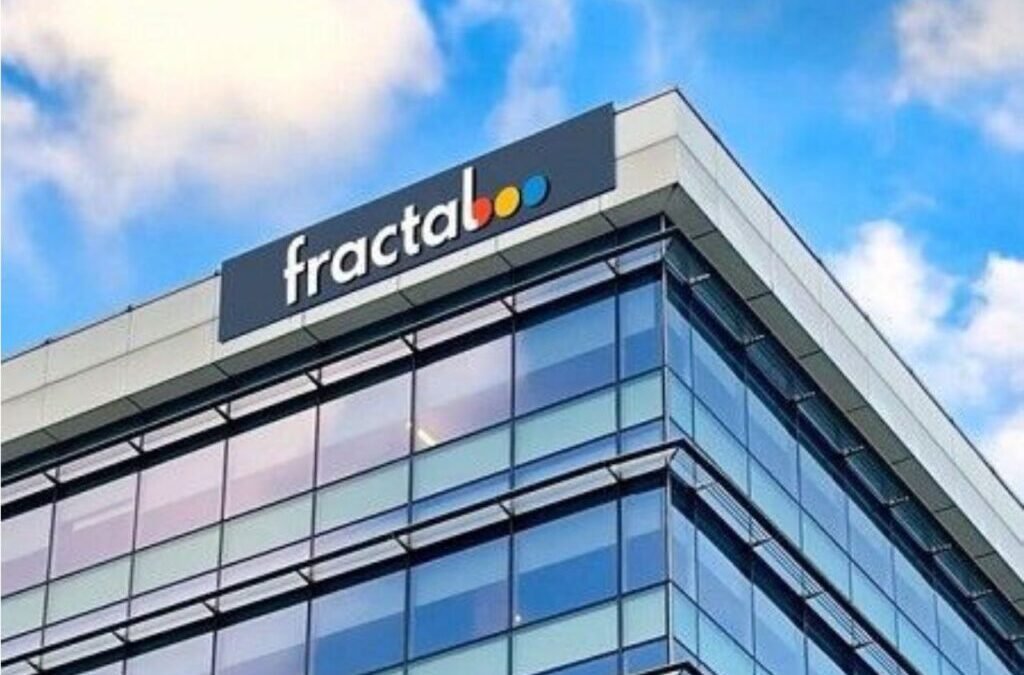
Synopsis: Fractal Analytics presents a classic post-IPO debate: whether a genuine operational turnaround and 29% revenue CAGR justify a valuation that still trades at approximately 60x trailing earnings, even as promoter holding sits at an unusually low 17 percent.
Shares of an enterprise AI and analytics company came into focus when the stock listed on BSE and NSE on February 16, 2026, after a Rs.2,834 crore IPO that subscribed marginally above two times overall. Since its opening trade at Rs. 837.7 on NSE (against the Rs. 900 issue price), the stock has trended downward, reaching the Rs. 750–823 range through late March 2026, meaning investors who subscribed at the issue price are sitting on losses of 8 to 16 percent within weeks of listing.
With a market capitalization of approx Rs. 14,647.13 crore, the shares of Fractal Analytics Limited were last trading at approx Rs. 851.75, up 3.01 percent from its previous close of 829.20.
Business Model and Segment Architecture
Fractal Analytics is a Mumbai-headquartered global enterprise AI company, founded in 2000 by Srikanth Velamakanni and Pranay Agrawal. Its operations run across two segments. Fractal.ai is the core delivery engine, providing AI services and products through its agentic AI platform, Cogentiq, which offers low-code development tooling, built-in governance, and security features for enterprise clients. Fractal Alpha is the venture-style arm, a collection of standalone AI businesses targeting high-growth markets, operated with relative autonomy.
Financials
The most compelling part of the Fractal Analytics investment case is the pace of financial normalisation. Over the last two years, the company has executed a meaningful profitability reset.
FY2025 consolidated revenue reached Rs. 2,765 crore, up 26 percent from Rs. 2,196 crore in FY2024 and representing a three-year revenue CAGR of 29 percent. More significantly, FY2025 delivered consolidated PAT of Rs. 221 crore, a sharp reversal from a loss of Rs. 55 crore in FY2024 and losses in FY2022. Operating profit margin recovered to 12 percent in FY2025 from effectively zero in FY2024, returning to FY2021 levels.
Operating cash flow tells the clearest story: from negative Rs. 31 crore in FY2023 to Rs. 397 crore in FY2025. That is a company that was consuming cash during its rapid expansion phase and has now flipped to generating it. Working capital days compressed from 38 to 26 days, and debtor days fell from 112 days in FY2022 to 77 days in FY2025, both indicators of improved execution discipline.
Momentum carried into Q3 FY2026, where the company reported consolidated revenue of Rs. 854 crore, up 20.8 percent YoY, and PAT of Rs. 103 crore, up 45% percent YoY. The divergence between revenue growth and PAT growth in Q3 signals that cost absorption is not yet proportional to revenue gains, a pattern worth tracking as the company scales.
The Structural Concerns
Several metrics warrant careful examination before treating the turnaround as fully durable. Promoter holding stands at just 17 percent as of the February 2026 post-listing shareholding data. For a company that raised Rs. 2,834 crore via an IPO that was predominantly an offer for sale, the alignment question is real. FII ownership at 40.6 percent and DII at 12.8 percent means the stock is heavily institutional, which implies sharper price reactions to earnings misses.
The company carries Rs. 430 crore of borrowings on consolidated books as of FY2025, modest relative to revenue but notable for an asset-light AI services business. ROCE improved to 12 percent in FY2025, but the three-year average remains negative due to two consecutive loss years. Return on equity for the last three years is -1.82 percent, with only FY2025’s 11 percent ROE bringing the average up.
The FY2023 profitability distortion also merits mention. Consolidated PAT for FY2023 was Rs. 194 crore, but other income for that year was Rs. 553 crore, a one-time, non-operating item that inflated reported profit. Stripping that out, the underlying FY2023 operating result was a loss. The FY2025 PAT of Rs. 221 crore is, by contrast, largely operationally driven, which makes it a more meaningful baseline.
Disclaimer: The views and investment tips expressed by investment experts/broking houses/rating agencies on tradebrains.in are their own, and not that of the website or its management. Investing in equities poses a risk of financial losses. Investors must therefore exercise due caution while investing or trading in stocks. Trade Brains Technologies Private Limited or the author are not liable for any losses caused as a result of the decision based on this article. Please consult your investment advisor before investing.
The post Fractal Analytics Post-IPO Slump: Is the Discount Earned or Excessive? appeared first on Trade Brains.