
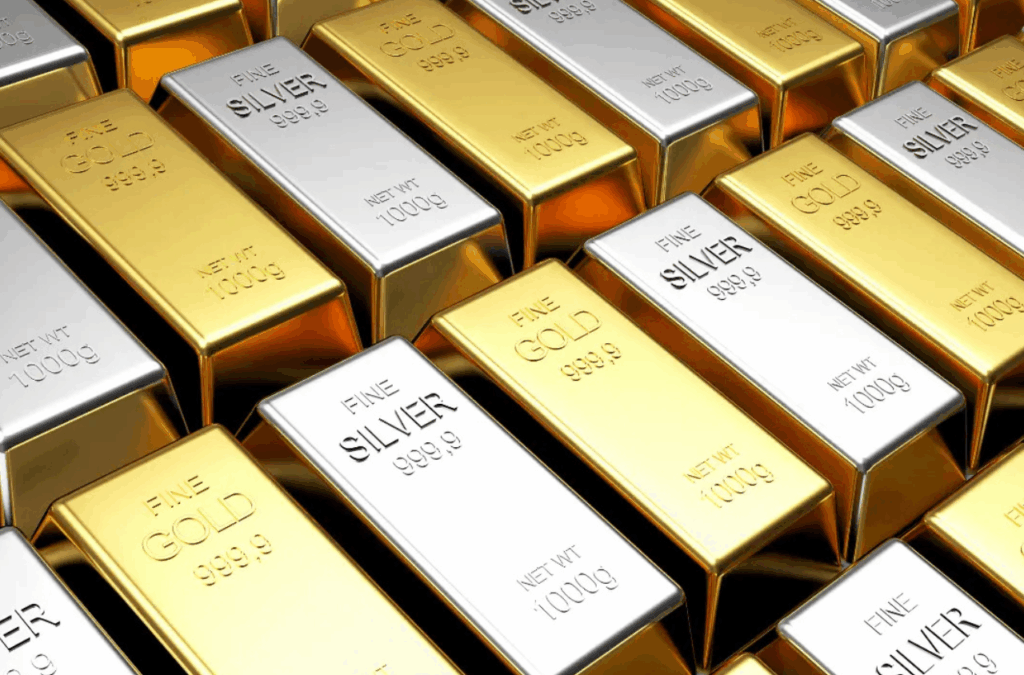
SYNOPSIS: Gold and silver prices declined as rising crude oil prices, a stronger US dollar, and uncertainty over US interest rates weakened bullion sentiment despite geopolitical tensions and volatility in global financial markets.
Over the past few days, a lot has been happening in the global markets. From rising tensions in the Middle East and a sharp surge in crude oil prices to the Indian rupee slipping to a record low and foreign investors pulling money out of the market, there’s been no shortage of headlines. Amid all this noise, discussions around gold and silver have also been dominating conversations.
Recently, gold had crossed the Rs. 1.8 lakh per 10 grams mark, while silver surged past Rs. 4 lakh per kilogram, grabbing investors’ attention. However, the rally didn’t last long, and both metals have since seen a sharp pullback, leaving many wondering what’s really driving the recent volatility in bullion prices.
Gold and silver began Friday’s trading session on the Multi Commodity Exchange (MCX) on a softer note. The recent spike in global energy prices has dampened hopes of an early interest rate cut in the United States. Rising crude prices have also revived concerns around inflation, making investors uncertain about whether the US Federal Reserve will be able to ease monetary policy anytime soon. This uncertainty has slightly reduced the typical safe-haven appeal of gold in the short term.
On the MCX, gold futures were trading about 0.27 percent lower at Rs. 1.59 lakh per 10 grams, while silver futures slipped 0.71 percent to Rs. 2.66 lakh per kilogram. The weakness in domestic bullion prices reflects the broader global trend, where gold appears to be heading toward its second straight weekly decline. Overall, bullion prices have already fallen more than 1 percent this week, and since the conflict began on 28th February, prices have declined over 3 percent.
Global factors shaping bullion prices
Movements in gold and silver prices in India are closely linked to developments in international markets. Recently, global cues have played a significant role in influencing domestic bullion trends.
In overseas markets, spot gold was trading near $5,112.82 per ounce, while US gold futures for April delivery were slightly lower at $5,116 per ounce. Meanwhile, spot silver edged up around 1 percent to $84.59 per ounce. Despite this mild recovery in silver, gold prices have declined more than 1 percent so far this week, indicating pressure from increasing energy prices and changing expectations around US interest rates.
West Asia tensions pushing oil higher
Another major factor affecting market sentiment is the escalating geopolitical tension in West Asia. Iran’s Supreme Leader, Mojtaba Khamenei, recently indicated that Tehran may keep the Strait of Hormuz closed as a strategic measure against the US and Israel, raising concerns about potential disruptions to global energy supply chains.
These developments have pushed crude oil prices above $100 per barrel, especially after reports of tanker attacks in the Gulf region and fears that the conflict could drag on. When oil prices rise sharply, inflation risks tend to increase as well. This, in turn, makes central banks more cautious about cutting interest rates, which can indirectly affect demand for gold.
Fed rate outlook remains uncertain
Against all these backdrops, discussions around US monetary policy are also influencing bullion markets. US President Donald Trump has once again urged the Federal Reserve to lower borrowing costs to support economic activity. However, most market participants currently expect the Fed to keep interest rates unchanged in the 3.5-3.75 percent range at the conclusion of its upcoming policy meeting.
According to reports cited by Reuters, traders believe the Fed is likely to maintain its current stance during the two-day meeting scheduled to conclude on 18th March. Although recent inflation data suggests that price pressures have been relatively contained, the impact of the ongoing conflict and rising crude prices has not yet fully reflected in economic data.
Investors are also closely watching the January Personal Consumption Expenditures (PCE) index, which is expected to be released on Friday and could offer further clues about the Fed’s next move.
Analysts Views
Analysts point out that bullion prices are currently being influenced by a mix of global factors rather than a single trigger. Elements such as the strength of the US dollar, rising oil prices, and movements in bond yields are all playing a role in shaping the outlook for gold and silver.
A commodities analyst at Motilal Oswal noted that gold has struggled to gain strong upward momentum despite geopolitical tensions because a stronger US dollar and rising bond yields have offset the usual safe-haven demand. The analyst also explained that during periods of heightened volatility in global equity markets, investors sometimes sell gold holdings to raise cash, which can add further pressure on prices.
The US dollar has remained firm partly because higher oil prices tend to benefit the US economy, given its status as a major energy exporter, further limiting upside in gold prices.
Disclaimer: The views and investment tips expressed by investment experts/broking houses/rating agencies on tradebrains.in are their own, and not that of the website or its management. Investing in equities poses a risk of financial losses. Investors must therefore exercise due caution while investing or trading in stocks. Trade Brains Technologies Private Limited or the author are not liable for any losses caused as a result of the decision based on this article. Please consult your investment advisor before investing.
The post Bullion Under Pressure: Gold Slips Below ₹1.6 Lakh, Silver Falls 0.7% appeared first on Trade Brains.