
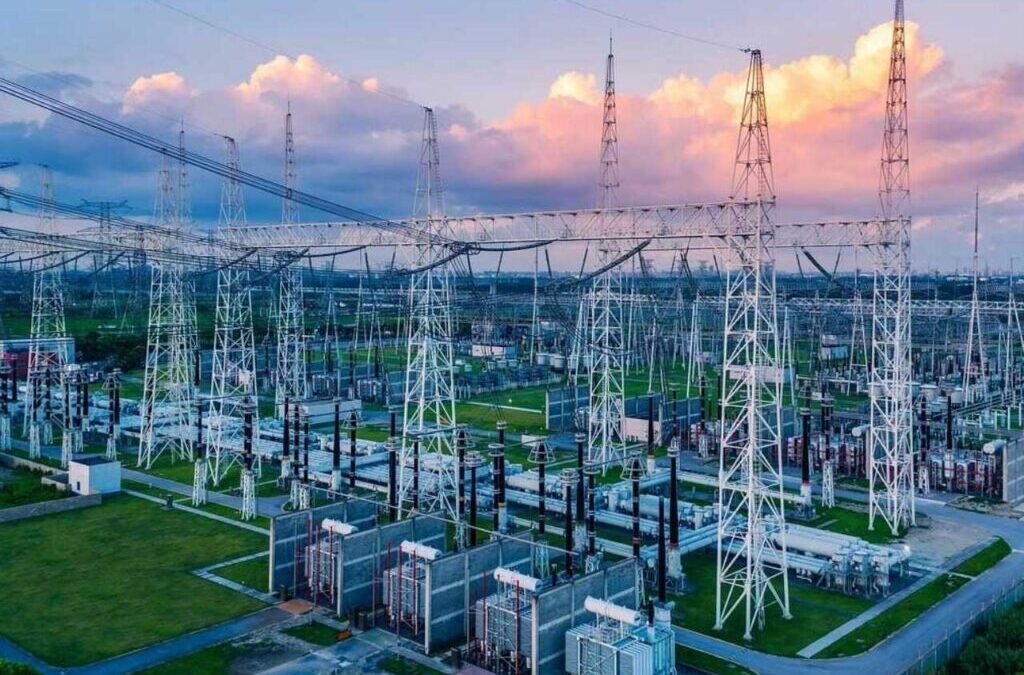
Synopsis: Atlanta Electricals, a small-cap company, is riding the waves of the power sector’s T&D business as it boasts a staggering 294 percent jump in its total capacity. With a robust balance sheet, order book and strong fianncials the company is well positioned to ride this power boom.
India’s power system is expanding rapidly. Electricity demand is rising every year as industries grow, cities expand, renewable energy projects multiply, and new data centres consume more power. To move electricity safely from power plants to homes and factories, the country needs a strong transmission and distribution network. Transformers are a critical part of that network.
Without transformers, electricity cannot be stepped up for long-distance transmission or stepped down for safe use. As India modernises its grid and builds new transmission corridors, transformer demand naturally increases. In this article, we will look at a small company strengthening its footprint in this space.
With a market capitalisation of Rs 6,871 crore, the shares of Atlanta Electricals Ltd closed at Rs 893.50 per share, down 0.8 percent from its previous day’s closing price of Rs 900.65 per share. Post its IPO debut in October 2025, the stock has already corrected over 2 percent.
Business Overview
Atlanta Electricals Ltd is a transformer manufacturing company in Gujarat that has been operating for thirty years. It produces power, auto, and inverter duty transformers up to the 220 kV class. With three manufacturing plants in Anand and Bengaluru, it serves over 200 customers across India, including GETCO, Adani Green Energy, and Tata Power. It is mong the largest integrated power transformer producers in India with manufacturing capabilities spanning from 33 kV class power transformers to 765 kV class extra high voltage units.
Its facilities hold ISO certifications and NABL accreditation, showing a commitment to global quality standards. Supported by experienced technicians and a strong presence across India, Atlanta has steadily increased its revenue and built a reputation for dependable design, testing, and execution in power infrastructure.
Atlanta Electricals has quietly prepared for upcoming opportunities. Over the past 18 months, it expanded its total manufacturing capacity from approximately 16,000 MVA to 63,060 MVA, which is a remarkable 294 percent increase.
Simply put, the company can now manufacture many more transformers than before, particularly large and high-voltage ones. This expansion allows entry into the extra-high voltage market, including 400 kV and 765 kV transformers. These machines are crucial for major transmission projects. By entering this segment, Atlanta has moved up in the manufacturing ranks.
The company has five manufacturing units spread across Gujarat and Bangalore with a combined capacity of 63,060 MVA and a total manufacturing area of 3,21,451 square feet. As of Q3 FY26, the company has successfully supplied over 4,710 transformers totaling more than 1,07,229 MVA across India.
The older plants operate at full capacity, while the new Vadod unit is gradually increasing production. The recently acquired Atlanta Trafo unit will enable the production of very high-voltage transformers. Management intends to fully utilize all five facilities by FY28, and if demand stays strong, this capacity could lead to higher revenue.
The company also boasts a diversified customer base. It serves over 250 clients across 19 states and three union territories, including major utilities and power companies like GETCO, Adani Green Energy, Tata Power, PGCIL, and NTPC. This diversification reduces reliance on a single buyer and helps to ensure steady demand.
Industry Highlights
The industry landscape supports Atlanta’s growth. The Indian transformer market is expected to grow from USD 3.25 billion in 2026 to reach USD 4.82 billion by 2031 at an 8.22 percent CAGR over 2026-2031.
India has invested nearly Rs 17 lakh crore in transmission and distribution infrastructure in recent years, with similar amounts underway. Integrating renewable energy requires strong grid connections, making transformers essential for every solar or wind project.
Also, the government has released a draft National Electricity Policy. It projects that India will need nearly Rs 200 trillion in investment in the power sector by 2047, with about Rs 50 trillion required by 2032. This funding will go toward expanding generation capacity, strengthening transmission networks, and modernising distribution systems to meet growing electricity demand.
Additionally, digital substations and smart grid systems are being developed. Globally, transformer demand is rising due to the energy transition and the growth of data centres. Also, the government has planned a capex of nearly 9.6 lakh crore through 2032, which directly benefits transformer manufacturers. This creates a favourable environment both domestically and internationally
Some investors express concerns about competition, especially from Chinese manufacturers. However, imported transformers cannot easily enter the market, and companies must manufacture locally to participate in government contracts. Approval processes take time, and existing domestic manufacturers have strong relationships, which lessens the immediate threat from aggressive foreign competition.
Other factors
Of course, risks are present. Capacity expansion must meet steady demand. Working capital needs careful management due to the long execution cycles of transformer projects. Competition from established players like Voltamp and Transformers & Rectifiers India should not be overlooked. Growth needs to be backed by strong execution and order conversion.
Still, the combination of significant capacity expansion, strong order visibility, improving margins, high return ratios, and a supportive industry cycle makes a compelling case. Atlanta Electricals seems well-positioned as India’s power infrastructure cycle gains momentum. If the company executes well and fully utilises its expanded facilities, it could become a major player in India’s power sector boom.
Financials
The revenue from operations for Atlanta Electricals stands at Rs 472 crores in Q3 FY26 compared to Q3 FY25 revenue of Rs 263 crores, up by a staggering 79 per cent YoY. Additionally, on a QoQ basis, it reported a robust growth of 49 percent from Rs 317 crore. The company is expecting a revenue growth of atleast 40 percent in the next few quarters.
Atlanta’s product mix aligns well with growth areas. Power transformers account for 82.51 percent of revenue, followed by Auto Transformers with 7.28 percent, Inverter Duty Transformer with 5.21 percent and the remaining 5 percent from others. This varied product portfolio allows participation in multiple segments of the power ecosystem.
Also, EBITDA stood at Rs 91.3 crore in Q3 FY26, a staggering growth of 120 percent as compared to Rs 41.6 crore in Q3 FY25. Additionally, on a QoQ basis, it reported a growth of 67 percent from Rs 54.80 crore. Also, coming to the margins front, EBITDA margins increased by 360 bps YoY, reaching 19.4 percent in Q3 FY26.
Coming down to its profitability, the company’s net profit stood at Rs 43.3 crore in Q3 FY26, a staggering growth of 95 percent as compared to Rs 22.3 crore in Q3 FY25. Additionally, on a QoQ basis, it reported a growth of 71 percent from Rs 25.30 crore.
The growth so far has been significant. Over the last three years, revenue has increased at a compound annual growth rate (CAGR) of almost 28 percent, while net profit has grown by nearly 90 percent in the same period. This level of profit growth indicates that the company is selling more and improving efficiency.
Return ratios are also strong. The company’s return on equity (ROE) is 41 percent and the return on capital employed (ROCE) is about 50.1 percent. These figures suggest that Atlanta is generating high returns on its invested capital. Such results are typically seen in companies that are executing well and operating efficiently.
Another factor that could benefit Atlanta during the power sector boom is its strong order book. As of December 2025, the company’s order book stood at Rs 2,451 crore, providing revenue visibility for the next 15 to 18 months. During this third quarter, the company secured additional orders worth Rs 796 crore and is eyeing to secure addition Rs 600 crore of orders in Q4.
This consistent flow of new business is crucial for maintaining growth. Many of these orders involve 220 kV transformers, which usually take 18–24 months to complete. As more orders for 400 kV and 765 kV transformers come in, revenue potential could increase further. The company also mentioned that it currently has an order pipeline of Rs 10,000 crore and has a win rate between 10-15 percent.
In summary, India needs more electricity and better power networks. Transformers are crucial for achieving this. Atlanta has established its factories, secured orders, and improved profits at the right time, and if industry trends continue and management stays disciplined, this small-cap company could experience substantial growth in the coming years.
Disclaimer: The views and investment tips expressed by investment experts/broking houses/rating agencies on tradebrains.in are their own, and not that of the website or its management. Investing in equities poses a risk of financial losses. Investors must therefore exercise due caution while investing or trading in stocks. Trade Brains Technologies Private Limited or the author are not liable for any losses caused as a result of the decision based on this article. Please consult your investment advisor before investing.
The post Atlanta Electricals: Why This Smallcap Stock May Gain From the Power Sector Boom appeared first on Trade Brains.