
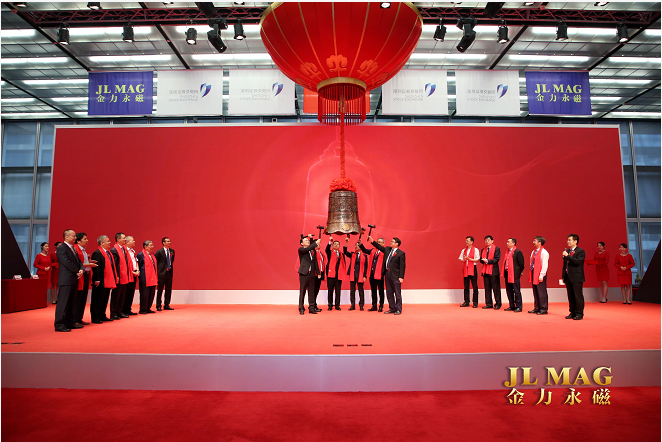
The state-owned maker of rare earth magnets reported strong profit growth in the first quarter, reversing two years of declines
Key Takeaways:
- As a maker of rare earth magnets that are an important component in many high-tech electronics, JL Mag is benefitting from China’s efforts to stimulate consumer spending
- The company’s shares fell sharply after China banned U.S.-bound exports of rare earths, but later rebounded on expectation of strong state support for the strategic sector
It may seem counterintuitive at first — a company’s profitability rising in tandem with the price of its raw materials. Yet in the case of JL Mag Rare-Earth Co. Ltd. (6680.HK; 300748.SZ), that’s exactly what is happening.
In a brief announcement last Thursday, the world’s leading producer of rare earth magnetic materials — widely used in new energy vehicles, wind turbines, and certain air conditioners — said its first-quarter profit rose 50% to 60% year-on-year. Even more strikingly, its net profit after deducting non-recurring items like government grants more than quadrupled, suggesting a strong rebound in its core operations.
The upbeat results were all the more surprising because they came just two weeks after JL Mag released a full-year 2024 earnings report showing its profit for the year fell nearly 50% — a continuation of its declining profitability over the past two years. However, last week’s brief announcement offered little explanation for the sudden improvement.
Some might try to draw a link between JL Mag’s fortunes and China’s status as the world’s leading rare earths producer, and its recent use of the important materials as a bargaining chip in its trade war with the U.S. But the reality behind the big profit jump is more mundane, which we’ll explain shortly.
A look back reveals that JL Mag’s profitability over the years is closely linked to rare earth prices, which peaked in 2022. That year, the company reported increases of 75.6% and 55% in revenue and profit, respectively. But two years later, its net profit fell to just 41% of the 2022 level. Over that period, the prices of rare earths, a collective name for …