
Austin, TX, USA, July 21, 2025 (GLOBE NEWSWIRE) — Custom Market Insights has published a new research report titled “Propylene Oxide Market Size, Trends and Insights By Production Method (Propylene Oxidation, Chlorohydrin Process), By Application (Polyether Polyols, Propylene Glycol, Glycol Ethers, Specialty Surfactants, Others), By End User (Automotive, Construction, Packaging, Furniture and Bedding, Electronics, Pharmaceuticals, Personal Care, Others), and By Region – Global Industry Overview, Statistical Data, Competitive Analysis, Share, Outlook, and Forecast 2025–2034“ in its research database.
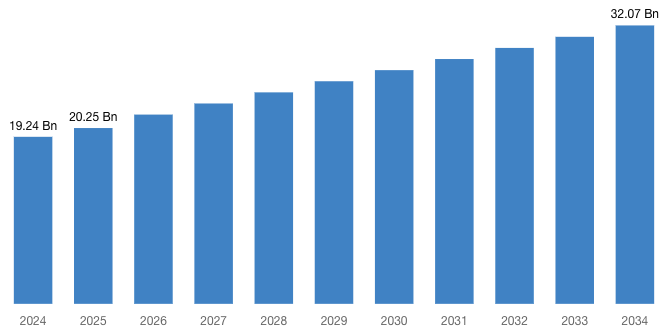
“According to the latest research study, the demand of the global Propylene Oxide Market size & share was valued at approximately USD 19.24 Billion in 2024 and is expected to reach USD 20.25 Billion in 2025 and is expected to reach a value of around USD 32.07 Billion by 2034, at a compound annual growth rate (CAGR) of about 5.24% during the forecast period 2025 to 2034.”
Click Here to Access a Free Sample Report of the Global Propylene Oxide Market @ https://www.custommarketinsights.com/request-for-free-sample/?reportid=71115
Overview
According to market analysts at CMI, the PO market has its growth driven largely due to its importance in polyurethane production and wider industrial needs being generated in parallel with applications. On the one hand, construction, automotive, and other sectors being on an upswing create demand for lightweight and protective materials, adversely affecting PO’s relevance. On the other hand, there is renewed consciousness on sustainability and pollution control, which is putting more focus on clean technologies, HPPO being one among them.
Key Trends & Drivers
- Growth of Production Technologies: Advanced development in manufacturing technologies, chiefly in chlorohydrin and propylene oxidation methods, has been propelling the propylene oxide (PO) market. Old methods, such as the chlorohydrin route, do lead to some toxic wastes; however, in the recent past, there have been various process-related advancements for safety in operating conditions, performance of catalysts, and energy efficiencies. One of the breakthroughs is the HPPO (hydrogen peroxide to propylene oxide) process, in which propylene is cleanly converted with hydrogen peroxide, and water is the only by-product. This reduces the environmental footprint while also cutting operational expenses and keeping plant infrastructure simple. As a result, many producers across the globe are shifting toward HPPO in their new or upgraded units, and this is shaping the future growth of propylene oxide in an industrial landscape that is slowly drifting towards sustainability.
- Rising Demand for Polyurethane-Based Solutions: The Main factor driving propylene oxide demand is the growing use of polyurethane (PU) foams. PO is the raw material used in producing polyether polyols, which are further used in the production of rigid and flexible polyurethane foams. The rigid and flexible polyurethane foams are widely used in construction, furniture-making, packaging, refrigeration, and automotive interior industries. Rigid PU foams are very much valued for their insulating thermal property and thus are very crucial for applications like energy-efficient buildings and appliances. Flexible PU foams provide comfort to applications such as bedding, furniture, and car seats. On the other hand, PO-derived materials will continue growing steadily in demand, amplified by consumer expectations for energy savings, durability, and comfort, especially in many developing nations with fast-paced urbanization. The growing application of polyurethanes and the growing need for sustainability only further bolster PO in the value chain.
Request a Customized Copy of the Propylene Oxide Market Report @ https://www.custommarketinsights.com/request-for-customization/?reportid=71115
- Advancements in the Automotive & Construction Sector: The automotive and construction industries are increasingly depending on some advanced materials made out of propylene oxide derivatives. In the automotive industry, strict fuel efficiency and emission standards are enforced to popularize lightweight materials such as polyurethane foams and composites, which reduce the overall weight of vehicles without any compromise on safety or performance. The increased use of electric vehicles (EVs) is also benefiting new applications for PO-based materials for thermal management and acoustic insulation. In construction, the enhanced building codes have put a higher focus on insulation materials such as rigid polyurethane foams. Other than foams, PO is also a feedstock for surfactants, glycol ethers, and deicing fluids utilized at industrial, commercial, and municipal levels. This diversification across the two largest global sectors supports market resiliency and opens new avenues for growth for PO producers.
- Environmental & Regulatory Emphasis: Environmental considerations and regulatory developments are changing the dynamics of the PO market. The traditional chlorohydrin process, from an environmental standpoint, presents problems: large quantities of wastewater are produced, and hazardous by-products such as calcium chloride are generated. Since then, regions from the developed world have enhanced environmental regulations and are now incentivizing green tech adoption. The HPPO version with higher yields and lower waste and water and energy use is fast catching up as the favored alternative. Regulatory frameworks like the EU’s REACH and the U.S.’s Toxic Substances Control Act (TSCA) accelerated pushes for all manufacturers to upgrade production facilities to safer handling of chemicals. Even though these regulatory changes offer cost and compliance challenges to certain players, they present huge opportunities for the players who are willing to invest in sustainable and efficient technologies for PO production, hence supporting long-term viability for the industry.
Report Scope
| Feature of the Report | Details |
| Market Size in 2025 | USD 20.25 Billion |
| Projected Market Size in 2034 | USD 32.07 Billion |
| Market Size in 2024 | USD 19.24 Billion |
| CAGR Growth Rate | 5.24% CAGR |
| Base Year | 2024 |
| Forecast Period | 2025-2034 |
| Key Segment | By Production Method, Application, End User and Region |
| Report Coverage | Revenue Estimation and Forecast, Company Profile, Competitive Landscape, Growth Factors and Recent Trends |
| Regional Scope | North America, Europe, Asia Pacific, Middle East & Africa, and South & Central America |