
Austin, TX, USA, July 17, 2025 (GLOBE NEWSWIRE) — Custom Market Insights has published a new research report titled “Propylene Glycol Market Size, Trends and Insights By Source (Petroleum-based, Bio-based), By Grade (Industrial Grade, Pharmaceutical Grade, Others), By End-Use Industry (Transportation, Building & construction, Food & Beverage, Pharmaceuticals, Cosmetics & Personal Care, Others), and By Region – Global Industry Overview, Statistical Data, Competitive Analysis, Share, Outlook, and Forecast 2025–2034“ in its research database.
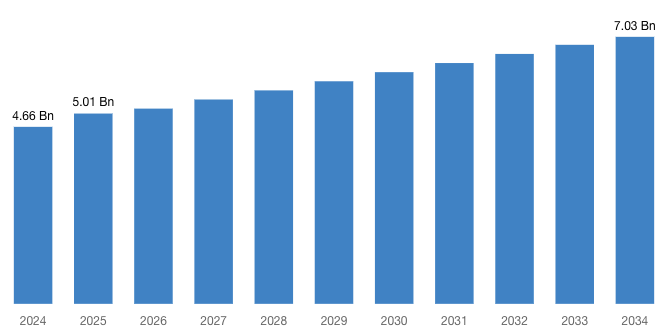
“According to the latest research study, the demand of global Propylene Glycol Market size & share was valued at approximately USD 4.66 Billion in 2024 and is expected to reach USD 5.01 Billion in 2025 and is expected to reach a value of around USD 7.03 Billion by 2034, at a compound annual growth rate (CAGR) of about 4.23% during the forecast period 2025 to 2034.”
Click Here to Access a Free Sample Report of the Global Propylene Glycol Market @ https://www.custommarketinsights.com/request-for-free-sample/?reportid=71111
Overview
According to the CMI, industry experts believe that the global propylene glycol (PG) market can expect steady and sustained growth in the years to come. This movement has been sustained by a wide range of applications, which have started instilling interest in bio-alternatives. The chemical’s versatility and safety make it an important component for a large number of end-use industries that include pharmaceuticals, food and beverage, personal care, automotive, and construction.
Growing environmental considerations and strict regulatory policies have pushed manufacturers to opt for bio-based production technologies to fulfill demand going into the future while also achieving sustainability targets. Nevertheless, the global PG market stands tall as a resilient and flexible segment within the specialty chemicals market.
Key Trends & Drivers
- Versatile industrial applications: As a synthetic organic compound, propylene glycol finds many uses as an industrial solvent and humectant, preservative, and antifreeze. The versatility of application, being the strongest factor for the demand for this market, enhances the packaging industry, among many others. It is commonly used in the food industry to carry flavors and colors. In the pharmaceutical industry, it is used as a solvent in oral, injectable, and topical formulations. In personal care products, it acts as a humectant in lotions, creams, and shampoos. It is used industrially in antifreeze solutions, de-icing fluid, and HVAC coolants. This variety in applications keeps demand sustained, even in times of economic downturn.
- Increasing Popularity of Bio-Based Propylene Glycol: Environmental sustainability and safe alternatives are driving the rise of interest in bio-based PG. Being made from renewable feedstock resources such as glycerin, corn, or soy, bio-based PG has a smaller carbon footprint than does petroleum-based PG. Much money is being invested by companies in R&D to scale up production and create more cost-effective production methods. Evidently, with growing consumer awareness regarding eco-labels and transparency in products, food, pharmaceutical, and cosmetic producers are starting to prefer renewable and biodegradable ingredients. This trend is expected to give a faster push to the bio-based PG segment rather than the conventional one.
- Growth Prospects in Personal Care and Cosmetics: Given the roaring present-day personal care market, a surge in disposable incomes, urbanization, and changing lifestyles has been the motive behind the rapid growth of such industry. Propylene glycol is extensively used in skin and hair care formulations as texture enhancers or stabilizers, and humectants. With consumer demand for clean beauty products on the increase, companies are now renovating products that had harsh chemicals with bio-based PG. This trend of personal care brands in favour of PG will grow further while demand for cruelty-free and plant-based products hits an all-time high simply because of their non-toxic and non-irritating characteristics.
Request a Customized Copy of the Propylene Glycol Market Report @ https://www.custommarketinsights.com/request-for-customization/?reportid=71111
- The growing demand from pharmaceutical and food industries: Looking out for alternative solvents and carriers that are non-toxic and GRAS (Generally Recognized as Safe) makes PG one of the key ingredients in drug production; it is incorporated in oral and injectable drugs and topical medicines because it dissolves active ingredients well and maintains stability in the final product. Moving equivalently, PG finds a large area of use in food processing as a humectant and flavor carrier for processed foods, dairy products, and beverages. On account of an increase in pharmaceutical production and consumption of processed food all over the globe-mainly led by emerging markets such as India, China, and Brazil-demand for PG in these sectors shall continue to grow.
- The construction and automotive industries: Propylene glycol (PG) has found quite a few important uses within the construction and automotive industries, being favored for its properties-from a chemical standpoint that include low toxicity, thermal stability, moisture retention, and so on. PG is preponderantly utilized in the construction sphere as a heat transfer fluid for HVAC systems and antifreeze solutions, for instance, in closed-loop heating and cooling applications. Owing to low corrosion and toxicity, PG is an excellent alternative to ethylene glycol for use in residential and commercial building systems where environmental and safety considerations are paramount. PG also finds use in construction materials for concrete curing, moisture control, etc., particularly in cold regions, where freezing prevents cracking and aids in maintaining the structural integrity of dry materials. Therefore, PG is commonly used in the automotive industry as an engine coolant and a de-icing solution.
Report Scope
| Feature of the Report | Details |
| Market Size in 2025 | USD 5.01 Billion |
| Projected Market Size in 2034 | USD 7.03 Billion |
| Market Size in 2024 | USD 4.66 Billion |
| CAGR Growth Rate | 4.23% CAGR |
| Base Year | 2024 |
| Forecast Period | 2025-2034 |
| Key Segment | By Source, Grade, End-Use Industry and Region |
| Report Coverage |