
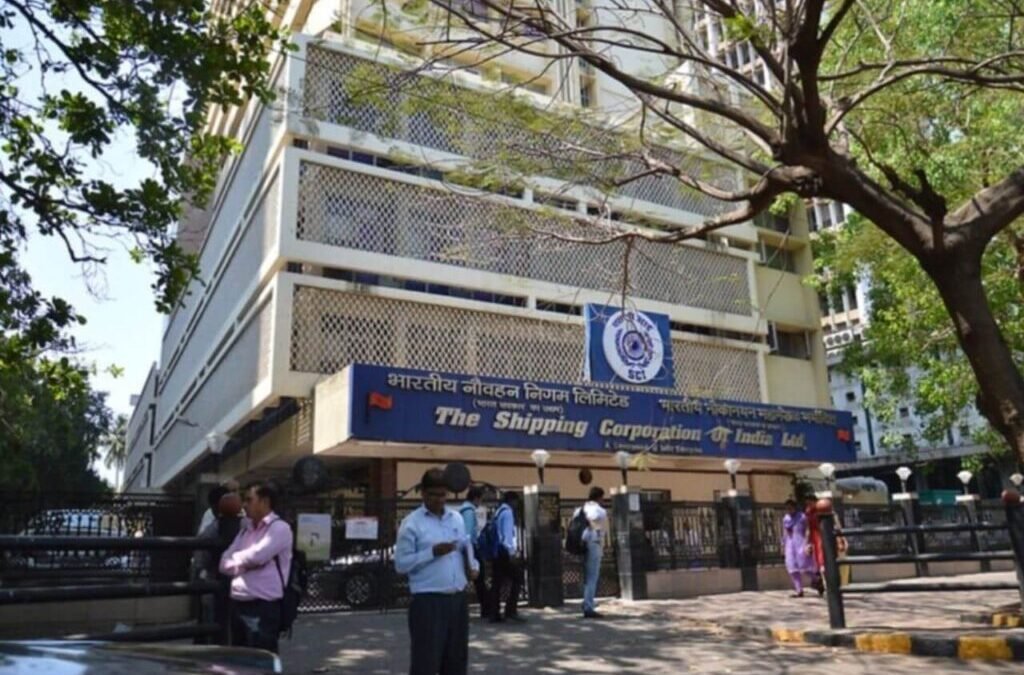
Synopsis: Shipping Corporation of India delivered a record FY26 with its highest-ever profit before tax, stronger tanker earnings, improved cash flows, and a healthier balance sheet. With elevated freight rates, unfinished Hormuz voyage revenues, fleet expansion, and large strategic joint ventures in oil, gas, and containers, SCI appears positioned for another potentially strong year ahead.
As global shipping markets navigate geopolitical disruptions, volatile freight rates, and changing trade routes, the Shipping Corporation of India has emerged from FY26 with one of the strongest performances in its history.
Record profitability, robust tanker earnings, stronger cash generation, and an expanding fleet have strengthened the company’s operational and financial position. With tanker rates still elevated, deferred voyage revenues expected in upcoming quarters, and ambitious long-term expansion plans already underway, SCI now enters FY27 with significant momentum and fresh growth opportunities.
With a market cap of Rs 14,738 crore, the shares of Shipping Corporation of India Ltd are trading at Rs 316 and are trading at a PE of 11 compared to their industry’s PE of 12. The shares have given a return of more than 170% in the last 5 years.
A Landmark Year in a Volatile Global Shipping Market
FY26 turned out to be a highly profitable year for the Shipping Corporation of India; however, what distinguished this year was that it turned out to be one of the best years for the organisation in terms of its financials amidst highly volatile global shipping market conditions.
Commenting on the earnings, the chairman and MD of the company Capt. B. K. Tyagi, called FY26 a “momentous performance” amid geopolitical uncertainties, disruptions of trade routes, and sharp fluctuations of freight rates in almost all segments of the global shipping market. Despite that, SCI was able to book a standalone net profit of ₹1,326 crores against ₹814 crores last year and a consolidated net profit of ₹1,353 crores against ₹844 crores last year.
The operating revenue increased from ₹5,592 crores to ₹5,778 crores. Moreover, the company reported an EBITDA of ₹2,633 crores for FY26. Most importantly, SCI has posted its highest-ever consolidated profit before taxes of ₹1,423 crore, a near 67% increase over last year’s figure. Now, investors have to determine if FY26 was a cyclical peak or just a start of something greater.
Balance Sheet Strength Gives SCI Room to Expand
Another key takeaway from the FY26 performance of SCI was the steady improvement in its balance sheet. SCI closed FY26 with a net worth of ₹8,489 crore, ₹2,676 crore in cash and liquid investments, and ₹2,409 crore in long-term debt.
This resulted in a debt-equity ratio of 0.29 and a debt service coverage ratio of 4.61. In addition to these metrics showing financial liquidity and flexibility, operating cash flow grew by 58% during FY26. Moreover, SCI also paid dividends of 75%, which is equivalent to ₹7.5 per share, along with a return on equity of more than 16%.
According to the management, the allocation of capital would continue to focus on three main aspects: reinvestment in fleet expansion, financial prudence, and shareholder remuneration. As a result of positive operating cash flows and adequate financial prudence, SCI seems financially ready to undergo an aggressive phase of expansion as long as freight rates are supportive.
Tankers Power FY26 Earnings Growth
The most substantial factor behind SCI’s profitable performance was its tankers division, which enjoyed an exceptionally favorable freight rate environment for most of FY26. The revenue generated by the tankers’ segment rose to ₹3,942 crore from ₹3,609 crore in FY25.
However, what makes more sense is the jump in its segment profitability, which went up to ₹1,190 crore, compared to ₹680 crore in FY25; this means almost a 75% increase. This performance was attributed to the excellent international tanker rates, especially during the disruption in supply chains and political instabilities in the Middle East Gulf region.
VLCCs earned a return of about $80,000 to $150,000 per day in their journeys through TD2 and TD3 and, in some cases, reached as much as $138,000 per day. The management stressed time and again that earnings from its tankers were the main reason for SCI’s record performance. Since tanker rates are high even after year-end, it can still sustain its profitability in FY27 if geopolitical and availability factors are favorable.
Did the Strait of Hormuz crisis delay even better numbers?
Intriguingly, the management mentioned that the figures for SCI for FY26 might not capture the full strength of the current tanker cycle. For instance, during Q4, some vessels of SCI got locked down in the Strait of Hormuz because of the increased hostility in the area.
At a particular point, the affected ships were three crude-oil carriers, two LPG carriers, and one ship linked to LNG transportation. The management was quick to note that the partial voyages have caused revenue recognition problems, but it is expected that once all the trips are concluded in subsequent quarters, the outstanding revenue will be reported then.
Capt. Tyagi said candidly that the company would have performed far better during the quarter had the Strait operated without restrictions. The management also added that nearly 60% of the company’s tanker vessels operate under voyage charter, while 40% use time charter. Thus, most of SCI’s ships are still at risk of benefiting from the spot market conditions.
Fleet Expansion Is Already Underway
The favorable freight cycle was not merely a factor that helped the company earn profits, but it took several actions to increase its earnings in the financial year 2026. As per the latest data, SCI currently has 58 vessels in its owned fleet, while it also controls another 40 vessels on behalf of government agencies, with an average age of the fleet being 15.5 years.
In this financial year, the company introduced two very large gas carriers, namely Sahyadri and Shivalik, having capacities of about 82,000 m³ each. These two ships are presently plying the Persian Gulf to India route and have helped SCI earn more from transporting gases using tankers.
Furthermore, SCI signed a deal with Mazagon Dock Shipbuilders Limited for manufacturing a 3,000 deadweight tonnage methanol dual-fuel diesel-electric platform supply vessel in line with the National Green Hydrogen Mission of India.
Other Segments Are Also Showing Signs of Recovery
While it was clear that tankers were the most profitable, some positives could be seen for SCI in its diverse mix of operations. Revenue in bulk carriers grew by 11% from ₹711 crore to ₹789 crore, and losses decreased as well due to improved positioning and higher voyage charters.
Management noted that Panamax and Supramax revenues had grown up to 30% to 35% quarter over quarter, largely fuelled by higher demand for coal and grain exports. In coastal shipping, a rise of 10% was seen in freight rates along with a high utilisation rate of 99% due to higher domestic demand.
Even in overseas liner operations, even though there was a decline in both rates and tonnage carried, SCI was able to achieve utilisation levels of 95%, thanks to strategic rerouting through the Cape of Good Hope due to disruption in the Red Sea.
The JV Strategy Could Redefine SCI’s Scale
One of the most groundbreaking aspects of SCI’s story regarding its fiscal year 2026 comes from what it is planning outside of earning money from the present market. Management outlined two significant strategic moves that would dramatically alter SCI’s landscape over the next few decades.
The first strategic move involves SCI’s signing of an MoU with oil PSUs and Sagarmala Financial Corporation to create a joint venture to operate oil and gas shipments. Management made it clear that under this strategic move, SCI would be able to generate revenues from 25% to 30% of India’s freight outflows from this industry.
The second strategic move involves SCI signing yet another MoU with Container Corporation of India and major Indian ports to create Bharat Container Shipping Line. In this case, management indicated that under this strategic move, SCI and CONCOR would hold 30% each, while their long-term plan would involve aggregating 51 ships until 2047.
Could FY27 be even better?
However, when analysts explicitly asked if there were any chances that Q3 and Q4 would bring materially better results, the management did not provide guidance on this front; nonetheless, management confirmed that current tanker market dynamics were “very, very high”.
According to various sources, spot tanker rates currently are at least several times higher compared to the pre-war rate levels. Additionally, management confirmed that the financial impact of current freight rates would be reflected in owners’ profit and loss statements within the next quarter.
It is noteworthy that SCI continues to use its strict approach to capital allocation by examining every individual acquisition decision with a target project IRR equal to 10-12%. Furthermore, management confirmed its intention to increase the number of second-hand and new vessels within FY27 while following a more comprehensive strategy aimed at building up the company until 2047.
In closing the call, Capt. Tyagi emphasised that SCI has already managed to consistently improve its performance during the last three years, and further strategic initiatives will drive “manyfold growth” for the coming years. Thus, after having performed so well during FY26, SCI appears to have quite reasonable potential to repeat that performance in FY27.
Disclaimer: The views and investment tips expressed by investment experts/broking houses/rating agencies on tradebrains.in are their own, and not that of the website or its management. Investing in equities poses a risk of financial losses. Investors must therefore exercise due caution while investing or trading in stocks. Trade Brains Technologies Private Limited or the author are not liable for any losses caused as a result of the decision based on this article. Please consult your investment advisor before investing.
The post SCI Share: After Record FY26 Profits, Could FY27 Be Even Better for the Company? appeared first on Trade Brains.