
Synopsis: CITI, a leading Global financial services firm, has identified two high-conviction stocks with strong upside potential. Let’s explore which offers a more compelling opportunity for growth: ICICI Bank or Axis Bank, according to CITI.
CITI, a leading global financial services firm, recently highlighted two major private banking stocks, offering ratings that suggest meaningful near-term upside potential. In this article, let’s examine which of the two, ICICI Bank or Axis Bank, is better positioned for stronger growth momentum, according to CITI, following the latest quarterly results and evolving sector outlook.
ICICI Bank Ltd
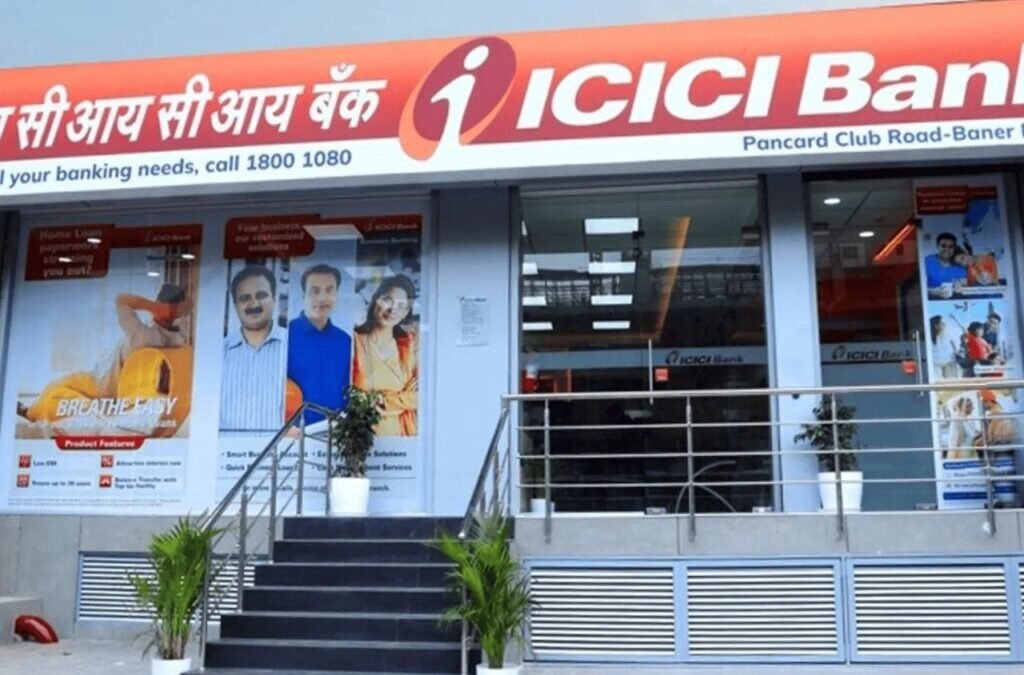
ICICI Bank is one of India’s leading private sector banks, offering a wide range of financial services including retail banking, corporate banking, treasury operations, and digital banking solutions. Headquartered in Mumbai, the bank has a strong nationwide presence through its branch network and digital platforms. It is known for its consistent focus on retail loan growth, strong asset quality, and expanding digital ecosystem, making it one of the key players in India’s banking sector.
With a market capitalisation of Rs. 8,84,017.35 crores on the day’s trade, the shares of ICICI Bank Ltd declined upto 1.43 percent, reaching a low of Rs. 1,223.10 per share compared to its previous closing price of Rs. 1,240.95 per share.
The stock is in focus after one of the leading Global brokerage firm, Citi, initiated a Buy Target of Rs. 1,720 on it with an upto 39 percent Upside Potential from the previous day’s close.
The company’s revenue rose by 2.49 percent from Rs. 48,387 crores in March 2025 to Rs. 49,594 crores in March 2026. Meanwhile, Net profit rose from Rs. 14,354 crores to Rs. 15,681 crores during the same period.
Reason for the target
Broad-based growth led by the retail segment
ICICI Bank is expected to see strong and diversified loan growth, mainly driven by retail banking. Home loans, auto loans, and personal loans continue to perform well due to steady domestic demand. Retail credit is more stable than corporate lending, helping ensure consistent growth and supporting overall earnings visibility across economic cycles.
Corporate growth is benefiting from a shift away from bond markets
Corporate borrowers are increasingly preferring bank loans over bond markets due to volatility and changing interest rates. ICICI Bank is well placed to benefit from this shift because of its strong corporate franchise. This trend supports higher loan growth in the corporate segment and improves interest income visibility for the bank.
NIMs expected to remain range-bound
Net Interest Margins (NIMs) are expected to stay stable rather than expand significantly. Rising deposit costs are balancing higher lending yields, limiting margin expansion. ICICI Bank’s strong pricing power supports stability, but competition in both loans and deposits prevents meaningful improvement, keeping margins broadly range-bound over the medium term.
No visible portfolio stress from the West Asia crisis
Despite global geopolitical concerns, including the West Asia situation, ICICI Bank does not show signs of stress in its loan book. Exposure is limited and risk management remains strong. Asset quality indicators are stable with controlled slippages, ensuring that external global events do not significantly impact the bank’s balance sheet.
Fee income growth expected to improve
Fee income is expected to grow due to higher activity in retail products, credit cards, wealth management, and transaction banking. As the customer base expands, cross-selling opportunities also increase. This helps diversify revenue sources beyond interest income, improving earnings stability and reducing dependence on lending cycles.
Cost discipline maintained
The bank continues to focus on cost control through digital adoption, automation, and operational efficiency. Branch expansion is measured, and productivity is improving. This disciplined cost management helps keep the cost-to-income ratio under control, supporting profitability and ensuring sustainable returns, which strengthens long-term valuation support.
Axis Bank Ltd
With a market capitalisation of Rs. 3,85,356.93 crores on the day’s trade, the shares of AXIS Bank Ltd rose upto 0.19 percent, reaching a high of Rs. 1,241.00 per share compared to its previous closing price of Rs. 1,238.55 per share.
The stock is in focus after one of the leading Global brokerage firm, Citi, initiated a Buy Target of Rs. 1,620 on it with an upto 31 percent Upside Potential from the previous day’s close.
The company’s revenue rose by 5.30 percent from Rs. 32,452 crores in March 2025 to Rs. 34,171 crores in March 2026. Meanwhile, Net profit rose from Rs. 7,509 crores to Rs. 7,642 crores during the same period.
Reason for the Target
No visible stress from the West Asia crisis
Citi does not see any meaningful risk to Axis Bank’s loan book from West Asia-related geopolitical issues. The bank’s exposure to such regions is limited, and overall asset quality remains stable. Strong underwriting standards and diversified lending reduce vulnerability, ensuring external global tensions do not materially impact earnings or balance sheet quality.
Comfortable with growth and asset quality outlook
Axis Bank is expected to maintain steady loan growth supported by retail and corporate lending momentum. Asset quality is also expected to remain stable with controlled slippages and healthy recoveries. Citi’s view suggests that credit costs should stay manageable, giving confidence in sustained profitability and predictable earnings performance going forward.
Committed to maintaining a through-cycle NIM
Axis Bank aims to sustain a through-the-cycle Net Interest Margin (NIM) of around 3.8%, reflecting disciplined pricing and liability management. While short-term fluctuations may occur due to rate cycles and deposit competition, the bank’s strategy focuses on maintaining stable profitability across cycles, supporting long-term earnings consistency.
Strategic deposit franchise deepening underway
The bank is actively strengthening its deposit franchise by expanding customer relationships, improving savings and current account mix, and building sticky retail deposits. This helps reduce reliance on high-cost wholesale funding. A stronger deposit base improves liquidity, supports loan growth, and enhances long-term margin stability for the bank.
Positive operating leverage expected in FY27
Operating leverage is expected to improve as revenue growth outpaces cost growth by FY27. As the bank scales and digital efficiencies improve, incremental costs rise more slowly compared to income. This leads to better profitability expansion, higher efficiency ratios, and improved return metrics over the medium term.
ECL transition impact is seen as minimal
The transition to Expected Credit Loss (ECL) accounting is not expected to materially impact Axis Bank’s financials. The bank’s strong provisioning buffers and conservative credit practices reduce volatility. Hence, the shift in accounting methodology is viewed as manageable and does not significantly alter earnings or asset quality perception.
Disclaimer: The views and investment tips expressed by investment experts/broking houses/rating agencies on tradebrains.in are their own, and not that of the website or its management. Investing in equities poses a risk of financial losses. Investors must therefore exercise due caution while investing or trading in stocks. Trade Brains Technologies Private Limited or the author are not liable for any losses caused as a result of the decision based on this article. Please consult your investment advisor before investing.
The post ICICI vs Axis Bank: Which Bank Stock Has Better Growth Potential? appeared first on Trade Brains.