
Synopsis: Kalpataru delivered a sharp FY26 turnaround with Q4 profit jumping over 8x and revenue nearly tripling as major Mumbai projects moved into the delivery phase. But despite the earnings spike, the stock still trades at a market capitalisation of just around ₹7,100 crore against an order pipeline of nearly ₹30,000 crore.
India’s listed real estate space has become heavily concentrated in a handful of large names that dominate headlines, institutional flows, and premium valuations. But beneath the surface, a second layer of developers is quietly entering a very different phase, moving from land aggregation and construction into large-scale project delivery and cash flow monetisation.
Against this backdrop, one Mumbai-focused developer has suddenly reported one of the sharpest earnings turnarounds in the sector. The market reaction, however, has remained relatively muted, largely because investors are still debating whether this is the beginning of a structural rerating or simply a temporary accounting-driven spike.
With a market capitalisation of ₹6,903 crores, the shares of Kalpataru Limited are trading at ₹335 apiece in today’s market session, down 2.90% from its previous day’s close of ₹344 apiece. However, the stock has corrected significantly and is down by 23.41% since its listing in July 2025
The Quarter That Changed the Conversation
Kalpataru reported a massive turnaround in the March 2026 quarter. Net profit surged to ₹194 crore from just ₹20 crore a year earlier, which is a 870 per cent growth, while revenue jumped from ₹597 crore to ₹1,694 crore. EBITDA margins also improved sharply to 14.4% from 7.8%.
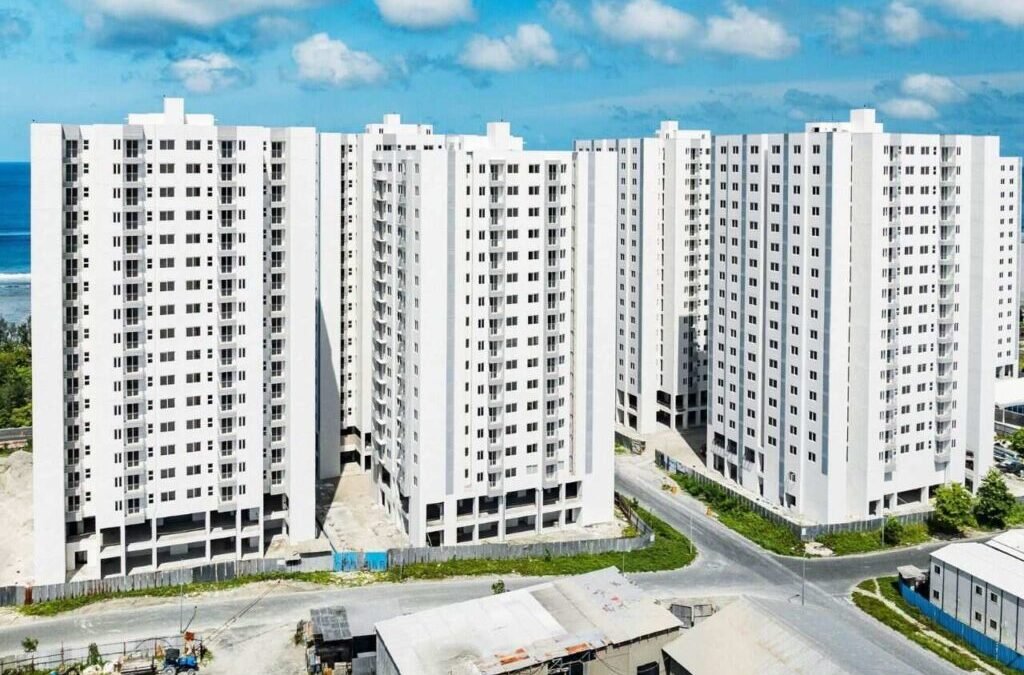
The reason was not sudden demand creation. The company follows the Project Completion Method (PCM), meaning revenue gets recognised only after occupancy certificates and delivery milestones are achieved. Projects like Kalpataru Vivant and Aria moved into the handover phase during Q4, unlocking years of accumulated value in a single quarter.
The Real Story Is the Order Intake Pipeline
While the Q4 numbers grabbed attention, the bigger story may actually be the scale sitting behind the business. Kalpataru currently has nearly ₹30,000 crore worth of order intake, planned for monetisation over the next four to five years, against a market capitalisation of roughly ₹7,127 crore.
That pipeline-to-market-cap ratio is unusually large even by Indian real estate standards. Management has already guided for 5 million square feet of launches in FY27 with a GDV of around ₹7,800 crore, including three launches expected in the first half itself.
Cash Flows Are Improving — But This Is Still a Real Estate Cycle
Collections during FY26 rose 34% year-on-year to ₹4,960 crore, supported by strong project execution and handovers. The delivery of 1.37 million square feet during Q4 also helped improve cash conversion and reduce balance sheet pressure.
But this is where the nuance matters. Real estate earnings can look explosive during handover quarters because years of construction economics get recognised together. The market knows this, which is partly why the stock has not rerated aggressively despite the earnings jump.
Why The Market Is Still Cautious
The concerns are not difficult to identify. Kalpataru remains heavily concentrated in the Mumbai Metropolitan Region, where execution delays, approval risks, and premium housing demand cycles can materially impact cash flows.
The company also operates in a sector where leverage and working capital cycles can quickly become balance-sheet problems if launches slow down. Management avoided giving aggressive FY27 numerical guidance, citing global and local uncertainty, which investors may interpret as prudence, but also as caution around demand visibility.
The Margin Profile Looks Strong for Now
Management expects margins of 20–25% at revenue recognition and 25–30% at the cash flow level across upcoming projects. Importantly, much of the land acquisition cost for current launches has already been paid, reducing near-term funding pressure.
Average realisations of nearly ₹15,969 per square foot also indicate the company remains positioned toward premium housing, a segment that has held up better than mass-market residential demand over the past two years.
The Bigger Bet
The core investment argument is simple: the market is still valuing Kalpataru like a mid-sized cyclical developer despite a project pipeline that is significantly larger than its current valuation implies.
But the counterargument is equally important: investors have seen many Indian real estate companies show strong quarters during delivery cycles without sustaining execution consistency over longer periods. The rerating only happens when the market becomes convinced that launches, collections, and cash flows can compound across multiple years rather than one strong phase.
Market Takeaway
Kalpataru’s FY26 numbers clearly show that the company has entered a large monetisation phase. A ₹30,000 crore order intake pipeline, improving collections, strong Q4 execution, and upcoming launches create visible growth over the next few years.
The reason the stock still remains underfollowed is that the market is waiting for proof that this is a sustainable compounding cycle, not just a one-quarter accounting surge. If execution continues and cash flows remain healthy through FY27, the gap between the company’s pipeline value and its market valuation could become much harder for the market to ignore.
Disclaimer: The views and investment tips expressed by investment experts/broking houses/rating agencies on tradebrains.in are their own, and not that of the website or its management. Investing in equities poses a risk of financial losses. Investors must therefore exercise due caution while investing or trading in stocks. Trade Brains Technologies Private Limited or the author are not liable for any losses caused as a result of the decision based on this article. Please consult your investment advisor before investing.
The post Realty Stock With ₹30,000 Cr Order Book and 870% Profit Growth to Keep on Your Radar appeared first on Trade Brains.