
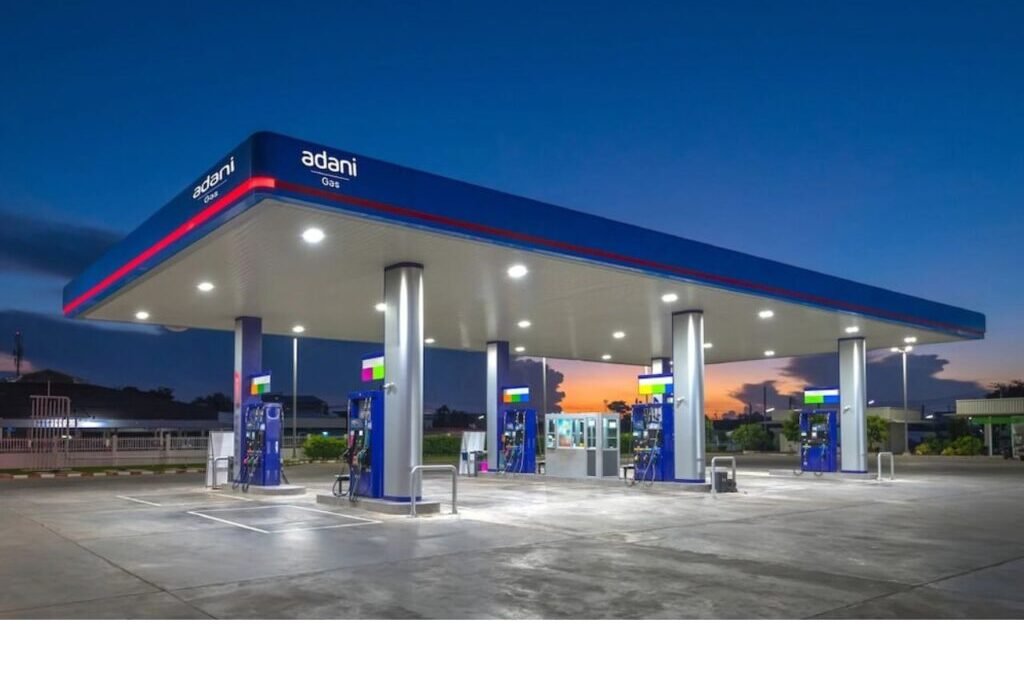
Synopsis: Adani Total Gas focused on expanding its network, securing gas supply, and protecting demand amid volatility, while building new energy businesses and strengthening its presence across regions for long-term growth.
The shares of this mid cap company majorly engaged in the business of Gas Distribution supplying natural gas to domestic, commercial, industrial and vehicle users and many more were in focus after posting its Q4 FY26 results
With the market capitalization of Rs. 71,378 Crores, the shares of Adani Total Gas Ltd were trading at around Rs. 649 per share which is 16 percent discount from its 52 weeks high of 798 per share and is trading at a P/E of 112 whereas industry P/E stands at 22.7
Q4 FY26 Results:
Year on Year analysis: Revenue from operations has increased from Rs. 1336 Crores to Rs. 1549 Crores, up 16 percent. Operating profit has increased from Rs. 265 Crores to Rs. 299 Crores, up 12.8 percent and net profit has increased from Rs. 149 Crores to Rs. 156 Crores, up 4.6 percent.
Quarter on Quarter analysis: Revenue from Operations has increased from 1499 Crores to Rs. 1549 Crores, up 3.3 percent. Operating profit has decreased from Rs. 303 Crores to Rs. 299 Crores, down 1.3 percent and net profit has decreased by Rs. 1 Crore from Rs. 157 Crores to Rs. 156 Crores
Network Expansion Across Core Business
The company continued to expand its physical infrastructure during the year. The number of CNG stations increased to 705 with the addition of 58 stations during FY26, including 25 in Q4. The steel pipeline network reached 15,572 inch-km, with 1,800 inch-km added during the year. Domestic PNG connections rose to 10,99,669, with 1,37,001 new households added in FY26 and 49,504 in Q4. Industrial and commercial connections also increased to 9,965 with 214 new additions in the quarter. This steady expansion across stations, pipelines, and connections reflects the company’s continued focus on increasing its reach.
Pan-India Footprint with JV Support
Including its joint venture IOAGPL, the combined network expanded further. Total CNG stations reached 1,169 with 49 new additions during the quarter. PNG home connections crossed 13.1 lakh, while the steel pipeline network increased to 28,005 inch-km. Industrial and commercial connections grew to 11,529 with 429 additions. The company operates across 53 geographical areas covering 125 districts, helping it build a wider presence across multiple regions rather than relying on a limited set of markets.
Gas Sourcing and Cost Movement
During the year, gas procurement costs increased significantly. The total cost of natural gas rose to ₹4,533 crore, reflecting a 23% increase YoY. In Q4, gas costs rose by 18% YoY. One of the key reasons was the reduction in APM gas allocation for the CNG segment, which declined to around 36% from 41% in the previous quarter. The balance requirement was met through a mix of long-term contracts, spot purchases, and other sourcing arrangements. This change in sourcing mix contributed to higher overall costs.
Response to Global Supply Disruptions
Global energy markets remained volatile due to geopolitical tensions in West Asia. LNG imports were impacted, with a reported decline of around 16% YoY in March 2026. At the same time, the Indian rupee depreciated by around 5%, further increasing procurement costs. In response, the company ensured uninterrupted supply to key segments and adjusted its sourcing mix. It also managed demand by temporarily curtailing industrial volumes in a controlled manner, ensuring supply to priority segments like CNG and domestic PNG.
Operational Performance Trends
The company reported total sales volume of 1,133 MMSCM for FY26 compared to 993 MMSCM in FY25, reflecting a 14% YoY increase. CNG sales increased to 782 MMSCM from 663 MMSCM, while PNG sales rose to 351 MMSCM from 330 MMSCM. In Q4, total volume stood at 297 MMSCM compared to 263 MMSCM in the previous year. CNG volumes were 207 MMSCM, while PNG volumes were 91 MMSCM. The increase in volumes was supported by expansion in infrastructure and addition of new customers.
New Energy Businesses – EV and Biomass
The company continued to scale its new energy segments. Its EV charging network expanded to 5,100 installed charge points across 26 states and 225 cities, with an installed capacity of around 54 MW. In the biomass segment, the company reported total CBG sales of 1,654 MT during FY26, including 888 tons from its DODO station. Fermented Organic Manure (FOM) sales crossed 1,500 tons during the year, with Q4 sales being 50% higher than the combined sales of the previous three quarters.
Conclusion:
Adani Total Gas continues to expand its network, strengthen sourcing, and manage supply challenges while maintaining steady operations. Its growing presence across regions, along with investments in EV charging and biomass, supports diversification. Despite higher gas costs and external volatility, the company has balanced expansion with financial discipline. With policy support and increasing gas adoption in India, it remains positioned for gradual and sustained long-term growth.
Disclaimer: The views and investment tips expressed by investment experts/broking houses/rating agencies on tradebrains.in are their own, and not that of the website or its management. Investing in equities poses a risk of financial losses. Investors must therefore exercise due caution while investing or trading in stocks. Trade Brains Technologies Private Limited or the author are not liable for any losses caused as a result of the decision based on this article. Please consult your investment advisor before investing.
The post Adani Total Gas: Breaking Down the Company’s Q4 FY26 Results and their Growth Strategy appeared first on Trade Brains.