
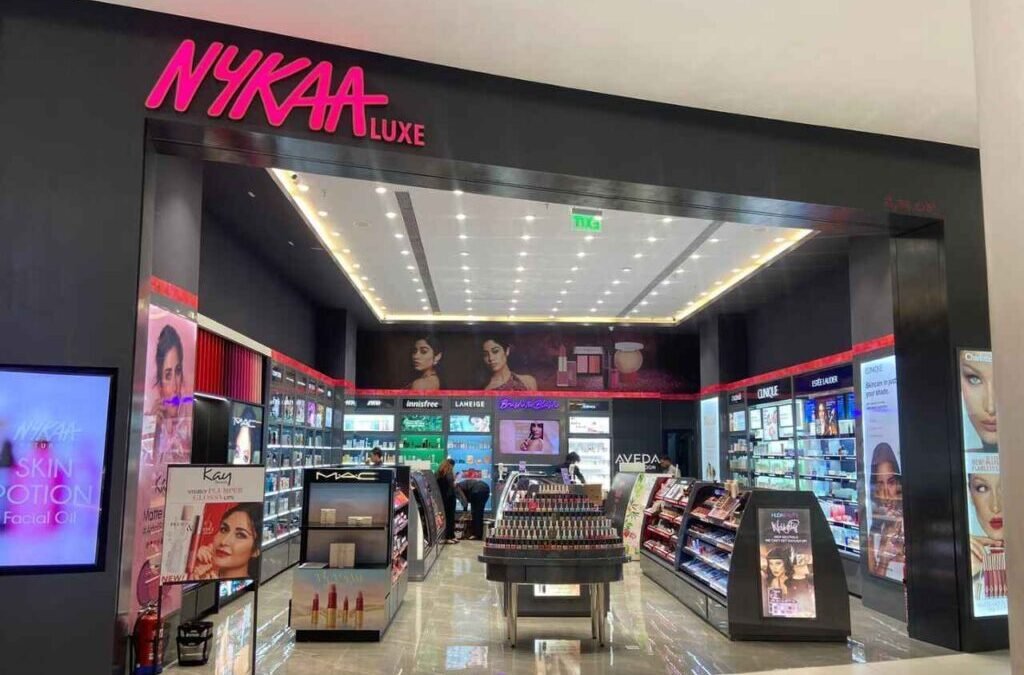
Synopsis: Nykaa’s House of Nykaa marks a shift from marketplace to brand ownership, driving strong growth and improving margins. While brands like Dot & Key and Kay Beauty are scaling rapidly, sustainability depends on execution, competition, and margin discipline, making it a promising yet closely watched strategy.
House of Nykaa is Nykaa’s portfolio of in-house brands across beauty and fashion, built to drive higher growth, margins, and long-term brand ownership. Nykaa’s evolution is no longer just about selling beauty products; it’s about owning them. With the rise of the House of Nykaa, the company is moving from a platform-led model to a brand-led strategy aimed at capturing higher growth and profitability.
Backed by strong customer acquisition, expanding distribution, and a growing portfolio of in-house brands, Nykaa is attempting to build long-term consumer franchises. The key question, however, is whether this strategy can sustain momentum or if expectations are running ahead of reality.
A Platform That’s Evolving Beyond Marketplace
The evolution of Nykaa from a beauty marketplace to a beauty ecosystem has been consistent. Having served around 52 million customers, 276 stores in 94 different cities, and having a strong presence in the omnichannel format, Nykaa has transitioned from merely being a retailer to a brand builder. In the past 13-14 quarters, Nykaa has consistently grown in the mid-20s, with Q3 FY26 seeing a growth of 28% in its gross merchandise value to Rs 5,795 crore and 27% in revenues to Rs 2,873 crore.
However, what stands out more than just growth is the shift in the basis of such growth. With an increasing focus on its own brands through the “House of Nykaa”, Nykaa seems to be making a shift from platform-based growth to owner-centric growth.
House of Nykaa: From Private Labels to Brand Power
There has always been clarity on Nykaa’s positioning – it doesn’t have private labels; it has brands. And that makes all the difference. The portfolio of “House of Nykaa” has already seen its GMV cross the annualised run rate of Rs 3,500 crore and grow by 48% YoY. Out of which, Rs 3,100 crore comes from beauty, which speaks volumes.
Nyka Online contributes 45% of its total revenues from its own platform. All others come through various forms of distribution and other platforms. This is reflective of the fact that Nykaa is consciously working towards creating brands that thrive beyond their own ecosystem.
Growth Momentum: The Core Argument for a “Goldmine”
Should one factor explain the success of the House of Nykaa strategy, it would be the speed of growth. The beauty category within its owned brand business was up 65% YoY in Q3, while the preceding quarters showed growth exceeding 70%.
It is not by chance; there are tailwinds from the category. Nykaa is consistent in asserting that the Indian beauty industry is underserved, and the company is working hard to acquire more customers. With 18.7 million unique annual transacting customers (up 26% YoY), there is plenty of room for growth of its own brands. Put simply, Nykaa is not just following trends, it is creating them.
Star Performers: Brands That Are Driving the Narrative
In the Nykaa ecosystem, some brands have already started to demonstrate their superiority. Dot & Key, which generates a GMV of Rs 1,900 crore annually, is growing more than 100%, with its EBITDA margin standing above the teens.
The Kay Beauty brand already exceeds Rs 500 crore GMV, growing 60%+. The Nykaa Cosmetics brand is also close to reaching that level, benefiting from a strong offline distribution of more than 14,000 GT/MT stores.
Despite being new categories for Nykaa, its brands are already establishing themselves. For instance, the Moi perfume brand is the leading non-luxury brand on the Nykaa platform. Moreover, the fashion brand Nykd generated Rs 150 crore in annualised GMV. It is important to note that they are no longer small experiments.
Profitability: The Real Test of Sustainability
While growth by itself may not constitute an adequate basis for a strategy, profit does. In this case, it appears that the “House of Brands” strategy implemented by Nykaa has worked in favour of margin improvements. Specifically, the beauty EBITDA margin currently stands at 10.1%, while the consolidated EBITDA has reached the record-high level of 8%.
The role of owned brands should be highlighted at this point. With better margins generated by own brands, gross margins have been positively affected. Management has confirmed that margins expansion was driven by improved unit economics in the B2B segment and growth in owned brands’ share.
This is where the discussion kicks off. While it is true that owned brands positively affect margins, Nykaa continues investing heavily in marketing and acquisition of new customers. This raises a crucial question: is the margin improvement structural or cyclical?
Distribution Strength: Nykaa’s Hidden Advantage
One of the most underrated aspects of Nykaa’s strategy is its distribution muscle. Through its B2B platform, the company now reaches over 485,000 retailers across 1,100 cities.
This is crucial. Unlike many D2C brands that rely heavily on digital channels, Nykaa has built an integrated online-offline distribution network. This allows its brands to scale faster and penetrate deeper into the market.
Additionally, partnerships with global brands like L’Oréal, Nike, and Kiehl’s further strengthen Nykaa’s ecosystem, positioning it not just as a retailer but as a full-stack platform capable of managing end-to-end brand operations.
The Strategic Edge: Content, Community, and Consumption
What really sets Nykaa apart isn’t just the products it sells; it’s how it shapes what people want to buy in the first place. The company has spent years building a strong connection with its audience through content, influencers, and community-led engagement. Today, with over 100,000 influencers and millions of pieces of content, Nykaa isn’t just part of the beauty conversation; it’s helping drive it.
This becomes even more powerful when you look at how consumers, especially Gen Z, behave. A large part of their buying decisions is influenced by what they see online from tutorials, reviews, and trends. Nykaa has positioned itself right at the centre of that journey. So by the time a customer decides to buy, they are often already within Nykaa’s ecosystem. That’s a big advantage when you’re trying to push your own brands.
Even offline, Nykaa is trying to build more than just stores; it’s creating experiences. Events like Nykaaland, which drew thousands of attendees and massive digital reach, show how the company is blending entertainment, community, and commerce. It’s not just about selling a lipstick or a skincare product anymore; it’s about building a relationship with the customer.
In a way, this is what makes the House of Nykaa strategy different. It’s not just about launching more products; it’s about owning the entire journey, from discovery to purchase. And if that flywheel continues to work, it could become one of Nykaa’s biggest long-term advantages.
Risks and Reality Check: Is It Overhyped?
That being said, it’s not all smooth sailing. A big part of Nykaa’s growth still depends on the beauty market itself expanding, and while that trend looks strong today, it’s not entirely in the company’s control. If consumer spending slows or trends shift, growth could take a hit.
There’s also the question of competition. Global brands are entering India more aggressively, and many of them already have strong recall and deeper pockets. While Nykaa’s own brands are growing fast, sustaining that momentum against established global players won’t be easy.
Margins, too, are something to watch. While owned brands help improve profitability, the overall margin profile still depends on multiple moving parts, like marketing spend, distribution mix, and channel growth. As the business scales, maintaining that balance becomes more challenging.
And then there’s the growth itself. Some of the sharp growth numbers, especially across newer channels, are coming off a smaller base. As these businesses mature, growth rates are likely to normalise, which could change how the market views the story.
Final Verdict: Strategic Goldmine or Hype Cycle?
So, is House of Nykaa a goldmine or just hype? Right now, it looks like a bit of both, but leaning more toward a well-thought-out strategy than just market excitement.
The building blocks are clearly in place: strong growth, emerging brands, improving margins, and a powerful distribution network. Nykaa isn’t just selling products anymore; it’s building brands, shaping consumer behaviour, and creating an ecosystem that supports both.
But the real test lies ahead. For this to truly become a long-term success story, these brands need to stand strong beyond Nykaa’s platform and continue delivering profitable growth. If that happens, this could turn into one of the most successful brand-building plays in India’s consumer space. For now, one thing is clear—this isn’t just another experiment. It’s a strategy with real potential and one that investors will be watching very closely.
Disclaimer: The views and investment tips expressed by investment experts/broking houses/rating agencies on tradebrains.in are their own, and not that of the website or its management. Investing in equities poses a risk of financial losses. Investors must therefore exercise due caution while investing or trading in stocks. Trade Brains Technologies Private Limited or the author are not liable for any losses caused as a result of the decision based on this article. Please consult your investment advisor before investing.
The post House of Nykaa: Is It a Strategic Powerhouse or Just Market Hype? appeared first on Trade Brains.