
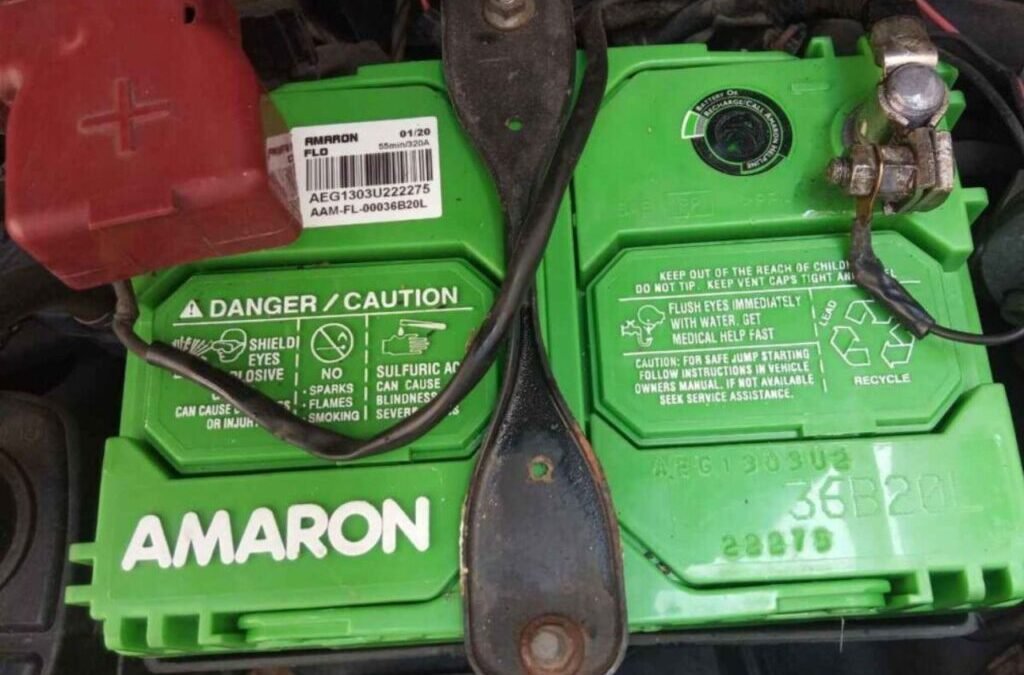
Synopsis: Amara Raja is undergoing a structural transition as lead-acid batteries face decline, particularly in telecom, while new energy segments like lithium-ion and BESS scale rapidly. With strong investments and emerging demand, future growth hinges on execution, as the company balances a stable legacy business with a high-growth but competitive new energy opportunity.
The battery manufacturing industry around the world is witnessing a paradigm shift, spurred on by an increasing reliance on electricity, renewable energy, and energy storage. Lead-acid batteries, which have traditionally dominated the industry, are now being replaced with new technology, particularly lithium-ion batteries, that offer enhanced functionality. Amara Raja Energy & Mobility Limited is caught at the epicentre of this revolution.
Even as the traditional lead-acid battery division continues to contribute a major share of the company’s income, newer segments such as lithium-ion batteries and energy storage solutions are growing fast. The pressing strategic question now is whether the growth in the newer energy divisions can help reverse the declining fortunes in some of the traditional lead-acid battery segments.
Business at a Turning Point
This is an important transitional period for Amara Raja Energy & Mobility Limited. The company, which is one of the major leaders in the lead-acid battery segment, has evolved to be a company that provides energy solutions. This is no longer a choice since there have been shifts in the industry that have necessitated this change.
The third quarter FY26 earnings presentation clearly shows a shift whereby, although the older lead-acid business accounts for most revenues, the newer energy businesses are growing fast. The key issue now is whether the growth of the new energy business will help cushion the impact from some of the segments in the old lead acid business.
Lead-Acid Still Dominates, But Growth is Slowing
Even with all the strategy changes, lead-acid batteries still hold centre stage for the company. Revenue generated from the lead-acid battery segment accounted for 93% of total revenue in Q3 FY26, standing at Rs 3,410 crore. Some parts of the segment are still delivering good results. Domestic automotive demand was resilient, with OEM demand in 4-wheeler vehicles increasing by 25% and aftermarket demand increasing by approximately 3%.
Furthermore, segments such as tubular batteries and HUPS increased by approximately 10%, suggesting that there is still robust demand for conventional power backup solutions. But there have been some exceptions. Overall, the lead-acid battery segment recorded muted performance, reporting revenue of Rs 3,174 crore.
Structural Decline in Telecom: A Key Trigger
The strongest indicator of structural disruption can be found within the telecom sector. There has been a 45+% YoY decline in volumes for lead acid batteries used in telecom applications, while its revenue share in terms of total revenue contribution has dwindled to below 5%. This is not a temporary trend but rather a shift in technology from lead acid to lithium ion batteries because of superior energy efficiency, longevity, and lower costs.
In fact, management admitted that this is a shift that is “here to stay”, with declining lead-acid volumes expected in the coming 2-3 years. Such a phenomenon represents a textbook example of structural obsolescence, whereby a whole sub-sector of the old business model is being phased out.
Export Weakness Adds to Pressure
Exporting also poses a challenge. The firm mentioned a drop in automotive exports by 15%, owing to tariff-related and geopolitical problems. The United States and some of the Asia Pacific countries have emerged as competitive and uncertain markets.
There is also increased rivalry among international markets, affecting the volume of trade.
Although exports were previously estimated to register a 10-15% CAGR, the current trends seem to pose hurdles. This would mean an additional burden for the lead-acid business amid existing structural constraints in the domestic market.
Margin Pressures Highlight Industry Maturity
Also, there have been increasing raw material prices, which are leading to thinning profit margins in the lead-acid battery industry. Notable among these materials are tin alloys, sulphuric acid, and antimony alloys, whose prices witnessed sharp rises in the last quarter.
Despite recording an operating margin of about 11.2 per cent (or 12.3 per cent after adjustments), this came not from demand but through pricing initiatives and operating efficiency. This is because, as management points out, this industry can no longer continue operating at high-profit margins because of competition. This highlights the maturing nature of the lead-acid business.
New Energy Emerges as a Growth Engine
In comparison to the legacy business, however, the energy business is making solid progress. The energy business has surpassed the Rs 200-crore mark in revenue in Q3, reflecting 2x YoY growth. The reason behind this growth has been the telecom lithium battery packs, where the company managed to supply 250 MWh worth of products, maintaining over 80% utilisation in stationary uses. While this business is small in comparison to the legacy one, it is growing quickly and forms the main strategy of the company going forward.
Battery Energy Storage Systems (BESS): The Next Big Opportunity
The company is now venturing into the area of BESSs apart from telecom lithium batteries, which creates very promising long-term growth potential. The management sees the BESS market grow to 25-30 GWh by FY31, led by the rising necessity for integrating renewables and grid stability requirements. In light of this, the company has greenlit a 5 GWh integrated BESS plant having an approximate capital expenditure of Rs 280 crore, slated to commence operations by FY27.
This business differs considerably from the conventional lead-acid business since it is more solution-based, encompassing not only the lithium battery packs but the entire BESS system along with the inverters, among others. While the margins in this line of business might be less when compared to others, management has pointed out that the asset turnover will be much higher at 9-10x levels.
Heavy Investments Signal Long-Term Commitment
This transition from conventional energy to new energy on Amara Raja’s part is clearly evident in the manner of capital allocation within its organisation. As of now, it has invested about Rs 1,400 crore in its lithium battery venture and keeps growing investment in the new energy segment.
In future, it plans to invest about Rs 1,000 crore worth of funds in new energy ventures in the next year, which is substantially more than the Rs 300 to Rs 400 crore that the firm is expected to invest in its lead-acid battery division in the coming years. It would not be wrong to suggest that lead-acid batteries are increasingly becoming a cash cow for the company, whereas the firm sees new energy as its main growth driver in the future.
Challenges in Scaling New Energy
Although the company enjoys strong growth momentum, there are a few hurdles that need to be crossed regarding execution. At present, the company is bringing in lithium batteries from other countries and then assembling the batteries for use. The profit margin for this is low, and the company relies heavily on other companies for its supply of batteries.
Building domestic capacity in the form of making lithium batteries entails heavy financial investments and the need to operate on a sufficiently large scale. Also, compared to lead-acid battery technology, lithium-ion batteries have higher competition with fewer entry barriers. Furthermore, demand visibility will depend on the rate at which the industry will move to replace lead-acid batteries with lithium-ion.
A Transition from Product to Platform
The more comprehensive evolution that has taken place at Amara Raja Battery not only involves the change in battery technology but also a change in the business model itself. This has seen a change in the business from a company involved in manufacturing lead-acid batteries to one offering energy solutions.
This will involve a change from generating income from products to offering services, a business which moves away from its domestic outlook towards a global outlook, and a business that grows in an accelerated manner instead of growing steadily.
Even while the lead-acid batteries continue to generate consistent cash flows, the business in segments like telecom is set to shrink on account of structural reasons. On the other hand, new energy businesses, like lithium batteries and BESS, will grow very fast despite the capital requirement and execution risks involved.
Conclusion: Can New Energy Offset the Decline?
Based on this transition, the firm is beginning to use its capital resources to scale up its new energy businesses through investments in lithium-ion cells, battery packs, and energy storage systems. This move is in line with global energy trends as it prepares itself for new business areas such as electric mobility and energy storage. Nevertheless, the growth of these businesses will take time and technological expertise, among other aspects, which will ensure that their earnings remain volatile for some years.
On the other hand, the traditional lead-acid business remains important since it provides consistent earnings and supports the company’s margins, allowing the firm to invest in its growth and scale up its new businesses. This means that Amara Raja must manage the decline of its old business while growing its new one.
Therefore, Amara Raja’s evolution is more about transformation than replacement since the former involves learning how to manage both its old and new businesses simultaneously to build a new energy business from scratch.
Disclaimer: The views and investment tips expressed by investment experts/broking houses/rating agencies on tradebrains.in are their own, and not that of the website or its management. Investing in equities poses a risk of financial losses. Investors must therefore exercise due caution while investing or trading in stocks. Trade Brains Technologies Private Limited or the author are not liable for any losses caused as a result of the decision based on this article. Please consult your investment advisor before investing.
The post Amara Raja: Can new energy segments offset the structural decline in lead-acid? appeared first on Trade Brains.