
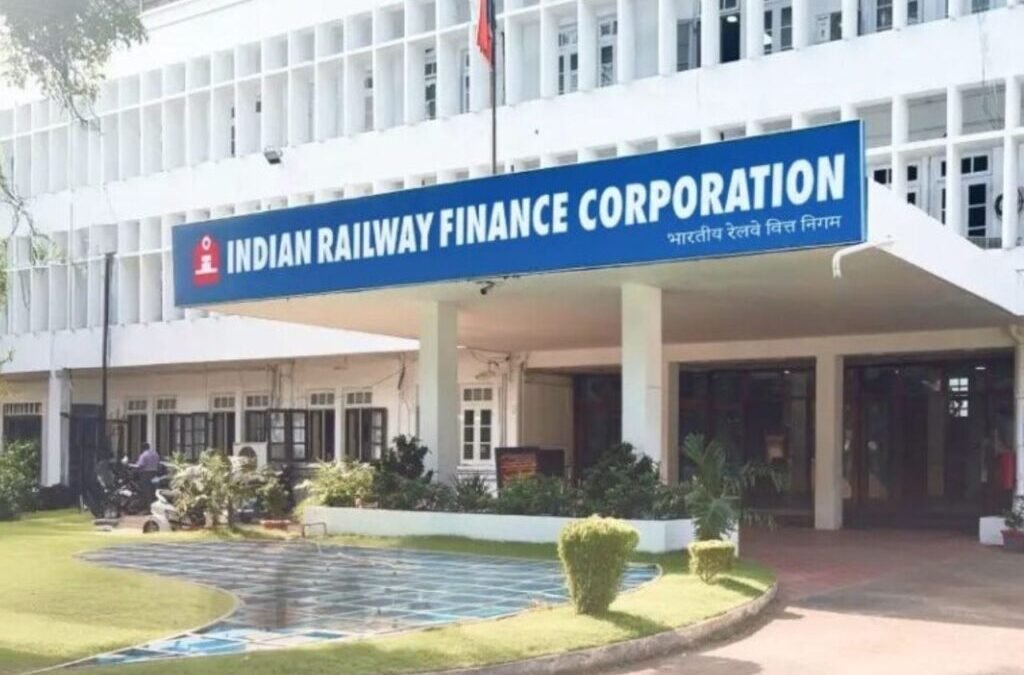
Synopsis: IRFC’s Rs 12,842 crore refinancing for HURL strengthens its loan book by adding a large strategic asset, improving diversification into railway-linked infrastructure, and reinforcing its role under the IRFC 2.0 strategy. The deal also supports asset quality, as HURL is a PSU-backed borrower with operational plants and railway linkages.
The Rs 12,842 crore refinancing of HURL by the Indian Railway Finance Corporation is a significant deal, especially as it is one of the largest of its kind for the company, which has been trying to expand beyond the conventional business of railway finance. The deal not only gives scale to IRFC’s loan portfolio but also remains within the scope of railway-linked infrastructure finance, thereby underlining the company’s focus on quality growth, strategic diversification, and long-term relevance as an infrastructure financier.
With a market cap of Rs 1.21 lakh crore, the shares of Indian Railway Finance Corporation Ltd are trading at Rs 92.80 and are trading at a PE of 17.3 compared to their industry’s PE of 16.6. The shares have given a return of more than 300% in the last 5 years.
Scale and Asset Book Growth
IRFC’s Rs. 12,842 crore refinance to HURL also benefits IRFC in terms of scale and growth in the asset book. The company itself has claimed that this is one of the biggest refinance deals for them. This, in turn, adds to the company’s asset book in terms of scale. For a company that lends out money, such large deals are important for them, as they add to their loan book without having to venture too far from their traditional areas of operation.
The deal also adds to the diversification in the loan book for IRFC. In the release, IRFC claimed to be expanding its footprint by refocusing on critical sectors in the infrastructure space that have high linkages with the railway industry. Fertilisers are claimed to be one such industry. This is important as it adds to the diversification in the loan book for IRFC while also adhering to the company’s approved strategic mandate.
Another positive aspect is the quality and nature of the borrower. HURL is a joint venture of major PSUs such as NTPC, Coal India, Indian Oil, FCIL, and HFCL. Moreover, its fertiliser plants at Gorakhpur, Sindri, and Barauni are already operational. This gives a relatively strategic nature to the refinancing, which may be beneficial to the stability of the loan book of IRFC rather than adding riskier exposure in terms of project development stage.
The structure of the refinancing appears to be beneficial to the quality of the book. IRFC has said that the loan will provide competitive financing terms and an optimised repayment structure in line with HURL’s operating cash flows. This, in effect, translates to a better liability match for the borrower, which may be beneficial in terms of reduced risk of default for the lender.
Strategic Positioning and Future Relevance of Lending
This is not just a transaction to add one large loan; it is also part of the broader strategic positioning for IRFC under its IRFC 2.0 initiative. As stated, the company has noted that the transaction is a significant step in its whole-of-government approach, as it seeks to provide cost-effective and long-term financing solutions to strategically important sectors. This, therefore, adds to the relevance of IRFC as a diversified infrastructure financier, and there is room for more such transactions to be made in the future.
There is also a logical case for why HURL would be part of the lending universe for IRFC. As noted in the filing, HURL’s facilities are well connected through rail infrastructure, and there are existing systems in place to coordinate the movement of fertilisers, which is managed in association with Indian Railways, with existing systems in place to enable seamless rail freight payments. Thus, there is no weakening of adjacency for IRFC in the rail sector, as the refinancing is actually enhancing the relevance of the company to providing financing to businesses that have traffic and adjacency to the rail network.
Overall, the HURL refinancing adds strength to IRFC’s loan book in three ways: the addition of a very large asset, the improvement in diversification of railway-linked infrastructure, and the reinforcement of IRFC’s capability in complex multi-stakeholder financing deals. With IRFC also emphasising its zero NPAs, the message being conveyed is that the company is trying to add to its book not only in terms of quantity but also in terms of quality.
Financials
The revenue from operations for the company stood at Rs 6,661 crore in Q3 FY26 compared to the Q3 FY25 revenue of Rs 6,763 crore; both were in a similar range YoY. Similarly, the net profit stood at Rs 1,802 crore in Q3 FY26, up compared to the Rs 1,631 crore profit in Q3 FY25.
Disclaimer: The views and investment tips expressed by investment experts/broking houses/rating agencies on tradebrains.in are their own, and not that of the website or its management. Investing in equities poses a risk of financial losses. Investors must therefore exercise due caution while investing or trading in stocks. Trade Brains Technologies Private Limited or the author are not liable for any losses caused as a result of the decision based on this article. Please consult your investment advisor before investing.
The post IRFC: How does the company’s largest ₹12,842 Cr HURL refinancing strengthen its loan book? appeared first on Trade Brains.