
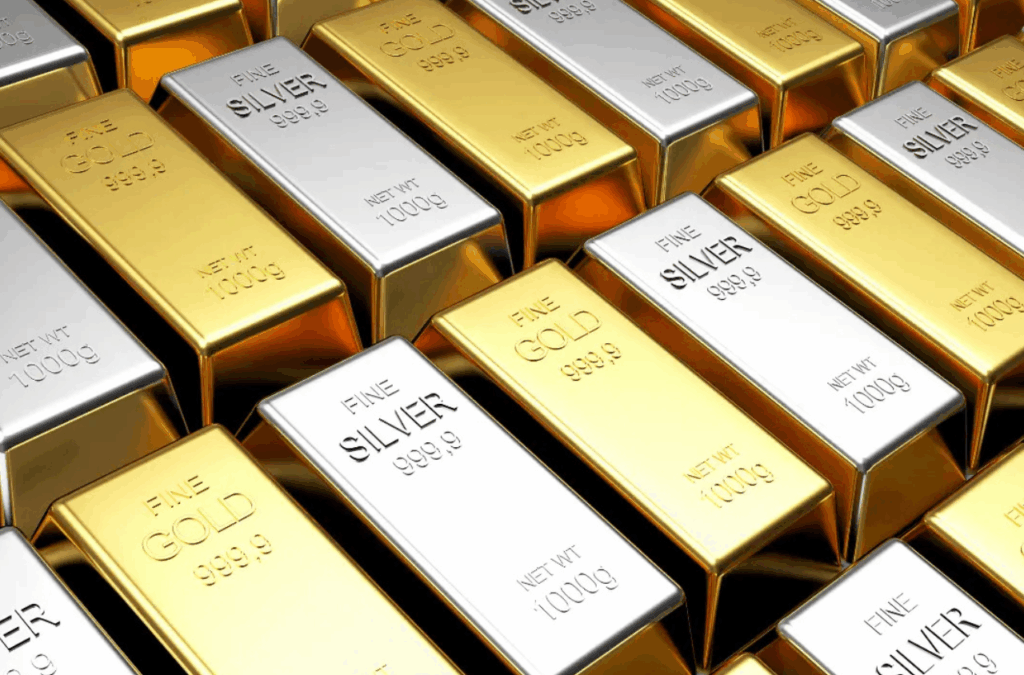
Synopsis: Gold and silver prices fell sharply, with gold nearing a four-month low amid rising inflation concerns and higher interest rate expectations. Despite geopolitical tensions, hawkish central bank outlooks and rising yields reduced the appeal of non-yielding assets.
Gold prices continued to slide in global markets, dropping on Monday and approaching a four-month low. Spot gold fell to $4,200 per ounce, marking its ninth straight session of losses and its weakest level since January 2. The metal had already declined by more than 10% in the previous week.
Silver mirrored the downward trend, with spot prices slipping 11% to $62.1 per ounce. Notably, gold recorded its steepest weekly decline in 43 years last week, falling over 10% and closing below $4,500 per troy ounce in the spot market on Friday.
Prices of Gold and Silver
Silver is currently priced at Rs. 2,06,363 per kg, marking a 10% decline from its previous closing price of Rs. 2,26,772. Gold is currently trading at Rs. 1,34,733 per 10 grams, reflecting a 7% drop from its previous closing price of Rs. 1,44,492.
Why are gold prices down
Gold prices have declined sharply as growing concerns over inflation and expectations of higher interest rates continue to pressure the metal. This comes despite ongoing geopolitical tensions between the US, Israel, and Iran, which have intensified in recent weeks.
Over the weekend, the situation escalated further after a 48-hour ultimatum was issued to Iran regarding the reopening of the Strait of Hormuz, alongside threats of severe retaliation. In response, Iran warned of possible attacks on key regional assets and even the potential closure of the strait, raising fears of prolonged disruptions to global energy supplies.
The escalating conflict has heightened worries about energy-driven inflation, which has been a key factor weighing on gold prices. Rising oil prices are increasing the likelihood that central banks may need to maintain tighter monetary policies to control inflation. As a result, the traditional appeal of gold as a safe-haven asset has weakened, since it does not offer yields and becomes less attractive in a higher interest rate environment.
Market expectations have shifted significantly in recent weeks, moving away from earlier projections of multiple rate cuts to anticipating a pause, with even a slight chance of rate hikes in upcoming policy meetings. This shift follows recent signals from major central banks emphasizing inflation risks, with some already taking a more hawkish stance.
Another possible reason for the recent decline in gold prices is the strength of the US dollar. As a defensive currency, the dollar tends to attract investors during times of global uncertainty, drawing capital away from non-yielding assets like gold. When the dollar rises, gold becomes more expensive in other currencies, reducing demand and putting downward pressure on its price.
Impact on ETFs
Silver ETFs took a brutal hit on Monday, with some funds like Kotak Silver ETF cratering nearly 20% intraday, which is a dramatic move even by commodity standards. The selloff was broad, hitting all 18 silver ETFs tracked in India, with most falling around 9–11% and the worst-hit funds losing a fifth of their value in a single session.
The catalyst was the same macro storm battering gold, as surging crude oil prices tied to Middle East tensions are stoking inflation fears, which in turn is pushing expectations for higher global interest rates. Since silver, like gold, is a non-yielding asset, rising rate expectations make it less attractive relative to bonds, and investors are rushing for the exits.
Among 18 silver exchange‑traded funds (ETFs), the Kotak Silver ETF saw the steepest fall which is plunging about 20 % to an intraday low of Rs. 17.77 from Rs. 22.31, while other major silver ETFs, such as Axis Silver ETF and Bandhan Silver ETF dropped roughly 11 %, and the Edelweiss Silver ETF slid around 10 % on the day. Most other silver ETFs were down close to 9 %, reflecting broad selling pressure and volatility.
Silver is more exposed than gold right now because it serves two roles as a precious metal and an industrial metal. It faces both the pressures affecting gold, like interest rates and a strong dollar, and the risk that a slowing global economy will reduce industrial demand in manufacturing and electronics.
Should investors be worried
Investors may feel some caution but not panic. The sharp drop in gold and silver mainly reflects rising interest rate expectations, a stronger US dollar, and inflation fears, factors that temporarily reduce the appeal of non-yielding assets. Geopolitical tensions and energy concerns could still support prices over time, but in the short term, volatility is likely to continue. Those holding gold and silver for long-term diversification or as a hedge against inflation may see this as a buying opportunity rather than a reason to exit entirely.
Disclaimer: The views and investment tips expressed by investment experts/broking houses/rating agencies on tradebrains.in are their own, and not that of the website or its management. Investing in equities poses a risk of financial losses. Investors must therefore exercise due caution while investing or trading in stocks. Trade Brains Technologies Private Limited or the author are not liable for any losses caused as a result of the decision based on this article. Please consult your investment advisor before investing.
The post Gold and Silver Fall Up to 10% Amid Inflation Fears and Rate Hike Worries; Should You Be Worried? appeared first on Trade Brains.