
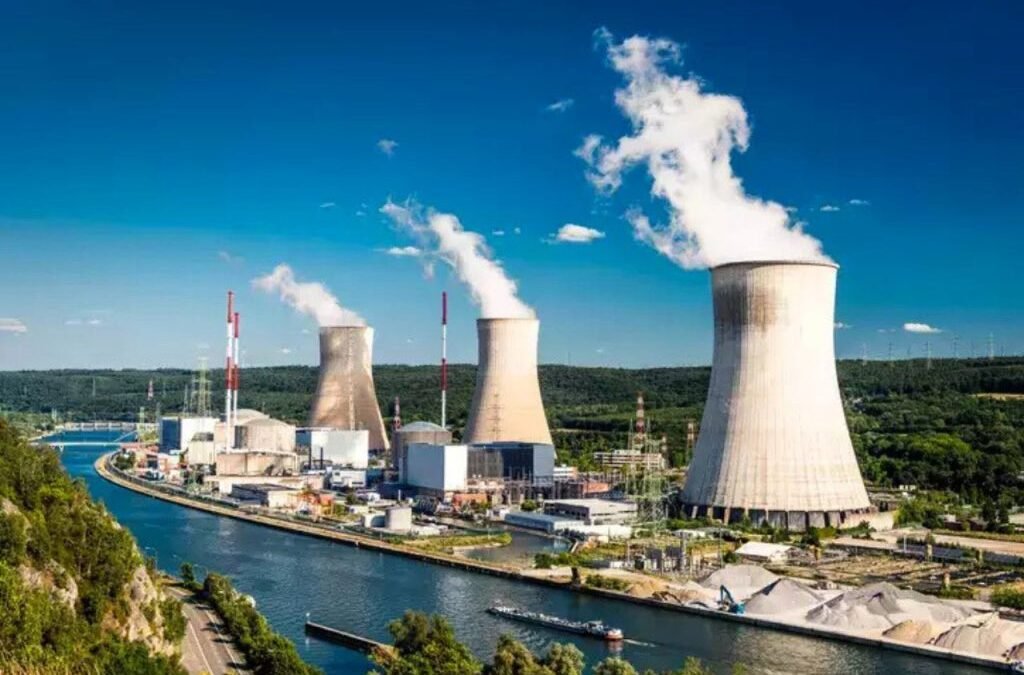
Nuclear energy generates power through atomic fission, providing steady base-load electricity, while hydropower harnesses falling water to drive turbines for renewable energy. Both are vital for India’s green goals; however, differences in capital intensity, government incentives, and environmental dependencies determine which model generates profits more reliably in today’s volatile market.
The Nuclear Business Model
Nuclear energy in India is entering a new era of growth. For years, only the government-owned NPCIL controlled this sector. Now, listed companies like NTPC and Adani Power stand as possible entrants to this space through joint ventures. All this started as India is trying to achieve its goal of 100 GW of nuclear capacity by 2047.
A major advantage of nuclear power is the “Cost-Plus” framework. For a company like NTPC, the government ensures they recover their costs plus a fixed return on equity. This makes earnings very predictable, even if the plant takes nearly ten years to start generating power for the grid.
Despite stable profits later, nuclear requires massive upfront money. For example, NTPC plans to invest Rs 1.5 trillion over the next decade. These high entry costs mean only the largest companies can afford to play. However, once built, the fuel costs are much lower than coal or gas.
The Hydropower Business Model
Hydropower is led by the listed giant NHPC or National Hydroelectric Power Corporation. Unlike nuclear, hydro is a mature industry in India. It currently contributes about 11 percent of the total energy mix. NHPC operates over 24 power stations and is a key player in the nation’s green energy goals.
While hydro has no fuel cost, its profitability is less stable than nuclear. In FY2025, NHPC saw its net profit margins decline from 35 percent to 28 percent. This was largely due to higher finance costs and increased operating expenses, showing that hydro profits can fluctuate.
Risks
Hydro businesses face “nature risk.” If a monsoon is weak, water levels drop, and electricity generation falls. Unlike nuclear, which provides a steady “base-load,” hydro depends on the climate. This unpredictability can make it harder for a company to hit consistent quarterly profit targets for investors.
Cost- Plus Model
In the Indian power sector, the Cost-Plus Model primarily governs Nuclear and Large Hydropower projects. Regulated by the CERC, it ensures producers recover all capital and operating expenses plus a fixed return on equity. While nuclear offers stable, year-round “base-load” profits, hydro’s returns can fluctuate due to seasonal water availability.
Construction and Investment
When looking at real data, we see that while the industry average investment for nuclear projects is Rs 15,000- Rs 20,000 crore per GW, NTPC’s specific 2,800 MW Rajasthan project is estimated at Rs 42,000 crore. Although the industry benchmarks a minimum of five years from concept to commissioning, the real-world wait for such massive infrastructure is closer to a decade. However, the “cost-plus” model ensures guaranteed returns, making this a highly predictable long-term business compared to more volatile energy sectors, especially as NTPC scales toward a 30 GW nuclear target by 2047.
NHPC estimates lower capital costs at Rs 11- Rs 15 crore per MW, with a massive 8,814 MW expansion requiring Rs 98,107 crore. Despite being cheaper per unit than nuclear, hydro faces higher “nature risks” and fluctuating profit margins, as seen in their recent FY2025 financial performance reports and debt levels.
Incentives and PLIs
The Indian government is pushing nuclear harder recently. In the 2026 Budget, significant customs duty relief was given for nuclear components. A Rs 20,000-crore Production Linked Incentive (PLI) scheme is also being proposed. These subsidies make the nuclear business significantly more attractive for private players like Adani Power and Tata Power.
On the other hand, As of the 2026 Budget, there is no specific PLI for large hydro; however, the government has revived the Small Hydropower Scheme with an outlay of Rs 2,500 crore. This provides Viability Gap Funding (VGF) covering up to 30 percent of project costs for plants up to 25 MW, specifically targeting difficult terrains like the North East and Ladakh.
The Bottom Line
Nuclear projects involve high entry costs, with NTPC’s Rajasthan plant estimated at Rs 42,000 crore, yet offer predictable returns via regulated frameworks and new customs relief. Meanwhile, hydropower offers lower capital costs of Rs 11- Rs 15 crore per MW but faces nature-dependent output and 2025 margin declines from 35 percent to 28 percent.
Disclaimer: The views and investment tips expressed by investment experts/broking houses/rating agencies on tradebrains.in are their own, and not that of the website or its management. Investing in equities poses a risk of financial losses. Investors must therefore exercise due caution while investing or trading in stocks. Trade Brains Technologies Private Limited or the author are not liable for any losses caused as a result of the decision based on this article. Please consult your investment advisor before investing.
The post Nuclear vs Hydro: Which Power Business Generates Profits More Easily? appeared first on Trade Brains.