
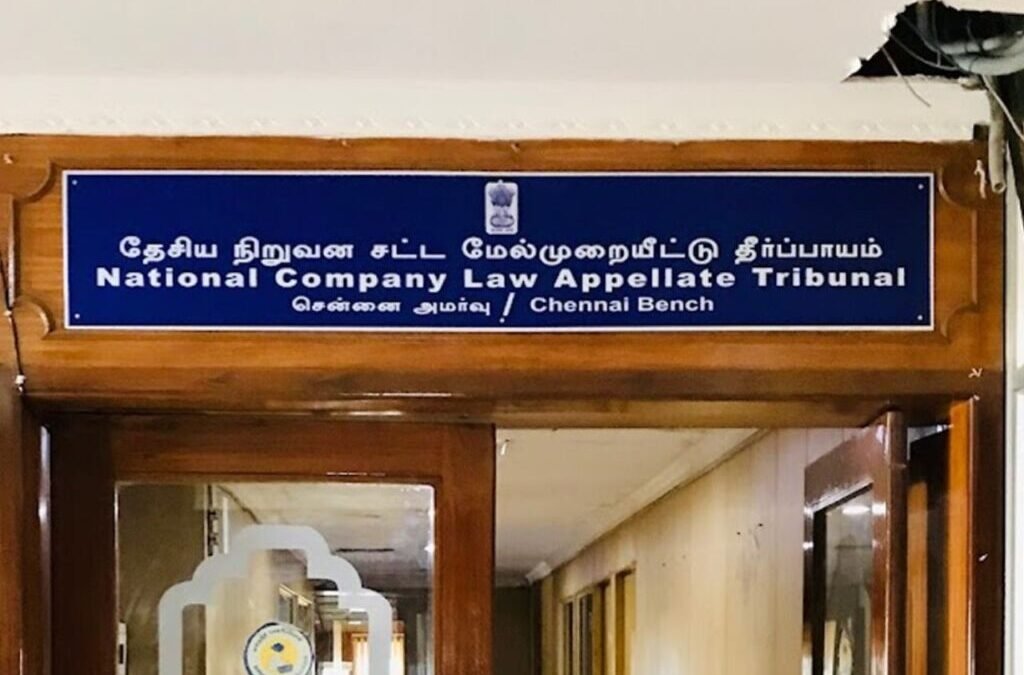
SYNOPSIS: NCLAT refused to stay India’s first corporate class action against Jindal Poly, allowing NCLT proceedings to continue over alleged Rs. 2,500 crore fund diversion through undervalued related-party transactions.
During Thursday’s trading session, shares of the largest manufacturer of biaxially oriented polyethene terephthalate (BOPET) and Biaxially Oriented Polypropylene (BOPP) films in India tumbled around 9 percent on the stock exchanges. So, what triggered this sharp decline? Let’s break it down in this article.
With a market cap of Rs. 2,613 crores, shares of Jindal Poly Films Limited were trading in the red at Rs. 596.8 on BSE, down by around 7 percent, as against its previous closing price of Rs. 640.55. The stock has delivered negative returns of about 10 percent in the last one year, but has gained by around 57 percent in the last one month.
News
According to multiple media reports, the National Company Law Appellate Tribunal (NCLAT) has declined to stay proceedings in what is being described as India’s first corporate class action lawsuit initiated by minority shareholders. The petition alleges fraudulent conduct and the siphoning of over Rs. 2,500 crore by the promoters and management of Jindal Poly Films Limited.
The appellate tribunal dismissed the company’s appeal challenging a 5 February order of the National Company Law Tribunal (NCLT), Delhi bench, which had admitted the class action petition under the Companies Act and issued notice in the matter. The detailed written order from NCLAT is awaited.
Jindal Poly Films, in its plea, sought an urgent stay on the NCLT’s decision, arguing that in the absence of interim relief, it would be required to issue formal communications to nearly 40,000 shareholders, stock exchanges, and the market regulator. The company argued that such disclosures could potentially lead to reputational damage and adverse market impact.
The company further contended that the class action petition was not legally maintainable, arguing that the relevant provision should not be used as an alternative to other statutory remedies that require higher shareholding thresholds. It also stated that the allegations primarily relate to governance matters that, in its view, should have been pursued through other legal mechanisms. Additionally, it pointed out that certain shareholders had previously approached another tribunal bench in a separate matter involving a group entity.
However, the NCLAT chose not to grant interim relief. As a result, the NCLT is now free to proceed with hearings on the merits of the case and examine whether the allegations made by the minority shareholders hold legal and factual validity.
When did it all start?
The case was filed in March 2024 by minority shareholders Ankit Jain, Rina Jain, and Ruchi Jain Hanasoge, who collectively hold a 4.99 percent stake in the company. They were the ones who had alleged that more than Rs. 2,500 crore was diverted through transactions involving undervalued asset sales and related-party dealings with promoter-linked entities.
According to the petition, between 2013 and 2017, Jindal Poly invested ~Rs. 704 crores in group power companies, Jindal Powertech and Jindal India Thermal Power, via zero percent preference shares. In FY21, these power companies reportedly received debt waivers exceeding Rs. 7,000 crore, which improved their financial standing and valuations.
The shareholders allege that despite the improved valuations, Jindal Poly subsequently sold its stake in these entities at significantly discounted prices to promoter-linked firms, resulting in alleged losses exceeding Rs. 2,500 crore for public investors.
Financials
Jindal Poly Films reported a decline in revenue from operations, experiencing a year-on-year decrease of around 69 percent, from Rs. 1,186 crores in Q3 FY25 to Rs. 372 crores in Q3 FY26. Likewise, it’s reported a net loss of Rs. 97 crores from a profit of Rs. 4 crores over the same period.
Jindal Poly Films Limited is a part of the BC Jindal group and is the largest manufacturer of BOPET and BOPP films in India. It is engaged in the business of producing BOPET, BOPP, CPP, Thermal, Metalised, Coated, Capacitor Films and Non-woven fabric. The manufacturing units at Nasik are amongst the most modern facilities available and are capable of producing high-quality products.
Disclaimer: The views and investment tips expressed by investment experts/broking houses/rating agencies on tradebrains.in are their own, and not that of the website or its management. Investing in equities poses a risk of financial losses. Investors must therefore exercise due caution while investing or trading in stocks. Trade Brains Technologies Private Limited or the author are not liable for any losses caused as a result of the decision based on this article. Please consult your investment advisor before investing.
The post Stock in Focus After NCLAT Denies Stay on ₹2,500 Cr Corporate Class Action appeared first on Trade Brains.