
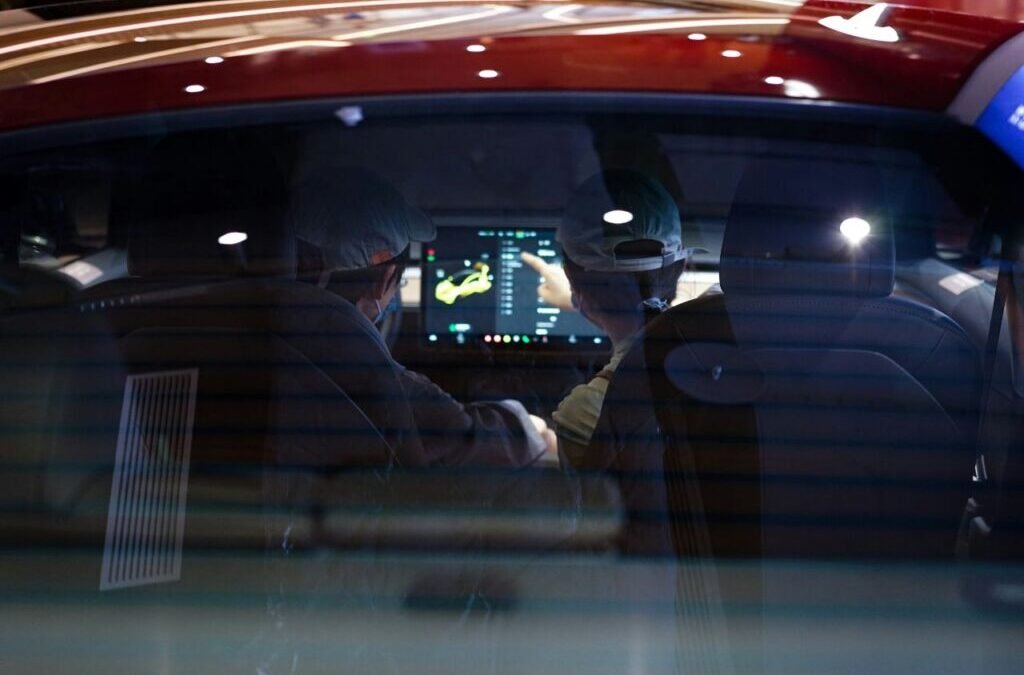
Over the past two years alone, cars have changed more than they did in the previous decade. Electrification has become standard, along with subscription services and autonomous driving. Overall, software has become if not more important than hardware, then certainly on par with it.
Previously, cars were evaluated by engine power or suspension quality. Now buyers first look at over-the-air update capabilities, predictive maintenance systems, CarPlay availability, and auto-parking features. Digital solutions are driving the entire industry forward.
Let’s examine the Digital Solutions, Trends, and Challenges currently dominating the automotive manufacturing industry.
Digital Transformation on Wheels
A Software-Defined Vehicle (SDV) is a car in which most functions are controlled by software rather than hardware. Simply put, the vehicle becomes more than just transportation – it’s a platform on wheels that can be updated, enhanced, and customized without physical intervention.
Just 10–15 years ago, heated seats were considered a luxury. Today, they’re such a standard feature that no one even mentions them. The same evolution is happening with software: what feels like an innovation today will be the norm tomorrow.
OTA (over-the-air) updates that upgrade systems remotely, voice assistants that learn driver habits, or autopilot features that take over routine tasks – all of these are shaping a new philosophy of automotive engineering.
Software no longer just “supports” the car – it defines it. And it’s not only the driver who benefits from a personalized, seamless experience.
Manufacturers gain huge advantages too: they can update features instantly without recalling vehicles, collect real-time data to predict failures, and improve safety. Service centers reduce routine visits, while pedestrians benefit from smarter collision-avoidance systems and lower emissions.
DXC (https://dxc.com/industries/automotive), for example, helps automakers build exactly these types of ecosystems. The DXC Automotive Platform integrates data from multiple sources, analyzes it in real time, and enables the rollout of new digital features without overhauling the entire system.
This is what the future of SDV looks like – where new capabilities are added with just a few clicks instead of another trip to the dealership.
Today, brands like Mercedes-Benz (MB.OS), Volkswagen (Cariad), and Tesla are actively developing their own Software-Defined solutions – with Tesla being the pioneer that showed how a simple software update can literally “upgrade” a car.
The car’s purpose remains the same: to take a person from point A to point B. But technology has made that journey smarter, safer, and more convenient for everyone – drivers, manufacturers, service providers, and even pedestrians.
Key Digital Trends Shaping the Future of Mobility
Today, the automotive industry is evolving into a digital ecosystem driven by data, analytics, and real-time connectivity. Cars are no longer just vehicles — they’re living elements of a vast digital network that constantly learns, reacts, and improves.
AI & Predictive Maintenance
Artificial intelligence has become the “third eye” for service centers and manufacturers. By analyzing sensor data, AI can predict when a part will fail — long before the driver notices any issue. As one of the heads of BMW Service Europe once said, “Every prevented breakdown saves the customer hundreds of euros and saves us days of downtime.”
Developers delivers such capabilities through its analytics modules, which process telemetry, temperature, pressure, and behavioral data to prevent system failures in real time. It’s not just convenient — it boosts safety, cuts maintenance costs, and makes entire fleets smarter.
Cybersecurity Focus
Every connected car is a potential target for hackers. John Marrs’ novel The Passengers imagined a world where autonomous cars were hacked to kidnap people — fiction, but not that far from reality.
Cybersecurity is now one of the hottest topics in the industry. The European Union has already implemented UNECE WP.29 standards, requiring automakers to have robust cybersecurity systems at the vehicle level.
Sustainability & Digital Twins
“Digital twins” are transforming the way cars are designed and tested. A vehicle can now be built in a virtual environment — simulating aerodynamics, component wear, or reactions to weather changes — before the first prototype is even produced.
This saves millions of dollars and years of development time. Remember the movie F1 with Brad Pitt? The race car was created in a digital cockpit, modeling airflow, lighting, and even track temperature — and that’s exactly how the real automotive industry operates today.
Custom software development companies uses simulation technologies to help manufacturers optimize production, reduce CO₂ emissions, and achieve ultra-precise testing.
The world of mobility is moving into an era where vehicles think, predict, and learn. And the companies investing in digital innovation today will be the ones defining what “driving” means tomorrow.
The Role of Cloud Platforms in Automotive Innovation
Cloud ecosystems allow automakers to scale development and securely share data between partners. Previously, each manufacturer built its own IT infrastructure, which cost enormous amounts of money. Now you can rent capacity from AWS, Azure, or Google Cloud and focus on what really matters—creating great cars.
A data-driven approach underlies all “smart” features. Advanced Driver Assistance Systems (ADAS) learn from billions of kilometers of data. Interior personalization adapts to the habits of a specific driver. Fleet monitoring allows companies to optimize routes and save fuel.
Subscription services have already changed the economics of the auto industry.
Among BMW’s subscription offerings are driver assistance ($35/month), map updates ($79/month), and high beam assist ($10/month). Mercedes offers enhanced autopilot capabilities for a monthly fee. Tesla sells “Full Self-Driving” as a subscription or one-time purchase.
This model forced manufacturers to think differently. The car stopped being a product that was sold and forgotten. Now it’s a platform for long-term relationships with customers.
Challenges Along the Way: Data Privacy, Legacy Systems, and Ecosystem Complexity
But unfortunately, we’re not in a fairy tale. Automakers face serious problems when implementing any fundamentally new and technological solutions.
Use of legacy systems that were created 20 years ago. Integrating them with modern software is very difficult.
Insufficient integration between manufacturers (OEMs) and suppliers complicates everything even more. Each component may use its own communication protocol and standards.
And we shouldn’t forget that developing software for cars is expensive. Very expensive. GM spent billions developing its own software platform, Ultifi. Volkswagen invested over 7 billion euros in Cariad.
Cybersecurity issues also persist. Hackers don’t sleep, and manufacturers must stay ahead of threats.
Finding a contractor who understands the specifics of automotive software is also a challenge. This isn’t a mobile app where a bug causes frustration. Here, a mistake can cost lives.
Instead of trying to do everything on their own, smart manufacturers partner with tech giants. Next, let’s look at the best Automotive Digital Solutions.
5 Best Automotive Digital Solutions
1. DXC Automotive Platform
The company provides solutions for the automotive and manufacturing sectors that modernize operations, integrate IT and OT, create smart factories, and support connected sustainable mobility.
- Year of implementation: Actively developing since 2020
- Applications: Volkswagen Group, Ferrari, and other leading automakers
- Business impact: Reduction in time-to-market for new features by 40%
2. Google Android Automotive OS
Not to be confused with Android Auto! This is a full-fledged operating system for cars, built into the vehicle itself. Google Assistant, Google Maps, and thousands of apps are available natively.
- Release year: 2020 (Polestar 2 was the first)
- Applications: Volvo, Polestar, GM, Ford, Honda, Renault
- Business impact: Allows manufacturers to save millions on developing their own systems
3. AWS Automotive Cloud
Amazon’s cloud platform specifically adapted for the auto industry. Processing telematic data, machine learning for autonomous driving, fleet management.
- Release year: 2021
- Applications: BMW, Rivian, Waymo
- Business impact: Rivian built its entire digital infrastructure on AWS
4. BlackBerry IVY
Platform for processing data from car sensors and providing real-time insights. Allows manufacturers and developers to create applications that use vehicle data.
- Announcement year: 2020 (together with AWS)
- Applications: Currently in pilot project stage with various manufacturers
- Business impact: Opens new opportunities for data monetization
5. Bosch Vehicle Cloud
The German tech giant offers a cloud platform for connected services. Focus on predictive maintenance and fleet efficiency optimization.
- Launch year: 2019
- Applications: Widely used by commercial fleets in Europe
- Business impact: Customers report 20-30% savings on maintenance
So, the Future of Automotive Digital Solutions
The modern car is already significantly better than a horseless carriage. And users don’t want to downgrade and return to Henry Ford’s first automobile. We’re accustomed to comfort, technology, and safety.
That’s why, just recently, Xiaomi’s car didn’t exist, and now it’s gaining enormous popularity. Buyers don’t look exclusively at the brand; they evaluate comfort and offerings. Tech companies that have never had automotive heritage can compete with century-old brands precisely because of their digital-first approach.
And even the best market players can lose if they ignore current trends in the automotive industry.
The digital transformation of the auto industry is about creating a better experience for people. Safer roads. Cleaner air. More comfortable lives.
Safe travels to everyone!
The post The Future of Automotive: Digital Solutions, Trends, and Challenges appeared first on Trade Brains Features.