
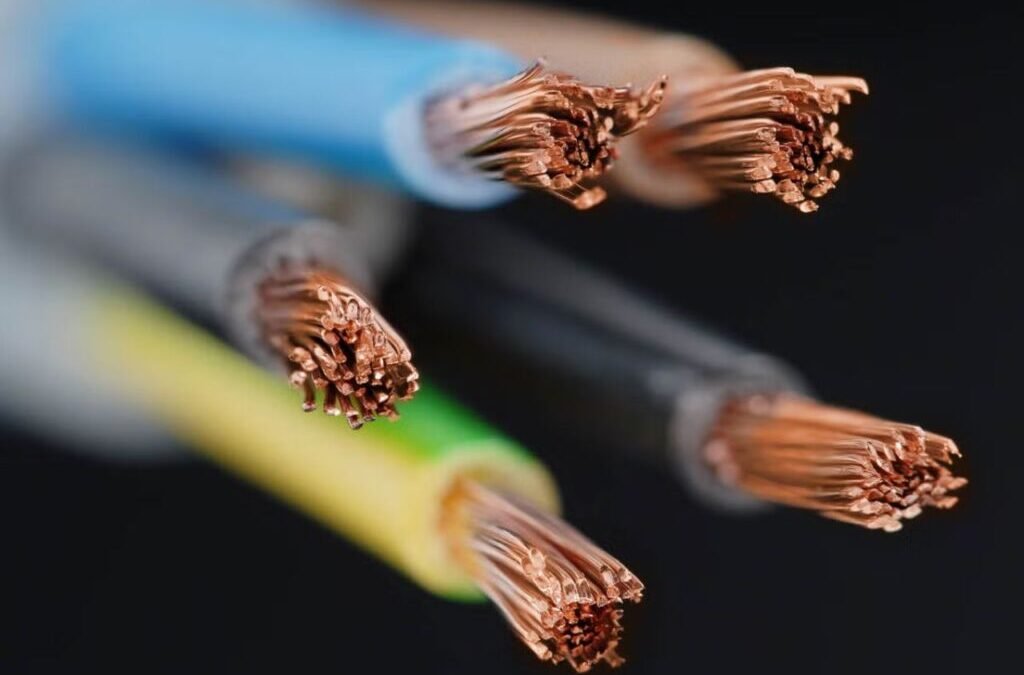
Synopsis: New entries by Bajaj, Adani and Birla may alter competitive dynamics in India’s cable and wire industry, a USD 9.32 billion market projected to reach USD 17.08 billion by 2032, with rising investments, pricing pressure and gradual shifts in market share.
The cable and wire industry in India is closely linked to the country’s broader growth in power, infrastructure, housing and industrial activity, making it an essential but often understated segment of the manufacturing ecosystem. In recent years, rising electrification, urbanisation and capex-led development have brought renewed attention to this space, setting the context for shifts in competition and industry structure.
Industry Overview
India’s wires and cables industry is a critical backbone of the country’s power, infrastructure, and digital ecosystem, with the market valued at USD 9.32 billion in 2024 and expected to expand to USD 17.08 billion by 2032, reflecting a CAGR of 7.94 percent. Growth is being driven by strong demand from power transmission and renewables, urban infrastructure upgrades, digital connectivity, and electric vehicle adoption.
Renewable energy, especially solar, is a major demand driver, as a 1 MW solar project typically requires around 50 km of solar cable. With India’s aggressive solar capacity expansion targets, this translates into millions of kilometers of cable demand. Parallelly, rising data consumption and faster transmission needs are reshaping product mix, with increasing use of hybrid cables, high-speed Cat.7 Ethernet cables, and optical fiber replacing conventional copper cables in several applications.
The Production Linked Incentive programme has already catalysed INR 1.47 lakh crore of private capex, benefiting cable manufacturers supplying to sunrise sectors such as EVs, renewables, and digital infrastructure.
Additionally, initiatives like Green Energy Corridors and the National Broadband Mission 2.0, which targets optical fiber connectivity to 2.7 lakh villages by 2030, ensure sustained long-term demand. On the global front, the China+1 strategy is opening export opportunities, with India’s cable exports poised to rise from USD 1.3–1.5 billion currently to over USD 3 billion by the end of the decade, reinforcing the industry’s structural growth trajectory.
A Changing Industry Landscape
India’s cables and wires industry is entering a new phase as large, well-capitalised conglomerates announce their entry into the segment. The sector, which has long been dominated by established players with strong distribution networks and brand recall, is now witnessing interest from groups like Bajaj, Adani and Aditya Birla. While demand fundamentals remain strong, driven by housing, infrastructure, electrification and industrial capex, the arrival of new entrants has raised concerns around competition, pricing pressure and market share dynamics.
Bajaj Electricals
Bajaj Electricals announced its entry into the wires segment in January 2026, marking a strategic extension of its electrical consumer products and lighting portfolio. The company has clarified that its initial focus will be on wire, leveraging its strong brand presence, retail reach and electrician connect. Commercial rollout is expected to begin in the near term, with management indicating a calibrated approach rather than an aggressive, capex-heavy launch.
In the near to medium term, Bajaj’s entry is likely to intensify competition in the housing wires segment, where branding, distribution and price play a critical role. While cables may remain outside its immediate plans, over time the possibility of forward integration into cables cannot be ruled out if scale and margins justify expansion. This makes Bajaj a more direct competitive threat to wire-heavy portfolios rather than diversified cable manufacturers in the initial phase.
Adani Group
The Adani Group announced its foray into the cables and wires segment in March 2025 through a joint venture under its metals and copper ecosystem. Unlike consumer-facing players, Adani’s strategy appears to be long-term and vertically integrated, anchored around copper manufacturing, infrastructure projects and power transmission. Commercial scale-up is expected to be gradual, with meaningful market presence likely over the next few years rather than immediately.
Adani’s entry could eventually impact the cables and wires segments, especially in institutional, power, railways and infrastructure-linked demand. While near-term disruption for incumbents may be limited, the group’s balance sheet strength and access to captive demand raise the risk of competitive pricing and scale-led pressure over the long run.
Aditya Birla Group
The Aditya Birla Group, through UltraTech Cement, announced its entry into the wires and cables business in February 2025, with a planned investment of around Rs. 1,800 crore and a greenfield manufacturing facility in Gujarat. Operations are expected to commence by late 2026. The strategy is clearly structured, with a focus on building scale, manufacturing efficiency and leveraging group synergies.
Birla’s entry is seen as one of the more serious long-term threats to incumbents, given its execution track record and willingness to invest patiently. However, similar to Adani, the impact is expected to be phased rather than immediate, as building brand recall, dealer relationships and product acceptance in this industry takes time.
Impact on Existing Cable Players
For established cable players like Polycab India, KEI Industries and RR Kabel, the immediate impact of these announcements has been more on market sentiment than on business fundamentals. These companies continue to benefit from strong demand, diversified end-markets and well-entrenched dealer networks.
In the cables segment, especially high-voltage, infrastructure and industrial cables, entry barriers remain relatively high due to certifications, execution capability and client trust. Recently, KEI Industries has increased their cable prices due to an increase in raw material cost.
Over the medium to long term, increased competition from Adani and Birla could lead to pricing pressure in commoditised cable categories and slower market share gains. Larger incumbents with scale, export exposure and premium product mix are better positioned to absorb this pressure compared to smaller or less diversified players.
Wires Segment
The wires segment is likely to see sharper competitive intensity. Since Bajaj Electricals is entering only wires initially, companies with a higher dependence on housing wires face relatively greater risk. Players such as RR Kabel, Havells and Finolex Cables, which derive a larger share of their cables and wires portfolio from wires rather than cables, could see margin pressure if competition intensifies through branding and pricing.
Wires are more brand-driven and less technically complex than cables, making them easier to enter. As a result, new entrants with strong consumer brands and retail reach can disrupt this segment faster than cables, especially in urban and semi-urban housing markets.
A Balanced Outlook
While the entry of Bajaj, Adani and Birla does change the competitive narrative, it does not immediately derail the growth story of existing players. Demand tailwinds, execution capability and brand strength still favour incumbents in the near term.
New entrants will take time to build scale, trust and distribution depth. Over time, the industry may see consolidation, tighter margins in commoditised segments and a sharper differentiation between premium, infrastructure-focused cable players and housing wire specialists. Overall, competition is set to rise, but so is the size of the opportunity, making execution and positioning more important than ever.
Disclaimer: The views and investment tips expressed by investment experts/broking houses/rating agencies on tradebrains.in are their own, and not that of the website or its management. Investing in equities poses a risk of financial losses. Investors must therefore exercise due caution while investing or trading in stocks. Trade Brains Technologies Private Limited or the author are not liable for any losses caused as a result of the decision based on this article. Please consult your investment advisor before investing.
The post How will Bajaj, Adani, Birla Reshape the Cable and Wire Industry? appeared first on Trade Brains.