
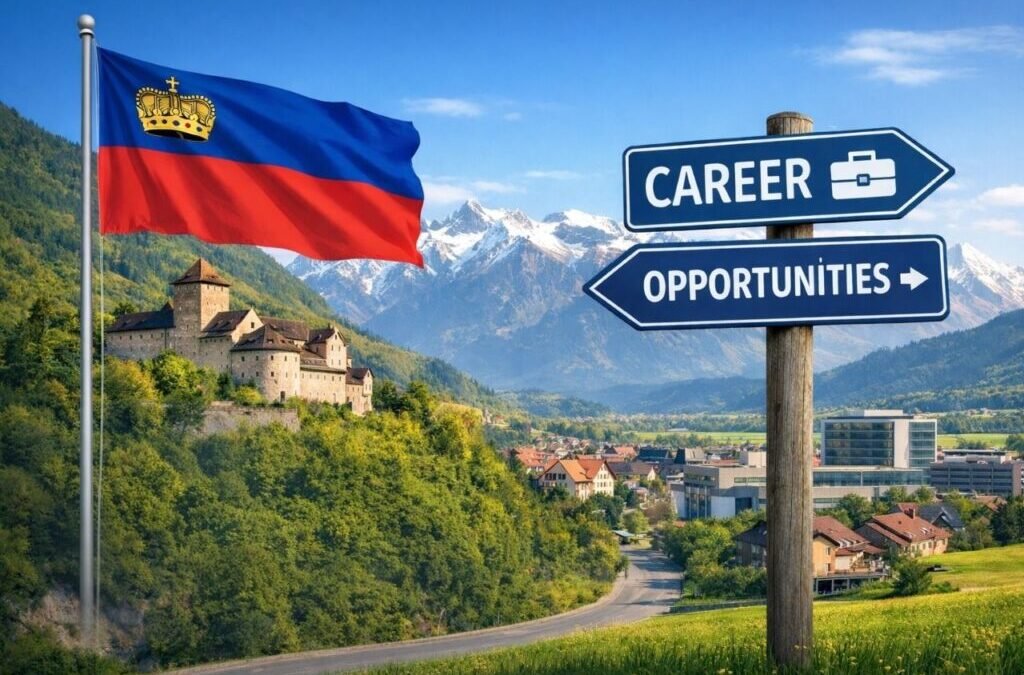
Liechtenstein rarely comes up when foreign professionals discuss working in Europe. Its size alone often leads to the assumption that job options must be limited. However, when people explore Liechtenstein jobs, spanning roles featured on job-search services like Layboard.in, a different picture starts to emerge. The country operates less like a small market and more like a highly concentrated economic zone.
For job seekers from India, this distinction is important. Liechtenstein does not rely on mass hiring or seasonal labor. Instead, its employment model is built around specialization, long-term value, and high productivity per employee.
A Small Economy With High Output
Despite its size, Liechtenstein consistently ranks among Europe’s strongest economies in terms of output per capita. This strength is not driven by volume, but by focus.
The country hosts a dense cluster of financial services, advanced manufacturing, precision engineering, and technology-driven industries. Many companies operate globally while keeping lean teams at home. As a result, each position carries significant responsibility and value.
Why Size Works as an Advantage
A smaller workforce means fewer internal layers and less competition for specialized roles. Foreign professionals with clearly defined expertise often face less saturation than in larger European labor markets.
Salary Levels and Economic Reality
Liechtenstein offers some of the highest salary levels in Europe, reflecting both productivity expectations and cost structures. Compensation is closely tied to skills, experience, and contribution rather than job titles alone.
While living costs are high, employment contracts usually account for this reality. For foreign specialists, the balance between income and professional growth often remains favorable when compared to larger markets with lower net pay.
Low Competition, High Expectations
Unlike countries that attract large volumes of foreign workers, Liechtenstein maintains a selective approach. The total number of vacancies is limited, but competition is often lower due to the highly specific nature of roles.
Who Fits the Market Best
Professionals with technical, financial, engineering, or niche industrial backgrounds tend to integrate more easily. General profiles are less effective, while targeted expertise significantly improves entry chances.
Hiring Culture and Workplace Structure
Daily work in Liechtenstein tends to feel compact rather than hierarchical. Teams are small enough that roles are visible, and individual decisions carry weight almost immediately. Communication is usually straightforward, not because it is enforced, but because small teams leave little room for ambiguity.
Foreign professionals are noticed quickly, for better or worse. Contribution becomes visible early, and expectations adjust based on results rather than titles. This suits people who are comfortable taking responsibility without waiting for layered approval.
Regulatory Environment and Employment Access
Employment regulations in Liechtenstein are transparent but precise. Entry into the labor market requires alignment between job role, qualifications, and legal frameworks.
For foreign workers, preparation matters. Employers expect documentation, clear professional histories, and realistic expectations regarding responsibilities. When these elements align, long-term employment relationships are common.
Entry Barriers and Realistic Expectations
Liechtenstein does not operate on speed, and this often surprises first-time applicants. Open positions appear irregularly, and recruitment can stretch over weeks without clear signals in between. For employers, the process is less about filling a vacancy quickly and more about deciding whether cooperation makes sense in a very small working environment.
From the candidate’s side, this changes the approach entirely. Sending dozens of applications rarely works here. Professionals who slow down, focus on fit, and accept longer waiting periods usually navigate the market with fewer false expectations.
Liechtenstein rarely fits the idea of a fast or accessible labor market, and that is part of its logic. Opportunities appear quietly and require attention rather than speed. For foreign professionals who are comfortable working in focused environments with clear expectations and limited internal competition, the country can offer meaningful career value when decisions are based on careful observation and realistic reference points.
FAQ
Is Liechtenstein open to foreign professionals?
Liechtenstein hires foreign specialists mainly in roles that require highly specific expertise. Employers usually look for candidates whose skills cannot be easily sourced within the local workforce. This makes foreign hiring selective rather than large-scale.
Are salaries in Liechtenstein higher than in most of Europe?
In many sectors, salary levels are noticeably higher than the European average. This reflects both high productivity expectations and the country’s economic structure. Compensation is often closely linked to individual contribution rather than formal seniority.
Is competition for jobs high?
The total number of vacancies is limited, but competition is often lower than in larger European markets. This is because roles are narrowly defined and require precise qualifications. Candidates with general profiles usually face more difficulty than specialized professionals.
Does Liechtenstein offer long-term career prospects?
Many positions are designed with long-term cooperation in mind rather than short-term contracts. Employers tend to invest in employees once a suitable match is found. This creates stable professional relationships over time.
Is English sufficient for professional work?
English is widely used in international companies and technical environments. However, certain roles may require knowledge of local languages depending on client interaction or regulatory needs. Language expectations vary by sector and employer.
The post Liechtenstein : How One of Europe’s Smallest Countries Offers Big Career Opportunities appeared first on Trade Brains Features.