
International scaling usually breaks at the same point: creative. The offer may be solid and the targeting may be correct, but the ad still feels “imported” because the people, vibe, and visual context don’t match what local audiences expect.
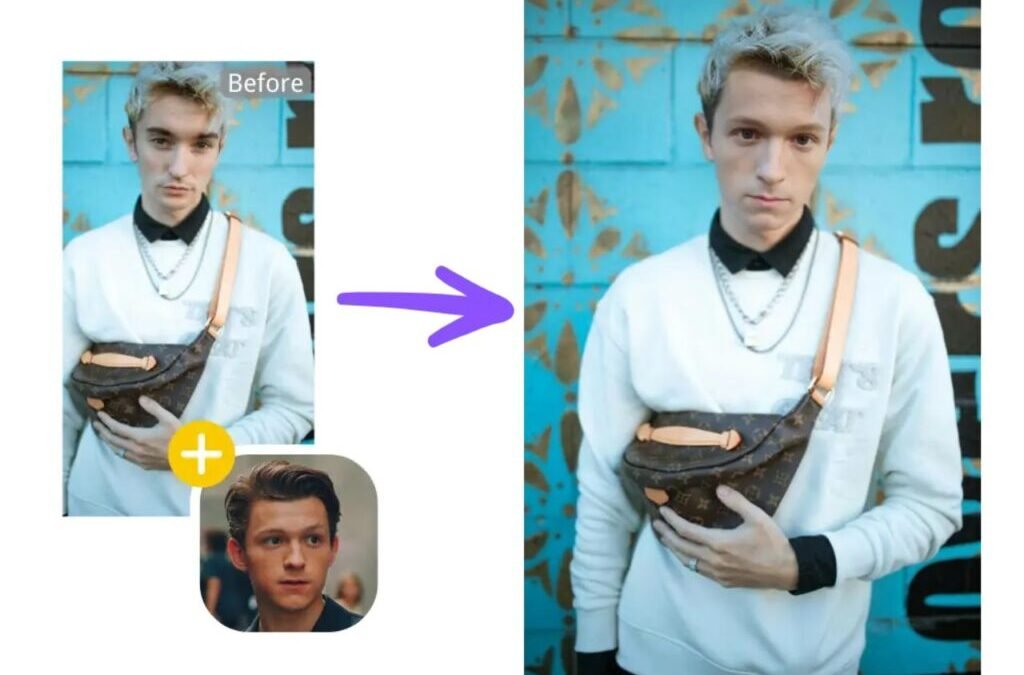
A practical workaround is to localize the “identity layer” first with ai face swap, so you can keep your campaign structure consistent while adapting the on-screen persona for each market. Supawork presents its face swap as free and no sign-up, and it supports common photo formats like JPG/PNG/WEBP/HEIC with a 20MB limit.
Why “translation-only localization” underperforms
Most teams localize currency and language, then wonder why performance doesn’t move. The real issue is visual relevance: if the person in the creative doesn’t feel like “someone from here,” users often scroll before they even process the message.
That’s why localization should be treated as an execution system, not a one-time rewrite. The goal is to make relevance obvious in the first second.
Keep the structure, swap the identity
Think of your campaign as two layers:
Structure layer (keep stable): offer, hook style, CTA, landing page sections, product proof.
Identity layer (localize): face, persona styling, thumbnail character, “who is speaking.”
When the structure stays stable, your team can keep what already converts. When the identity layer changes, the same message feels native across markets.
Workflow: static first, video second
Localization scales when you validate cheaply before producing the video.
Start with static variants:
- Ad images
- Landing page hero images
- Email thumbnails
- Creator-style post visuals
Static is faster to iterate, easier to QA, and quicker to test for CTR and landing engagement. Once a market-specific identity variant shows positive signals, you can upgrade it to a video.
Standardize inputs to protect quality
Face-swap quality is mostly an input problem, not a tool problem. Build a basic checklist that everyone follows:
- The target photo is clear, front-facing, and well-lit.
- No heavy blur, extreme angles, or major occlusion.
- Cropping is consistent across markets, so the layout stays “brand-tight.”
If your inputs are inconsistent, your localization will look inconsistent—even if your message is perfect.
Turn winners into short video variants
After you pick the best-performing identity variant per market, convert it into short-form video so the campaign feels truly local in motion.
Use video face swap as the production multiplier: with video face swap, you can generate face-swap videos with a simple upload flow (source video + target face photo), and Supawork highlights features like no login, no watermark, and 1080P enhancement.
The page also lists supported video formats MP4/MOV/AVI/WEBM (up to 300MB) and target photo formats up to 20MB, which helps teams standardize submissions across regions.
A localization script that doesn’t require rewriting everything
To keep localization fast, don’t rewrite the entire script per market. Keep the structure fixed and localize only what changes perceived relevance:
- Opening line: local pain point wording (one sentence).
- Proof cue: local example or category (one sentence).
- CTA: local verb + familiar action (“Try it,” “Get the demo,” “Join the waitlist”).
Everything else stays stable, which makes your testing cleaner and your production scalable.
Compliance and brand trust (especially across borders)
Localization can become risky if it implies endorsements or uses faces without permission. Treat identity assets as brand assets:
- Use faces you own or have explicit rights to use (team members, contracted creators, licensed models).
- Avoid public figures and sensitive contexts.
- Don’t frame the creative in a way that misleads users about who is speaking.
Trust is a conversion lever, and it’s even more fragile when you’re entering a new market.
Closing
Global scaling doesn’t require reinventing campaigns country by country. It requires a repeatable way to make relevance obvious: keep the structure that already converts, localize the identity layer to match local expectations, validate with static first, then scale winners into video.
When teams operationalize localization this way, performance becomes something you can iterate on weekly—not a mystery that resets every time you enter a new region.
The post The Global Creative Localization Playbook: Make One Campaign Feel Local Everywhere appeared first on Trade Brains Features.