
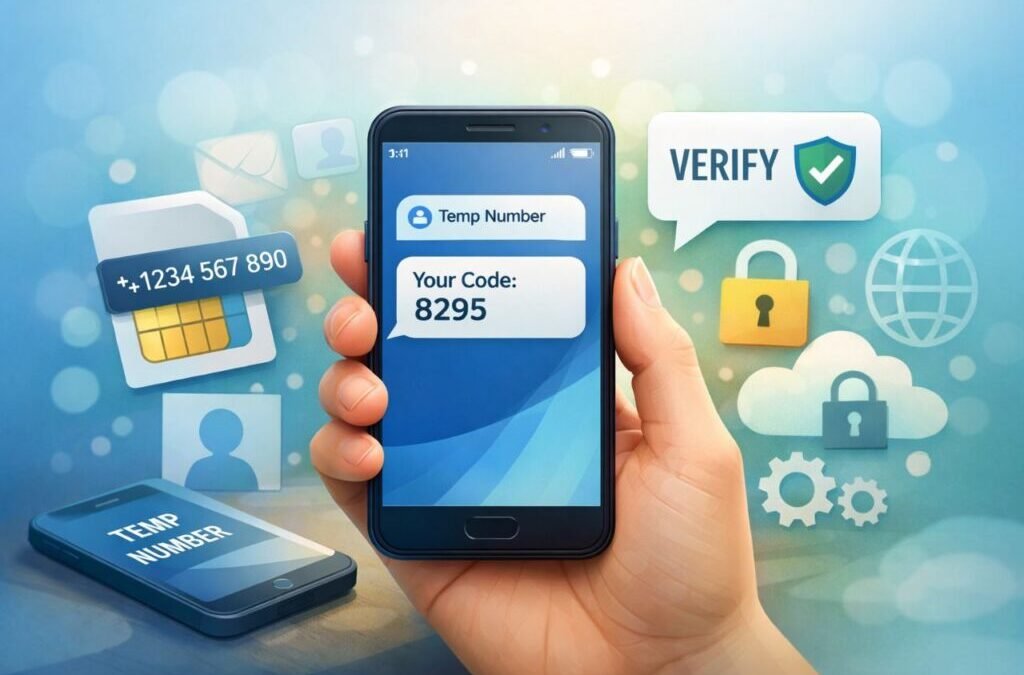
The modern internet is built on verification. Nearly every digital service today — from messaging platforms and cloud tools to online marketplaces and developer environments — requires users to confirm their identity at some stage.
Most often, this confirmation comes in the form of SMS-based phone verification. While this mechanism helps prevent automated abuse and fake account creation, it also introduces a significant privacy challenge that many users underestimate.
A phone number is one of the most persistent identifiers in the digital world. Unlike passwords, it cannot be easily rotated. Unlike usernames, it is often directly connected to a real individual. Once a phone number is shared with an online platform, it can be stored indefinitely, linked to other data points, and reused for purposes beyond its original intent. Over time, this leads to the accumulation of personal data across multiple systems that the user cannot fully control or audit.
As data breaches become more frequent, phone numbers are increasingly exposed alongside emails, usernames, and activity logs. These leaked numbers are then used for spam campaigns, SMS phishing attacks, and targeted social engineering.
Even legitimate companies may use phone numbers for analytics, advertising, or cross-platform tracking. As a result, sharing a personal phone number online often creates long-term risks that extend far beyond the initial verification step.
To address this problem, many users are turning to temporary phone numbers as a privacy-focused alternative. A temporary phone number allows a user to complete required verification processes without permanently linking their real identity to a platform. By using a temporary phone number, users can satisfy SMS verification requirements while minimizing long-term exposure of their personal contact information.
This approach is especially effective for services that require phone verification only once, such as during initial registration or one-time access. In these cases, retaining a personal phone number provides little additional security benefit but creates ongoing privacy concerns. Temporary numbers allow verification to occur without introducing unnecessary data retention.
Temporary phone numbers are widely used in professional and technical environments. Developers and QA engineers often need to create multiple test accounts to evaluate authentication flows, rate limits, onboarding processes, or error handling.
Using real phone numbers in test environments is impractical and risky, especially when accounts need to be created and discarded frequently. Temporary numbers make it possible to conduct thorough testing without exposing personal data or relying on physical SIM cards.
Security researchers and analysts also benefit from temporary verification methods. When studying platform behavior, abuse prevention systems, or authentication mechanisms, researchers often need controlled access without linking their personal identity to the systems being tested. Temporary phone numbers provide a clean separation between research activity and real-world identity.
Another important advantage is protection against SMS-based threats. Phishing attacks delivered via text messages have become increasingly sophisticated, often impersonating banks, delivery services, messaging platforms, or account security alerts. These attacks frequently rely on leaked phone number databases.
By reducing the number of platforms that have access to a real phone number, users significantly lower their exposure to targeted SMS phishing attempts.
Temporary phone numbers also improve digital hygiene for everyday users. Many platforms automatically send promotional messages, notifications, or follow-ups long after the user stops engaging with the service.
Over time, these messages clutter personal inboxes and increase the risk of falling for fraudulent messages. Using temporary numbers isolates verification traffic and prevents unwanted communication from reaching a personal device.
From a usability standpoint, temporary numbers eliminate the need for additional SIM cards, secondary phones, or long-term telecom contracts. This is particularly valuable for users who travel frequently, work remotely, or interact with services across multiple regions.
Many platforms enforce geographic restrictions that require phone numbers from specific countries. Temporary numbers provide a flexible way to meet these requirements without relying on local mobile operators or expensive roaming plans.
Beyond convenience and security, the use of temporary phone numbers aligns with modern privacy principles such as data minimization and purpose limitation. Users should share only the information that is strictly necessary, for a specific purpose, and for the shortest possible time.
Applying this principle to phone verification reduces the accumulation of persistent identifiers across unrelated platforms and strengthens user control over personal data.
As awareness of digital privacy continues to grow, temporary phone numbers are moving from a niche solution to a standard practice. They offer a balanced approach that respects both security requirements and user privacy.
In an internet environment where personal data is constantly collected, analyzed, and reused, reducing dependence on permanent identifiers is becoming essential.
In the long term, the role of temporary phone numbers will likely expand as platforms face increasing pressure to improve data protection practices. Users who adopt privacy-focused verification methods today gain greater control over their digital identity and reduce long-term risks associated with data exposure.
Temporary phone numbers are not about avoiding security — they are about implementing security responsibly. By limiting unnecessary data sharing while still complying with verification requirements, users can participate fully in the digital world without sacrificing control over their personal information. In a connected environment where trust is increasingly fragile, tools that protect identity without compromising access are becoming indispensable.
The post Why Temporary Phone Numbers Have Become a Critical Element of Digital Privacy appeared first on Trade Brains Features.