
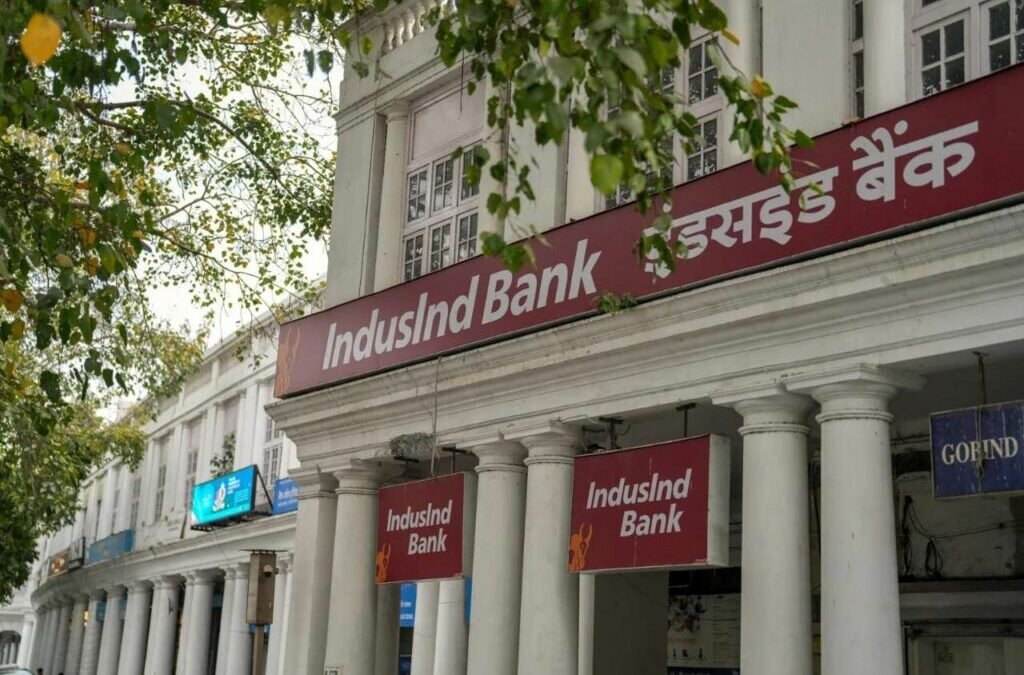
Synopsis: India’s largest private bank is in focus today after RBI approved its group entities to together hold a maximum 9.5% stake in IndusInd Bank. This move is due to a regulatory requirement; let us see what more about this approval and what it stands for.
This company, which is an Indian banking and financial services company headquartered in Mumbai. And India’s largest private sector bank by assets and one of the world’s largest bank by market capitalisation is in focus after RBI approved bank and its associated entities to hold 9.5% stake in IndusInd Bank.
With a market cap of Rs 15,31,328 crore, the shares of HDFC Bank Ltd are trading at Rs 995 per share and are trading at a PE of 21.2, whereas their industry PE is 15.4 and its median PE is 20.4. The shares have given a return of 41% over the last 5 years.
About the RBI approval
HDFC Bank has received approval from the RBI to allow its group entities to collectively hold up to a 9.5% stake in IndusInd Bank, a move driven by regulatory requirements rather than a new investment plan. The approval, granted on December 15, 2025, is valid for one year until December 14, 2026, and comes with the condition that the aggregate holding must remain within the approved limit at all times.
The bank has clearly stated that it does not plan to invest directly in IndusInd Bank. Instead, the approval was necessary because investments made independently by HDFC group entities, such as HDFC Mutual Fund, HDFC Life, HDFC ERGO, HDFC Pension, and HDFC Securities, could together cross the earlier regulatory threshold. Under the RBI’s updated 2025 guidelines, such holdings are treated as a single “aggregate holding”, making prior approval mandatory.
This development reflects the RBI’s effort to keep a close watch on ownership concentration in the banking system while still allowing large financial groups to operate normally through their various businesses. The permission does not imply any change in control or management influence over IndusInd Bank, as the approved stake remains well below levels that would indicate promoter control.
For investors, the disclosure should be seen as a routine regulatory clarification, not a strategic tie-up or acquisition. It removes uncertainty around compliance for HDFC group entities and ensures their investments can continue smoothly in the normal course of business, without altering the competitive or ownership landscape of IndusInd Bank.
Financials and more
HDFC Bank’s net interest income (NII) came in at Rs 31,550 crore in Q2 FY26, registering a 0.4% QoQ increase over Rs 31,440 crore in Q1 FY26, indicating stable sequential growth. On a YoY basis, NII rose 4.8% from Rs 30,110 crore in Q2 FY25, reflecting steady expansion in core lending operations.
HDFC Bank is widely recognised as one of India’s leading private sector banks, with its origins closely tied to the liberalisation of the Indian banking system. Promoted by HDFC Ltd, it was among the first institutions to receive an “in-principle” approval from the RBI to set up a private bank. Incorporated in August 1994 and commencing operations in January 1995 as a Scheduled Commercial Bank, HDFC Bank built its foundation on strong governance, financial discipline, and a clear focus on customer needs.
A major turning point in the bank’s journey came in April 2022 with the announcement of the merger between HDFC Ltd and HDFC Bank. This historic merger brought together India’s largest housing finance company and its largest private sector bank, significantly expanding the bank’s capabilities. With decades of expertise in housing finance now integrated into the banking platform, HDFC Bank offers a wide range of financial services—from banking and home loans to insurance and mutual funds—through its subsidiaries. Post-merger, the bank continues to be professionally managed by an experienced board and operates without an identified promoter, underscoring its institutional character.
HDFC Bank’s scale is reflected in its extensive distribution network and growing international presence. As of September 30, 2025, the bank had over 9,500 branches and more than 21,000 ATMs across 4,100+ cities and towns, with more than half of its branches located in semi-urban and rural areas. Internationally, it operates branches in key global financial centres and maintains representative offices to support overseas customers and housing finance–related services. This strong domestic reach, combined with selective global presence, positions HDFC Bank as a deeply embedded and trusted player in India’s financial system.
Written by Leon Mendonca.
Disclaimer

The views and investment tips expressed by investment experts/broking houses/rating agencies on tradebrains.in are their own, and not that of the website or its management. Investing in equities poses a risk of financial losses. Investors must therefore exercise due caution while investing or trading in stocks. Trade Brains Technologies Private Limited or the author are not liable for any losses caused as a result of the decision based on this article. Please consult your investment advisor before investing.
The post Bank stock in focus after receiving RBI approval to hold 9.5% stake in IndusInd Bank appeared first on Trade Brains.