
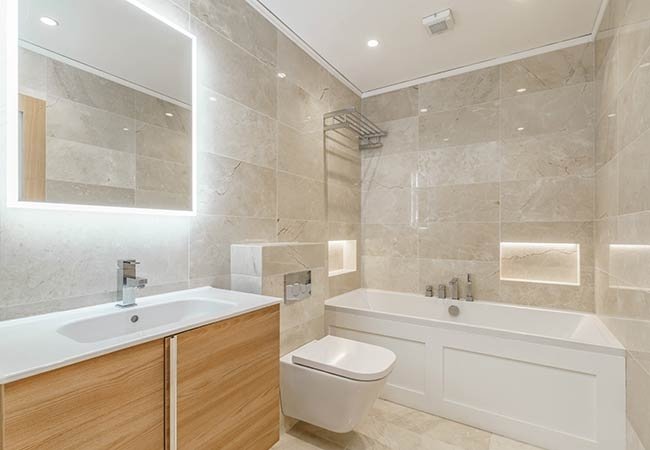
A beautifully decorated room can still feel visually uncomfortable. This often happens when walls and floors do not align in style, tone, or strength. The eye immediately catches the imbalance.
The flooring may feel too bold while the walls look plain, or the walls may be richly detailed while the floor feels dull. Since these two surfaces occupy the largest area in a room, they must work together to create a cohesive environment.
This is where the difference between wall tiles and floor tiles becomes important. Understanding how each tile type functions helps you make better design decisions and ensures your interiors feel intentional and harmonious.
What Really Sets Wall Tiles And Floor Tiles Apart?
Wall tiles and floor tiles may look similar at first glance, but they are engineered for completely different roles.
Wall Tiles: Designed For Style And Lightness
Wall tiles are primarily decorative. They add personality, colour, and texture to the vertical surfaces. That is why they are:
- Thinner and lighter in structure
- Easy to install on vertical surfaces
- More varied in finishes such as gloss, satin, and decorative textures
Since they cannot withstand the pressure of footsteps, using them as flooring can lead to cracks or chipping.
Floor Tiles: Designed For Strength And Safety
Floor tiles are made to take impact. They endure constant movement, rough use, cleaning, and furniture weight. Which is why they are:
- Thicker and structurally stronger
- Slip-resistant, especially in wet areas
- Resistant to stains, scratches, and heavy wear
Floor tiles can be used on walls if the wall is st3rong enough, but wall tiles should never be used underfoot.
One simple rule:
Wall tiles = For the eyes
Floor tiles = For the feet
How Surfaces Impact The Feeling Of A Room?
Even with the same colour palette, walls and floors influence different aspects of a room’s look.
Walls influence:
- Height perception
- Ambience and brightness
- Style and visual focus
Floors influence:
- Width perception
- Stability and grounding
- Flow and movement
A successful room design ensures both elements support each other, not compete.
How To Coordinate Wall And Floor Tiles?
Pairing is more than picking two pretty designs. It is about establishing a relationship between them.
1) Choose The Hero Surface
Decide whether the wall or the floor will make the strongest design statement.
- A patterned floor demands calmer walls.
- A feature wall requires a neutral floor base.
Both cannot be the spotlight at once.
2) Match Undertones, Not Exact Colours
Mixing finishes within the same undertone range always feels visually cohesive.
- Warm floors (beige, taupe) pair with warm walls
- Cool floors (grey, icy white) pair with cool walls
This is the easiest rule in tile coordination.
3) Blend Gloss And Matt Finishes
- Matt floors prevent slipping and look grounded
- Gloss walls reflect light, creating visual lift.
A classic pairing that suits most interior styles.
Room-Wise Tile Decision Guide
Each room has a different behavioural requirement. Here is the most practical pairing approach:
| Space | Floor Tile Priority | Wall Tile Priority | Best Pairing Tip |
| Living Room | Strength + grounding | Style + personality | Subtle textured walls with warm, natural flooring |
| Kitchen | Stain-resistance + safety | Easy cleaning + light reflection | Matt floors + glossy splash areas |
| Bathroom | Anti-slip first | Moisture protection | Anti-skid flooring with a soothing feature wall |
| Bedroom | Comfort underfoot | Calm visual appeal | Matt flooring + soft wall tones |
Tiles should support the lifestyle you live in each space.
Common Mistakes To Avoid
Avoid these errors for long-term satisfaction:
- Using glossy wall tiles on floors
- Selecting bold patterns on both surfaces
- Ignoring lighting differences in the final room
- Using smooth floors in wet zones
- Forgetting that grout lines affect the overall appearance.
Good planning equals fewer regrets.
Quality Plays A Major Role
A beautifully planned space is only as strong as the materials that support it. Once your wall and floor design is finalised, the next step is ensuring that the surfaces you select can maintain both beauty and performance for years to come. High-quality tiles make this possible by combining technical reliability with thoughtful visual design.
Coordinated wall and floor solutions from premium brands like Simpolo Tiles & Bathware are crafted with this intent. Their tiles on floor design are engineered with superior structural strength to withstand heavy foot traffic, impacts, and regular cleaning, while their wall tiles offer refined finishes, elegant textures, and styles that elevate the personality of interiors.
This level of quality is fundamental in Indian homes, where high humidity, heavy daily use, seasonal temperature changes, and deep-cleaning routines are common. Tiles that lack robust performance can fade, stain, or weaken over time, disturbing the original design harmony. Choosing premium tiles ensures that both walls and floors retain their finish, strength, and coordinated appeal well into the future.
In essence, durable tile quality does more than protect your investment. It ensures your design vision remains intact and relevant, delivering comfort, elegance, and consistency through every year of everyday living.
Quick Styling Rules For Perfect Coordination
Memorise these designer-approved tips:
- Large floor tiles open up space
- Light walls brighten and visually elevate ceilings
- A single feature wall gives a premium impact
- Dark floors paired with soft walls bring balance
- Always assess samples in final lighting conditions
If both surfaces feel visually calm, décor falls into place effortlessly.
Conclusion
Your walls and floors are the foundation of your interior story. Wall tiles deliver expression, creativity, and depth. Floor tiles provide comfort, safety, and flow. When chosen with clarity and paired with intention, they transform your home into a space that feels elegant, cohesive, and timeless.
By understanding the difference between wall tiles and floor tiles and combining them thoughtfully, you ensure your home looks beautifully curated from top to bottom.
The post Wall Tiles Vs Floor Tiles: Tips For Perfectly Coordinated Interiors appeared first on Trade Brains Features.