
Austin, TX, USA, April 16, 2025 (GLOBE NEWSWIRE) — Custom Market Insights has published a new research report titled “Mayonnaise Market Size, Trends and Insights By Product Type (Flavoured, Unflavoured), By Packaging Type (Bottles, Pouches, Others), By Distribution Channel (Supermarkets and Hypermarkets, Convenience stores, Online Retailers, Others), and By Region – Global Industry Overview, Statistical Data, Competitive Analysis, Share, Outlook, and Forecast 2025 – 2034“ in its research database.
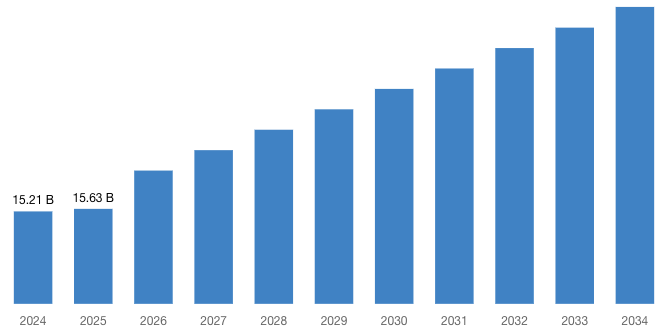
“According to the latest research study, the demand of global Mayonnaise Market size & share was valued at approximately USD 15.21 Billion in 2024 and is expected to reach USD 15.63 Billion in 2025 and is expected to reach a value of around USD 48.86 Billion by 2034, at a compound annual growth rate (CAGR) of about 12.38% during the forecast period 2025 to 2034.”
Click Here to Access a Free Sample Report of the Global Mayonnaise Market @ https://www.custommarketinsights.com/request-for-free-sample/?reportid=68616
Mayonnaise Market Overview
Mayonnaise is one of the dynamic segments of the global condiment industry, popular for its creamy and rich taste among different cuisines. Mayonnaise was originally made with vegetable oil, eggs, and acidifying ingredients, but changing consumer tastes and innovation in the industry have moved far beyond standard mayonnaise.
Strong market growth is being propelled by rising consumer demand for healthier, more varied product options such as low-fat, organic, and those based on natural ingredients.
Furthermore, the increasing population of health-oriented people is searching for plant-based options to answer vegan, vegetarian, and flexitarian lifestyles, which is aiding in the demand for eggless mayonnaise with plant-based ingredients like soy, pea protein, aquafaba, and avocado oil.
The move to plant-based mayonnaise is being driven by greater consumer awareness of environmental sustainability, ethical issues, and more nutritional food without compromising on taste and mouthfeel. The industry is responding with swift innovation, ensuring the alternatives retain that rich, creamy mouthfeel and flavor profile of traditional mayonnaise, making them palatable to a wider audience.
The rising demand for clean-label and functional food has been one of the major factors driving the growth of the mayonnaise market. The shift toward organic and natural mayonnaise is being caused by consumers’ tendencies to grab products with no hidden ingredients, which are devoid of artificial preservatives, colors, and additives.
Then some health-conscious fellows also choose low-fat or low-cholesterol alternatives, thus further establishing the market’s diversity. Moreover, the global phenomenon of culinary trends is expanding due to the increasing use of mayonnaise in global dishes, including burgers, salads, dips, and dressings.
As this versatility continues to blossom, manufacturers have expanded their offerings by making spicy, herb-filled, and regionally inspired versions of this form of protein to practically suit any consumer palate.
The plant-based formulations must still prove to be stable and shelf-stable in general; these are the greatest challenges facing the mayonnaise industry. Eggs are also the traditional emulsifier in mayonnaise, a component that helps stabilize the emulsion and prevent the ingredients from separating.
Request a Customized Copy of the Mayonnaise Market Report @ https://www.custommarketinsights.com/request-for-customization/?reportid=68616
Formulating egg replacement with plant-based ingredients is a challenge, as it requires significant research and development to achieve a product that can replace the mouthfeel and stability characteristics of eggs without a trade-off on taste. Manufacturers are utilizing advanced food science techniques to tackle this challenge, exploring the potential of various emulsifiers and stabilizers.
Furthermore, the cost of producing plant-based mayo is still fairly premium, utilizing special ingredients like avocado oil and aquafaba and preventing general consumers with limited budgets from entering the plant-based mayo home scale or the market segment at large.
Bottles, pouches, and other packaging types segment the global mayonnaise market. Bottles are the largest type of package by market share, especially in the beverages, pharmaceutical, and personal care product markets, because of their longer life, ability to be reused, and better protection.
But, due to their economical nature, they are lighter than their glass counterparts, and the environmental benefits are elegantly provided to the planet; pouches are dominating the food, dairy, and, of course, personal care segment in a jiffy.
Cartridge pack design, also known as top packs, is categorized as others, which are growing in a few niche applications such as cups but generally represent a smaller share compared to bottles and pouches, which are segments that consume much more plastic. One specific type of packaging tends to dominate in a category, but this also varies greatly depending on the type of product, pricing, consumer preference, and sustainability trends.
We segment the mayonnaise system market across Asia Pacific, North America, Latin America, Europe, and the Middle East and Africa. Globally, the mayonnaise market is growing, but the mayonnaise market in the Asia-Pacific region and South America is increasing majorly.
The adoption of mayonnaise in local cuisines in Asia-Pacific is also fueled by the increasing percentage of the middle class in the population and increasing Western influence over food habits. Consumers are experimenting with mayonnaise-based sauces and dressings.
For example, the consumption of mayonnaise has been higher in China, India, and Japan over recent years because they mix it with regional foods. Increasing sales of plant-based mayonnaise in this area is somehow highly influenced by urban culture, where consumers are adapting to vegan and healthy lifestyles with food.
At the same time, several regional brands have launched mayonnaise flavors using local ingredients such as chimichurri and aji in response to booming consumption in the category in South America.
North America and Europe undoubtedly continue to be strongholds in terms of mayonnaise consumption due to well-established consumer patterns, but the two regions are also at the front lines of plant-based innovation, fueling the development of new formulations to suit the progression of changing consumer tastes.
Maintaining a balance between new and classic lines, as well as classic consumers, will determine the future of the global mayonnaise market. The increasing number of health-conscious and environmentally conscious consumers creates an opportunity for classic products as well as innovative products.
Report Scope
| Feature of the Report | Details |
| Market Size in 2025 | USD 15.63 Billion |
| Projected Market Size in 2034 | USD 48.86 Billion |
| Market Size in 2024 | USD 15.21 Billion |
| CAGR Growth Rate | 12.38% CAGR |