
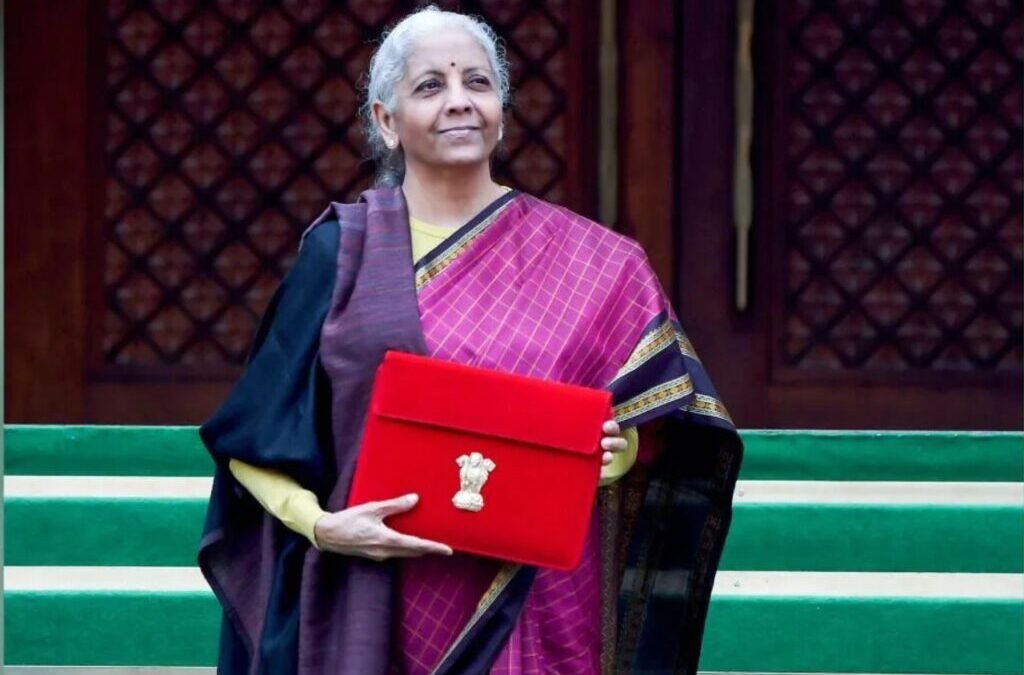
Synopsis: The Union Budget 2026 simplifies taxation, reduces compliance, and boosts ease of doing business through MAT rationalisation and targeted tax reliefs. It supports manufacturing, exports, and digital sectors to drive investment, sustainability, and long-term economic growth.
The Union Budget 2026 focused on simplifying India’s tax structure and promoting ease of doing business through targeted reforms. The budget emphasizes tax certainty, reduced compliance burden, and encouragement of corporate participation in the lower tax framework, supporting long-term economic growth and improved investment sentiment. One key highlight is the rationalisation of the Minimum Alternate Tax (MAT) regime to facilitate a smoother shift to the new corporate tax regime.
Apart from that, the Budget 2026 also introduces selective exemptions and relaxations to support priority sectors while maintaining a simplified tax base. Exemptions and incentives are mainly aligned with manufacturing, infrastructure, MSMEs, startups, renewable energy, and technology-driven sectors. These measures aim to promote capital investment, innovation, employment generation, and sustainable development, while gradually phasing out complex deductions to ensure transparency and uniformity across the corporate taxation system.
Within this broader reform agenda, the Union Budget 2026 outlines a series of targeted tax exemptions and relaxations aimed at supporting key growth sectors and incentivising strategic investments, which are as follows
Direct Tax Exemptions & Income-tax Reliefs (FY27)
The FY27 Budget introduces targeted income-tax reliefs focused on individuals, non-residents, and small taxpayers. Interest received from Motor Accident Claims Tribunal awards is fully exempt from tax, with TDS removed. A one-time foreign asset disclosure scheme offers immunity for small disclosures. For Indian Businesses that include corporates and MNCs, the Rationalisation of the Minimum Alternate Tax or MAT provisions enable companies to now smoothly shift to the new corporate tax regime.
Data Centres, Cloud Services & IFSC Tax Holidays
Apart from manufacturing incentives, FY27 grants long-term tax holidays to strategic service infrastructure. Foreign companies providing global cloud services through India-based data centres receive a full tax holiday until 2047, with related Indian entities eligible for a 15 percent safe harbour margin. Additionally, IFSC units receive an extended profit-linked deduction for 20 consecutive years out of 25, strengthening India’s global financial hub ambitions.
Manufacturing & Make in India Incentives
To reinforce the Make in India initiative, FY27 provides extensive tax and duty reliefs for manufacturers. Deferred duty payment facilities are expanded for trusted manufacturers, while non-residents supplying capital goods or tooling to bonded-zone manufacturers receive a five-year income-tax exemption.
Export Promotion & Trade Facilitation Measures
The Budget enhances export competitiveness by easing tax and customs constraints. Duty-free import limits for seafood exporters are raised from 1 percent to 3 percent of FOB value, while exporters in leather, textile, and footwear sectors receive extended timelines for export obligations. Removal of the Rs 10 lakh cap on courier exports and full automation of export clearances further liquidity, turnaround time, and ease of doing business.
This exemption helps businesses save money by allowing them to import more raw materials tax-free, which makes their final products more affordable and competitive globally, as there can now import duty free goods equivalent to 3 percent of their total export value.
Energy Transition, Infrastructure & Green Economy Exemptions
Tax reliefs linked to energy security and sustainability are not explicitly covered earlier. The Budget extends basic customs duty exemptions on imports for nuclear power projects until 2035, irrespective of capacity. Capital goods used in processing critical minerals receive full duty exemption, while the entire value of biogas blended with CNG is excluded from central excise duty, supporting clean energy and long-term infrastructure goals.
Agriculture, Fisheries & Cooperative Sector Tax Exemptions
Several agriculture-linked exemptions are not reflected earlier. Fish caught by Indian vessels in the Exclusive Economic Zone or high seas is made fully duty-free, with foreign landings treated as exports. Cooperative societies receive expanded income-tax deductions, inter-cooperative dividend income becomes deductible, and notified national cooperative federations enjoy a three-year dividend tax exemption, enhancing rural and cooperative-sector capital efficiency.
Indirect Tax & Customs Duty Exemptions
Customs duty exemptions form a core pillar of the FY27 tax strategy. The government has exempted basic customs duty on 17 cancer drugs and medicines for rare diseases to improve healthcare affordability. Significant exemptions are extended to capital goods and raw materials used in aircraft manufacturing, lithium-ion batteries, solar glass, and nuclear power projects. While also stating critical minerals exploration expenditure be be amortised over a period of five years.
The Bottom Line
The FY27 Budget has offered comprehensive tax and duty incentives across sectors, this has promoted individual reliefs, business competitiveness, healthcare, manufacturing, exports, clean energy, agriculture, and cooperatives. Strategic measures for data centres, cloud services, and IFSC units strengthen India’s global financial and digital infrastructure, while customs and excise exemptions support sustainable growth, innovation, and ease of doing business, all of these reinforce the Make in India initiative and the long-term economic development goals of the country.
Disclaimer: The views and investment tips expressed by investment experts/broking houses/rating agencies on tradebrains.in are their own, and not that of the website or its management. Investing in equities poses a risk of financial losses. Investors must therefore exercise due caution while investing or trading in stocks. Trade Brains Technologies Private Limited or the author are not liable for any losses caused as a result of the decision based on this article. Please consult your investment advisor before investing.
The post 7 Tax Exemptions made in this year’s Budget; Will you benefit in any? appeared first on Trade Brains.