
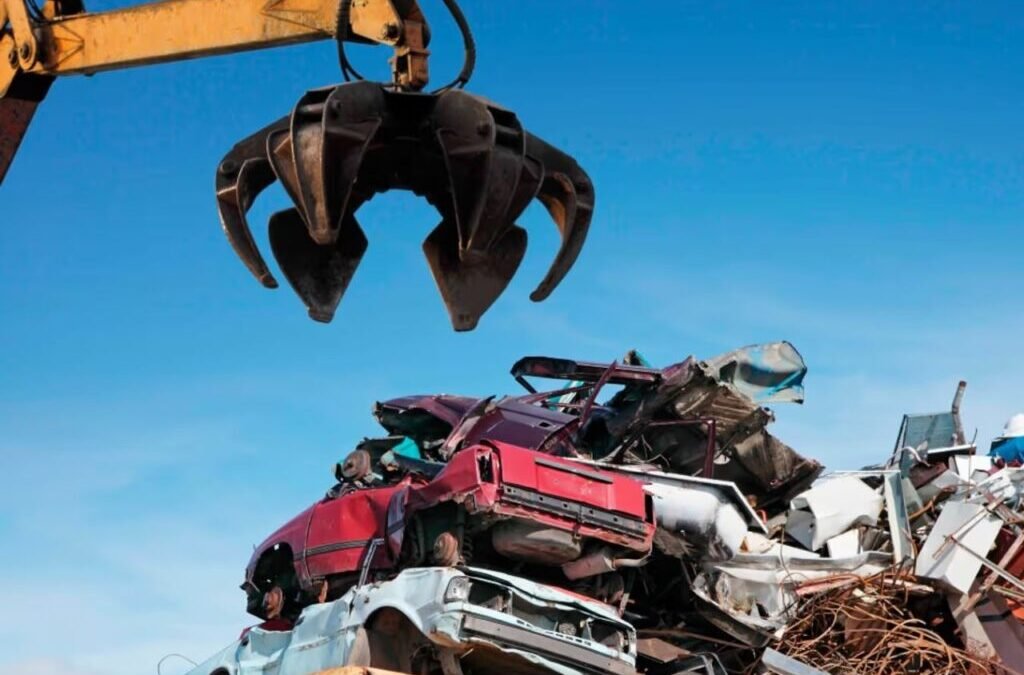
Synopsis: India’s scrap dilemma is worsening as international exports become restricted and as policy changes occur, a subtle recycling trend might be developing, which could transform certain metal stocks.
India is steadily creating something revolutionary. As the nation advances its bold initiative to become a manufacturing leader and reach Net Zero emissions by 2070, one sector lies at the core of both aspirations, and that is metal recycling. Consider it the essential component that enables everything, from producing cars and batteries to constructing infrastructure, all while safeguarding the environment.
Recently, experts in the industry have expressed serious worries regarding India’s increasing dependence on metal scrap supplies. The nation must encourage official and scientific gathering, disassembly, and processing of recyclable materials, which will result in conserving resources and saving energy. The message is evident: if India genuinely aims to achieve self-sufficiency and fulfil its climate objectives, it needs to overhaul its metal recycling strategy and quickly.
Understanding India’s Metal Recycling Challenge
Imagine an old car sitting unused in someone’s garage. Instead of letting it rust away, what if that vehicle could be dismantled scientifically, with every kilogram of metal extracted and reused to build new products? That’s essentially what metal recycling does, but the current system in India leaves enormous potential untapped.
The numbers reveal a stark reality. Right now, India imports approximately 90% of the zinc and aluminium scrap it needs, 70% of stainless steel scrap, and 25% of steel scrap from abroad. It’s like ordering ingredients from outside when you could be using what’s already in your kitchen.
However, this is where the issue deepens. The nations that have historically sent their scrap metal to India are altering their approach as they understand that they require that scrap for their own production sectors, so they’re retaining it domestically. The tightening of worldwide scrap availability indicates that India cannot depend on imports forever, as it needs to promptly produce and reuse its own metal scrap effectively.
The environmental advantages make this transition even more essential. Recycling each ton of scrap conserves 1.1 tons of iron ore, 630 kg of coking coal, and 55 kg of limestone, resulting in significant energy savings.
Producing steel from recycled scrap rather than using virgin ore uses 60% to 75% less energy and generates 58% fewer greenhouse gas emissions. In the case of aluminium, the benefits are significantly greater; recycling requires just 5% of the energy needed for original production and releases less than 90% of carbon dioxide.
These statistics are not merely impressive. They perfectly embody what India must accomplish to meet its Net Zero 2070 pledge. Metal recycling is not just beneficial for this purpose; it is crucial.
The development path appears promising. Indian steel mills have raised their scrap consumption from 24 million tonnes in 2021 to over 34 million tonnes by 2024. That’s a considerable advancement, but there remains considerable opportunity for growth. Recycled steel makes up under 20% of India’s overall steel production, while the worldwide average ranges from 30% to 32%. This gap signifies a vast opportunity for firms ready to take advantage of it.
India already shows proficiency in specific fields. The nation currently recycles to produce 85% of its lead, 80% of its stainless steel, 47% of its steel, 40% of its copper, 33% of its aluminium, and 10% of its zinc. These figures indicate that the technical expertise and framework are present. What is required at this moment is expansion, structure, and enhanced policy backing to achieve the next stage.
Policy Momentum Building for Metal Recyclers
The Indian government is intensifying its assistance for the recycling industry through various initiatives. The government mandated that all new items made from non-ferrous metals must include at least 5% recycled content beginning in FY28, gradually rising to 10% in FY29. And by FY31, products made of aluminium will have 10% recycled content, 20% recycled content for copper products, and 25% recycled content for zinc products.
The National Vehicle Scrappage Policy stands as one of the most important opportunities. This program seeks to eliminate outdated, polluting cars from highways while reclaiming essential materials. Every aged vehicle holds significant quantities of steel, aluminium, copper, and various other metals. When handled at authorised Registered Vehicle Scrapping Facilities, nearly all materials can be reclaimed and recycled.
The government has established a structure along with incentives. Car owners who dismantle their aged vehicles obtain certificates for getting discounts on their new car purchases, resulting in a mutually beneficial situation: individuals transition to more eco-friendly cars while recycling firms gain a consistent source of raw materials.
Extended Producer Responsibility laws are generating assured demand. These regulations hold manufacturers accountable for gathering and recycling their products once consumers are done using them. A company producing batteries, electronics, or appliances must guarantee appropriate recycling when they reach the end of their life. This regulation offers consistency and reliability to the recycling business framework.
Aside from vehicles, India is confronting a surging influx of electronic waste and outdated appliances. Refrigerators, washing machines, air conditioners, and cell phones all have precious metals inside. As wealth rises and individuals replace appliances, this “white goods” waste signifies an expanding chance for effective collectors and processors.
Ex-SAIL CMD Anil Kumar Choudhary highlighted the significance: “As exporting nations tighten regulations to retain scrap for local use, it is essential to promote and enhance domestic scrap generation and recycling to foster self-sufficiency and support the Make in India initiative.”
Now, which are the companies that are strategically positioned to capitalise on India’s metal recycling transformation? Here are five that companies mentioned below fitting into this theme
MSTC
MSTC refers to the Metal Scrap Trade Corporation, founded in 1964 as a governmental entity to oversee metal scrap trade for the steel sector in India. Currently, it’s a Mini Ratna public sector entity under the Ministry of Steel with a distinctive business mix that includes e-auctions and recycling.
The company runs India’s first structured vehicle recycling infrastructure through its partnership with Mahindra, named Mahindra MSTC Recycling (CERO). CERO, or ‘Zero’ in Spanish, operates eight Registered Vehicle Scrapping Facilities in Delhi NCR, Chennai, Indore, Ahmedabad, Guwahati, and Bengaluru, along with 34 collection centres throughout the country.
Each facility has the capacity to handle around 15,000 vehicles each year. With the vehicle scrappage policy gaining traction, MSTC’s existing infrastructure enables it to seize increasing volumes. Support from the government offers specific benefits: simplified access to public sector contracts, established connections with PSU firms, and the financial security of being a PSU.
Gravita India
Established in 1992 and located in Jaipur, Gravita India has transformed into one of the top recycling firms globally, with activities spanning several continents. The firm runs 13 production sites throughout India and in other countries such as America, Ghana, Mozambique, Tanzania, Cameroon, Senegal, and Sri Lanka.
Gravita India Limited operates across multiple recycling verticals, with lead recycling forming its core business. The company is among India’s leading secondary lead producers, and exports refined lead and lead alloys to global markets. In addition, Gravita has diversified into aluminium recycling and plastic recycling, strengthening its position as an integrated recycling player.
The company’s lead products are registered with the London Metal Exchange (LME), enabling access to international markets and enhancing credibility among global buyers.
Most thrillingly, the company established a lithium-ion battery recycling sector in Mundra, Gujarat, with a capacity of 6,000 MTPA, positioning itself ahead of the upcoming surge in EV battery recycling. In February 2026, Gravita revealed intentions to purchase Rashtriya Metal Industries for as much as Rs 565 crores, signifying its foray into copper recycling and broadening its revenue sources.
Gravita showcases significant scale and profitability, boasting a market capitalisation of over Rs 12,000 crores and revenues of approximately Rs 3,869 crores (FY25). The company offers comprehensive recycling solutions, having completed more than 70 projects internationally, generating extra income while sharing its technical knowledge worldwide.
Jain Resource Recycling
Established in 2022, Jain Resource Recycling is backed by a rich history from its parent company, Jain Metal Group, which was founded in 1953. Located in Chennai, the firm runs four facilities in SIPCOT Industrial Estate at Gummidipoondi, spanning over 40 acres with an overall production capacity of over 1.7 lakh metric tonnes annually in lead, copper, and aluminium recycling.
Jain’s strategically positioned site in Chennai offers effective access to both imported scrap and markets for exporting finished products. The firm caters to prominent clients such as Vedanta, Hindalco, Luminous Power Technologies, etc., within the country, as well as international giants Mitsubishi Corporation and Nissan Trading. As of the latest filings available, almost 70% of its revenue was generated from exports to China, Singapore, Japan, and South Korea.
The firm reported a revenue of Rs 7,126 crores and profits of Rs 223 crores in FY25, with revenue increasing by 61% and profit by 36% from FY24 to FY25. Consolidating all recycling activities in a single site enhances operational efficiencies, as by-products from one process can potentially be used as inputs for another.
Pondy Oxides & Chemicals
Referred to as POCL, this company, located in Chennai and founded in 1995, is the largest secondary lead producer in India. Lead represents around 83% of revenue, which is logical since the majority of the world’s lead demand is satisfied through recycling instead of mining. Approximately 85% of lead usage is directed towards lead-acid batteries, which continue to be vital for vehicles, backup power in telecommunications, renewable energy storage, and the rapidly growing electric rickshaw industry in India.
POCL attained remarkable achievements: the first Indian company to have a lead brand registered on the London Metal Exchange with 3N7 purity (99.97% pure). In April 2025, a new cutting-edge smelter was commissioned in Thervoykandigai, Tamil Nadu, starting with an initial capacity of 36,000 MTPA and aiming to expand to 72,000 MTPA, dubbed India’s first fully automated and integrated lead recycling plant.
The organisation is also preparing for what lies ahead. POCL teamed up with ACE Green Recycling to create what is claimed to be the largest battery recycling facility in the world that is free from greenhouse gas emissions, removing emissions associated with conventional high-temperature smelting.
Having a market capitalisation of about Rs 3,600 crores and roughly 66% of its revenue coming from exports to Japan, South Korea, Thailand, Indonesia, and Middle Eastern countries, POCL showcases significant scale and adherence to international quality standards.
Reasons These Firms May Experience Rapid Expansion
Several strong trends are coming together to establish potentially explosive growth opportunities for these metal recycling firms.
Policy Aid Increasing: The government’s vehicle disposal initiative, Extended Producer Responsibility guidelines, and required recycled material quotas beginning FY28 ensure consistent demand for recycling services. Industry groups are urging for further actions, such as granting infrastructure status to recycling plants, streamlined GST rates, and improved access to affordable financing.
Import Vulnerability Promoting Self-Sufficiency: As India relies on imports for 90% of specific metal scraps and exporting nations limit sales, the development of domestic scrap production and recycling is strategically essential. Businesses that effectively handle domestic scrap fulfil an essential national requirement.
Persuasive Economics: The substantial energy conservation and decreased emissions from recycled materials compared to new ones result in genuine financial benefits. When steel producers utilise scrap rather than iron ore, achieving 60-75% energy savings creates strong economic incentives, even aside from ecological factors. With energy prices fluctuating and possible carbon pricing systems developing, these benefits become even more pronounced.
Manufacturing Expansion Generates Supply and Demand: India’s growing manufacturing industry fosters a beneficial cycle; enhanced manufacturing leads to increased metal usage, ultimately producing more scrap. At the same time, increased production results in higher demand for metal inputs, establishing immediate markets for recycled materials.
Technology Enhancing Efficiency: Contemporary recycling techniques are significantly more advanced than previous approaches. Automated sorting through sensors and AI, along with cutting-edge smelting and refining methods, yields higher-purity results with reduced energy usage—firms adopting these technologies achieve competitive edges in cost and quality.
Other highlights
While the structural outlook appears strong, investors must recognise that recycling remains a cyclical and execution-heavy business. Commodity price volatility is the most immediate risk. Metal prices move with global supply-demand dynamics, and sharp corrections can compress spreads or create inventory losses. Even though most organised recyclers hedge exposure, margin volatility cannot be eliminated.
Operational discipline is equally critical. Recycling is not just buying scrap and melting it. It involves sourcing fragmented scrap supply, managing working capital efficiently, maintaining plant uptime, ensuring safe disposal of hazardous waste, and complying with tightening environmental norms. Any lapse in logistics, processing efficiency, or regulatory compliance can quickly erode profitability.
Competition is also intensifying. As decarbonisation and ESG commitments gain momentum, large industrial groups are entering recycling. At the same time, India’s vast informal recycling ecosystem continues to operate at lower compliance costs, creating pricing pressure for organised players. Export-oriented companies additionally face currency risk, where a stronger rupee can dilute realisations.
What makes this theme investable is the supply-demand imbalance quietly building underneath. India still imports nearly 90% of its zinc and aluminium scrap needs, along with large quantities of copper and stainless steel scrap, even as recycled-content mandates begin from FY28 and global exporters tighten supply.
Steel scrap usage has already risen from 24 MT in 2021 to over 34 MT in 2024, yet recycled steel remains below 20% of total production versus the global 30–32% average. Even a partial catch-up implies millions of additional tonnes of domestic demand. Recyclers with ready capacity, port access, and strong procurement networks could benefit from operating leverage as volumes scale faster than fixed costs.
At the same time, segments like lead already depend heavily on recycling, with nearly 75–80% of global demand met through secondary supply. As EV batteries, solar storage, telecom backup, and vehicle replacement cycles expand, demand visibility improves further.
If vehicle scrappage accelerates and formalisation gathers pace, organised recyclers may steadily gain share from the informal sector, improving margins and export credibility. This is no longer just an ESG narrative; it is becoming a structural industrial opportunity.
That said, India appears to be at an inflexion point. Rising scrap imports, global export curbs, recycled-content mandates beginning FY28, and the vehicle scrappage push are gradually formalising the ecosystem. If policy implementation strengthens and informal-to-formal market share shifts accelerate, organised recyclers could see structural volume growth and operating leverage.
Disclaimer: The views and investment tips expressed by investment experts/broking houses/rating agencies on tradebrains.in are their own, and not that of the website or its management. Investing in equities poses a risk of financial losses. Investors must therefore exercise due caution while investing or trading in stocks. Trade Brains Technologies Private Limited or the author are not liable for any losses caused as a result of the decision based on this article. Please consult your investment advisor before investing.
The post 4 Metal Recycling Stocks Benefiting from India’s Vehicle Scrappage Policy to look out for appeared first on Trade Brains.