
Synopsis: Domestic institutional investors increased their stake in AU Small Finance Bank from 20.13 percent to 31.91 percent by September 2025, reflecting confidence in its strong loan growth of 22 percent YoY, Rs. 1.38 lakh crore deposits, healthy CASA, and RBI universal banking approval.
Domestic institutional investors have steadily increased their exposure to this banking stock over the past year, with their stake rising sharply from 20 percent to 32 percent by September. Such a jump signals growing confidence among long-term investors, drawing attention to the factors behind this shift and what it may indicate about the bank’s performance, strategy, and outlook.
AU Small Finance Bank Ltd, with a market capitalization of Rs. 74,676.98 crore, trading at Rs. 999 per equity share, down by 0.02 percent from its previous day’s close price of Rs. 999.20 per equity share.
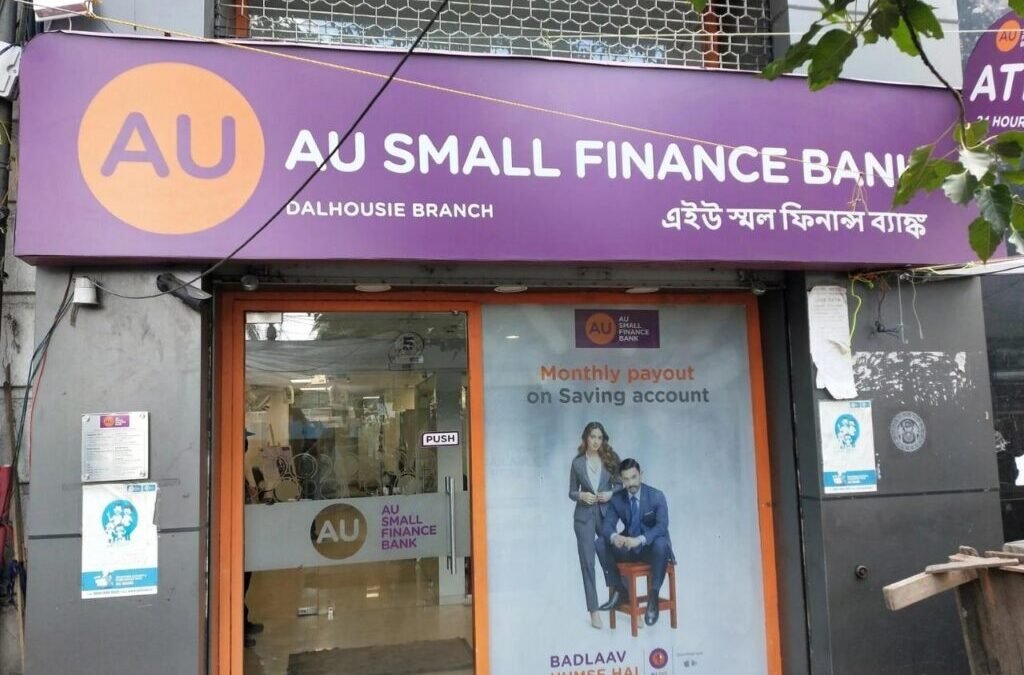
AU Small Finance Bank Limited is a Jaipur-based bank offering a wide range of retail, wholesale, and digital banking services across India. It provides deposit products, cards, loans across vehicles, housing, MSMEs, agriculture and personal finance, along with insurance, mutual funds, pension schemes, and government banking services. The bank serves individuals, SMEs, corporates, NRIs, and government institutions through branches, business correspondents, and digital channels.
Shareholding Pattern
As of September 2025, the company’s shareholding structure reflects strong institutional participation, with promoters holding 22.82 percent, FIIs at 34.5 percent, DIIs at 31.91 percent, and the public owning 10.78 percent of equity. This balanced ownership indicates sustained confidence from both management and long-term institutional investors.
From September 2024 to September 2025 institutional ownership has risen sharply. DII holding increased from 20.13 percent to 31.91 percent, highlighting growing conviction among domestic institutions in the company’s long-term growth prospects.
Stock return
AU Small Finance Bank Ltd has delivered strong returns across multiple timeframes, with a 3-month return of 29.41 percent, a 6-month return of 23.92 percent, and a 1-year return of 75.02 percent.. Over the longer term, the company has achieved a 5-year return of 122.77 percent from Rs. 460.13 to current level of Rs. 999, reflecting consistent growth and robust performance in its sector. The stock is the best performer of Bank Nifty in the year 2025.
Possible reason why Institutions Are Increasing Their Stake
Universal Banking Approval
A major catalyst behind rising DII interest is the RBI’s in-principle approval for AU SFB to transition into a universal bank. This milestone positions AU as the first small finance bank in over a decade to receive such approval, opening up long-term opportunities across corporate lending, liability expansion, and product diversification, while also enhancing the bank’s credibility among large investors.
Profitability and Operating Metrics
Operational performance has strengthened in recent quarters. During Q2FY26, the bank reported a 12 percent sequential decline in slippages, while credit cost eased to 30 bps from 34 bps in Q1FY26. Net interest margin improved by 5 bps, supported by a sharp 25 bps reduction in cost of funds and better liquidity management, improving the outlook for return on equity in the second half of the year.
Healthy and Secured Loan Book Growth
Loan growth has remained robust, with the secured loan book accounting for about 92 percent of gross loan portfolio, growing 5 percent quarter-on-quarter and 22 percent year-on-year. This asset-backed approach has helped improve asset quality, with reductions in GNPA, NNPA, and SMA levels, aligning well with institutional investors’ preference for stability and controlled risk.
Deposit Expansion and Balance Sheet Strength
AU Small Finance Bank has crossed the Rs. 1 lakh crore mark in loans, assets, and deposits, reinforcing its scale within the small finance banking space. Its growing balance sheet, combined with controlled operating expenses and sustained fee income growth, has strengthened earnings visibility.
Financial Outlook
AU Small Finance Bank reported a net interest income of Rs. 2,144 crore in Q2 FY26, marking a 9 percent year-on-year increase from Rs. 1,974 crore in Q2 FY25 and a 5 percent rise sequentially from Rs. 2,045 crore. However, net interest margins declined by 60 basis points to 5.5 percent during the quarter. On the profitability front, the bank posted a net profit of Rs. 561 crore in Q2 FY26, slightly lower than Rs. 571 crore a year earlier and down 3 percent quarter-on-quarter from Rs. 581 crore.
As of 31st December 2025, AU Small Finance Bank reported total deposits of Rs. 1,38,420 crore, up 23.3 percent year-on-year from Rs. 1,12,260 crore in December 2024 and a 4.5 percent increase from Rs. 1,32,590 crore at the end of September 2025. CASA deposits stood at Rs. 39,950 crore, reflecting a 16.1 percent year-on-year growth and a 2.5 percent quarter-on-quarter rise. The CASA ratio was 28.9 percent, slightly lower than 30.6 percent a year ago and 29.4 percent in the previous quarter.
The bank remains confident that its credit costs for the full year will align with its guidance of around 1 percent. It has also maintained its targets for operational efficiency, aiming to keep the cost-to-income ratio below 60 percent and the cost-to-opex ratio under approximately 4.3 percent.
Conclusion
The increase in DII stake from 20 percent to 32 percent shows that big investors are confident about AU Small Finance Bank’s future. Strong loan and deposit growth, good asset quality, and efficient operations, along with RBI approval for universal banking, give the bank room to grow and earn steadily. Even though margins are a bit soft, its low-risk profile and healthy CASA growth make it an attractive choice for long-term investors looking for stable returns in India’s banking sector.
Disclaimer: The views and investment tips expressed by investment experts/broking houses/rating agencies on tradebrains.in are their own, and not that of the website or its management. Investing in equities poses a risk of financial losses. Investors must therefore exercise due caution while investing or trading in stocks. Trade Brains Technologies Private Limited or the author are not liable for any losses caused as a result of the decision based on this article. Please consult your investment advisor before investing.
The post 20% to 32% Stake: Why DIIs Are Bullish on AU Small Finance Bank? appeared first on Trade Brains.