
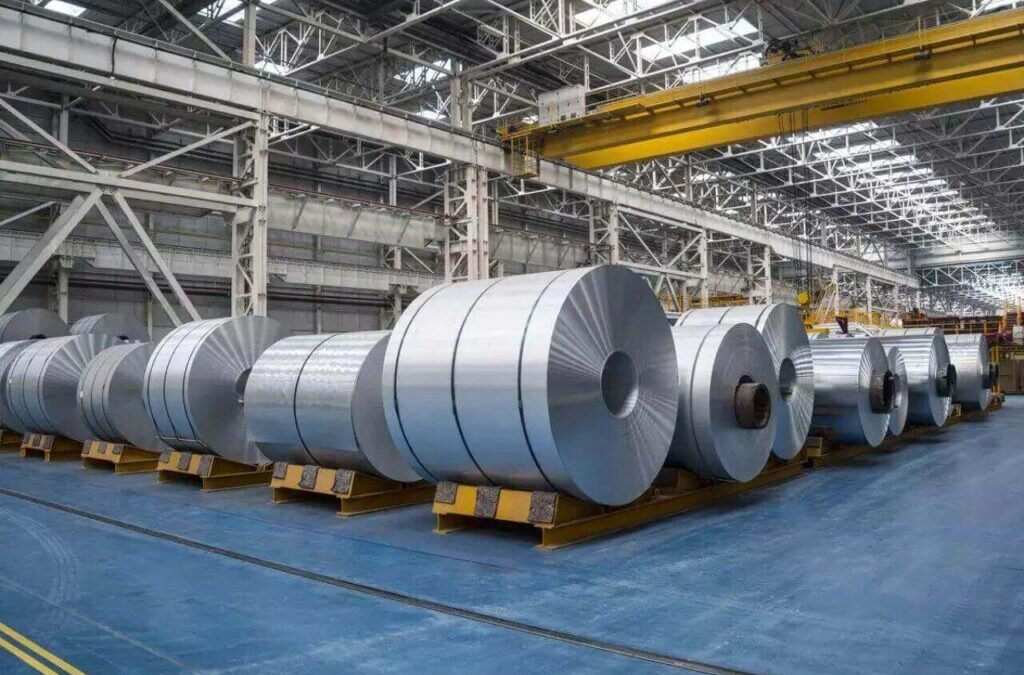
Synopsis: LME aluminium prices have surged 6 percent over four sessions to $3,687 per tonne, driven by West Asia supply disruptions and a potential Strait of Hormuz closure; with JPMorgan projecting the largest global supply deficit in 26 years, Indian producers Hindalco, NALCO, and Vedanta have emerged as key beneficiaries though analysts caution that the tailwind may be concentrated in the near term.
Aluminium prices on the London Metal Exchange have staged one of their sharpest short-term rallies in recent memory, rising 6 percent over just four sessions to hit $3,687 per tonne. The move is drawing attention to a set of familiar names on Dalal Street with Indian aluminium producers standing out as direct beneficiaries of a tightening global supply picture.
The immediate trigger was a series of Iranian attacks on two major West Asian smelters (Emirates Global Aluminium in Abu Dhabi and Aluminium Bahrain (ALBA)) in late March, with both companies confirming significant facility damage. ALBA alone absorbed a 19 percent capacity impact, while Qatar’s Qatalum also reported disruptions, putting an estimated 8-9 percent of global aluminium supply at risk. The more persistent fear is structural: a prolonged closure of the Strait of Hormuz would choke off alumina shipments to Gulf smelters, with no quick rerouting option available at scale.
JPMorgan Chase has put a number to the worst case. According to the report, the bank projects a global aluminium deficit of approximately 1.9 million tonnes by 2026, its largest supply shortfall in 26 years. Rising energy costs, with the Richards Bay Index up 14 percent in March, are adding a further floor to aluminium prices globally. Market participants view the $3,700-$3,800 per tonne range as the threshold beyond which smelter-driven stock moves could become more pronounced.
Among listed Indian plays, NALCO is the most direct proxy, a state-run primary aluminium producer with no downstream complexity to dilute the LME price pass-through. Shares of NALCO have gained approximately 33 percent year-to-date in 2026, far outpacing the benchmark Nifty50, which is down 8 percent over the same period.
Hindalco, via its domestic smelting operations in Odisha, also benefits from higher realisations, though its global subsidiary Novelis introduces a separate variable. Novelis is currently dealing with a $1.3-1.6 billion free cash flow impact from fires at its Oswego, US plant, with a restart expected by late Q2 CY2026. That overhang has kept Hindalco’s YTD gain more modest at roughly 12 percent. Vedanta, with aluminium as one of several commodity exposures, gains alongside peers but with lower direct sensitivity.
Caveats Worth Noting
Not all analysts are bullish without reservation. JM Financial notes that while Indian producers are positioned to benefit in the first half of FY27, supply restrictions are expected to ease and prices may mean-revert in the second half of the year. Global aluminium demand growth is forecast to slow sharply to 0.9 percent in 2026, weighed down by a construction slump in China and macro uncertainty in the United States. If the Strait of Hormuz situation stabilises faster than the market currently assumes, the deficit projection shrinks considerably.
Disclaimer: The views and investment tips expressed by investment experts/broking houses/rating agencies on tradebrains.in are their own, and not that of the website or its management. Investing in equities poses a risk of financial losses. Investors must therefore exercise due caution while investing or trading in stocks. Trade Brains Technologies Private Limited or the author are not liable for any losses caused as a result of the decision based on this article. Please consult your investment advisor before investing.
The post ₹3,67,900 Per Tonne and Climbing: Indian Metal Stocks Surge on Global Supply Deficit appeared first on Trade Brains.